


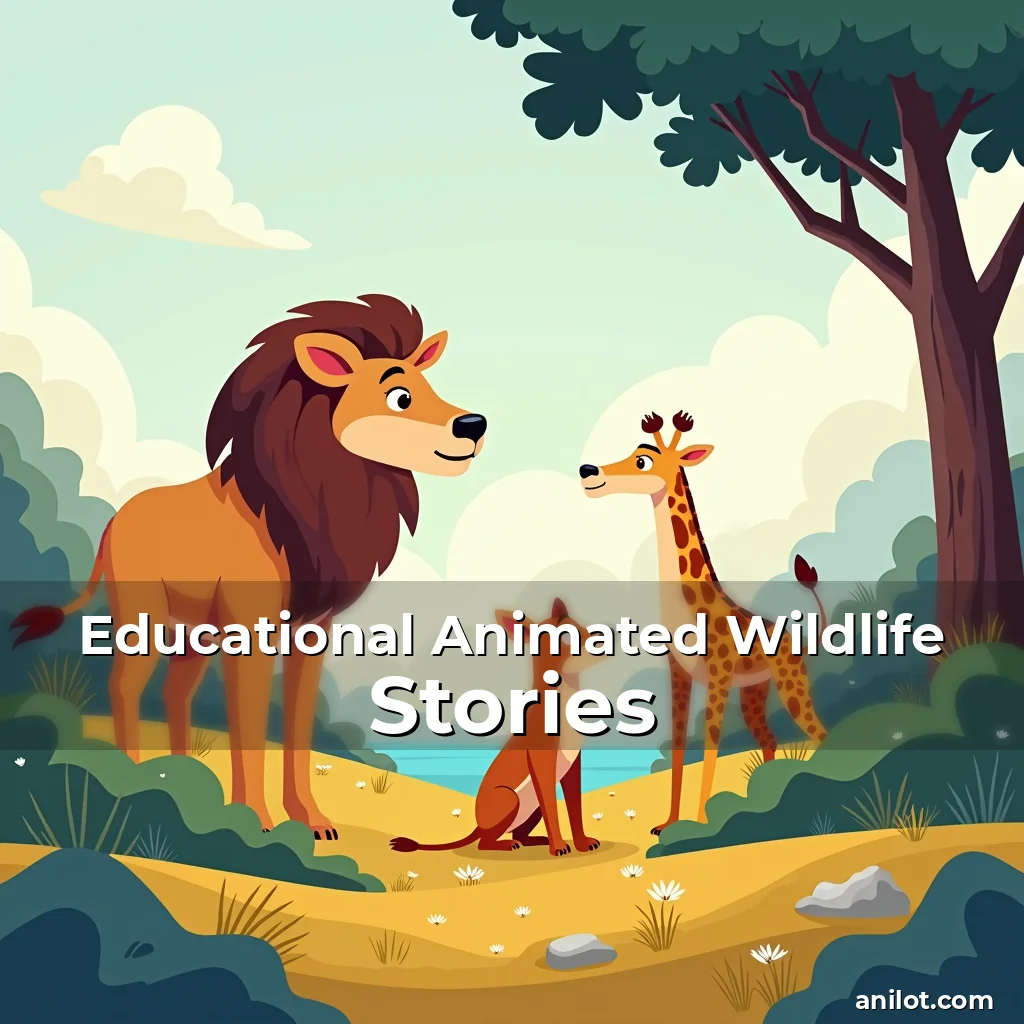
Educational Animated Wildlife Stories
In recent years, animated wildlife stories have emerged as powerful tools for education, entertainment, and environmental awareness. These narratives bring animal behavior, ecosystems, and conservation issues to life through vibrant visuals and compelling storytelling.
The blend of artistry and science makes these animations accessible even to young audiences while providing deep educational value across age groups.
The Power of Animation in Wildlife Education
Animation has revolutionized how we understand and connect with nature. Through stylized representations, complex biological processes become visually engaging and easy to grasp.
This medium allows creators to depict animals and environments that might be difficult or dangerous to film in real life. For example, deep-sea creatures or endangered species can be portrayed without disrupting their natural habitats.
- Accessibility: Animations simplify intricate ecological relationships, making them comprehensible to learners at any stage.
- Creativity: Artists have freedom to exaggerate features or use imaginative scenarios to highlight key lessons.
Interactive elements in digital platforms further enhance engagement, enabling users to explore ecosystems virtually or simulate animal behaviors.
These techniques make learning about wildlife both fun and memorable, reinforcing knowledge retention among students.
The Evolution of Wildlife Storytelling
Wildlife storytelling dates back centuries, with ancient cave paintings depicting hunting scenes long before modern animation existed. Early civilizations used oral traditions to pass down knowledge about local fauna and flora.
The development of television brought more structured forms of wildlife education. Documentaries by pioneers such as Sir David Attenborough set standards for accuracy and visual appeal.
With technological advancements, animation began replacing traditional methods. Stop-motion films introduced movement to static illustrations, bridging gaps between realism and imagination.
Digital animation now offers unprecedented control over every aspect of production, from lighting effects to character design.
A New Era of Digital Innovation
Modern software enables animators to create hyper-realistic depictions of animal movements, physiological functions, and habitat interactions. Simulations can track migration patterns or demonstrate food chains dynamically.
Data visualization techniques integrate factual information seamlessly within entertaining formats. Audiences absorb climate change impacts or deforestation rates naturally through narrative progression rather than statistical reports.
Virtual reality experiences take immersion further, allowing viewers to “walk” alongside animals or witness rare phenomena up close safely.
Artificial intelligence aids scriptwriting by analyzing behavioral data to ensure scientifically accurate portrayals of animal social structures and survival strategies.
The Educational Benefits of Animated Wildlife Stories
Animated stories provide interactive learning opportunities that transcend passive observation. Viewers actively participate in problem-solving scenarios involving predator-prey dynamics or ecosystem balance.
Research indicates that multimedia presentations significantly improve memory recall compared to text-based materials alone. Visual reinforcement strengthens neural pathways related to learning outcomes.
Such content encourages critical thinking skills as audiences analyze cause-and-effect relationships within fictional yet plausible ecological settings.
Learners develop empathy towards wildlife when they experience challenges faced by different species through relatable characters and situations.
Fostering Environmental Awareness
Animated stories serve as effective vehicles for promoting environmental stewardship. By showcasing fragile ecosystems under threat, they raise awareness about pressing global issues.
Characters often embody symbolic roles representing broader themes like pollution prevention or sustainable living practices. Their journeys educate viewers subtly through engaging narratives.
Conservation messages integrated into story arcs create emotional connections that translate into real-world actions. People are inspired to adopt eco-friendly habits after witnessing virtual consequences of human impact.
School curricula increasingly incorporate these resources as supplementary teaching tools aligned with scientific standards and cross-disciplinary learning objectives.
Cultivating Emotional Connections
Emotional investment plays a crucial role in transforming passive observers into active participants in wildlife protection efforts. Animalets’ adventures foster personal bonds with diverse species beyond typical zoo encounters.
Anthropomorphism in certain productions helps bridge understanding gaps between humans and non-human entities, facilitating compassion-driven conservation attitudes.
Vulnerable moments experienced by animated protagonists evoke protective instincts in viewers, encouraging advocacy for endangered populations.
Moral dilemmas presented in stories challenge audiences to consider ethical responsibilities toward biodiversity preservation and land management policies.
Technological Advancements Driving Progress
Continuous improvements in computer graphics technologies enable filmmakers to render lifelike textures on fur coats or simulate realistic muscle movements during locomotion sequences.
Photogrammetry techniques allow precise digitization of actual animal specimens, ensuring anatomical correctness while maintaining creative flexibility.
Advanced motion capture systems record authentic body language cues from live subjects, enhancing believability in character expressions and interactions.
Cloud computing facilitates collaborative projects where international teams contribute expertise simultaneously regardless of geographic location barriers.
The Future Landscape of Animated Wildlife Narratives
Emerging trends suggest increased integration of gamification elements within wildlife documentaries. Interactive quizzes embedded inside episodes test comprehension levels instantly.
User-generated content platforms empower communities worldwide to share homemade animations contributing to collective educational repositories.
Blockchain technology may soon verify authenticity credentials for academic references used in fictionalized portrayals of historical ecological events.
Predictive modeling algorithms assist writers in crafting scientifically sound plotlines based on current research findings regarding evolutionary biology or climate science developments.
Bridging Cultures Through Shared Stories
Globally distributed animated series promote cultural exchange by incorporating indigenous perspectives traditionally overlooked in Western-dominated media landscapes.
Narrative frameworks rooted in folklore from various regions enrich universal themes about coexistence with nature while preserving regional uniqueness identities.
Cross-language subtitles and dubbing options facilitate accessibility so content resonates effectively across linguistic boundaries within multicultural societies.
Collaborative ventures between studios located in ecologically significant areas help contextualize plots accurately reflecting local wildlife conditions authentically.
Celebrating Creative Diversity in Wildlife Animation
Variety in artistic styles prevents homogenization risks, allowing distinct voices to flourish despite thematic similarities shared amongst genre pieces.
Independent creators experiment boldly using unconventional color palettes or abstract forms communicating ecological ideas metaphorically instead of literally.
Hybrid approaches blending documentary footage with animation segments offer hybrid experiences marrying factual integrity with dramatic flair appealingly to broad demographics.
Educational institutions partner regularly with artists developing curriculum-aligned material balancing creativity needs against pedagogical goals efficiently.
Challenges Facing Modern Producers
Securing funding remains consistently challenging due to high production costs associated with quality animation requiring skilled labor forces specialized in relevant fields.
Balancing entertainment value against didactic instruction demands careful calibration; too much exposition feels lecture-like whereas excessive drama undermines core informational purpose.
Ethical concerns arise regarding anthropomorphic depictions potentially misrepresenting true animal behaviors leading to misconceptions about wild species characteristics.
Copyright restrictions limit reuse potential for existing intellectual properties necessitating original creations whenever possible especially since many iconic franchises already occupy prominent market spaces.
Overcoming Production Hurdles Creatively
Studio collaborations mitigate budget limitations through pooled resources while sharing technical know-how among participating entities reduces overall expenses incurred individually otherwise.
Open-source software solutions lower entry barriers enabling aspiring animators lacking capital constraints yet possessing innovative concepts still able to produce meaningful works impacting public perception positively.
Community crowdfunding initiatives provide alternative financing mechanisms connecting passionate supporters globally who align values strongly behind particular missions being pursued earnestly here.
Adopting modular production pipelines lets developers scale complexity according to project scope efficiently maximizing output quantities maintainable sustainably within resource ceilings defined previously beforehand precisely.
Engaging Diverse Age Groups Effectively
Tailored content ensures appropriateness spanning early childhood developmental stages through adult curiosity seekers seeking deeper dives into complex topics explored generally.
Kids benefit immensely from simplified explanations wrapped inside colorful tales fostering initial interest sparking lifelong passions cultivating future scientists biologists ecologists etcetera pursuing careers ultimately beneficial society widely.
Younger adults engage better via serialized narratives offering episodic structure similar familiar binge-watching tendencies observed frequently nowadays predominantly online streaming services platforms readily available everywhere conveniently anytime anywhere.
Elderly generations appreciate nostalgic reimaginings classics combined contemporary enhancements improving viewing experience substantially considerably surpassing expectations initially perceived maybe never thought could achieve really.
Measuring Impact Through Engagement Metrics
Tracking viewer responses provides quantitative indicators evaluating effectiveness metrics utilized determining success criteria guiding strategic decisions made subsequently afterwards following initial implementations carried out originally beforehand.
Surveys conducted post-viewing sessions gather qualitative feedback assessing clarity communication efficiency relevance aspects essential measuring true influence exerted upon target demographics reached successfully achieved desired results intended primarily.
Analytics tools monitor interaction frequency duration intensity levels identifying popular segments worthy replicating expanding upon leveraging strengths capitalized upon continuously perpetually improving offerings delivered consistently reliably recurrently perpetually.
Comparisons drawn benchmarking performances relative competitors establish positions industry standing facilitating necessary adjustments implemented proactively reactively depending circumstances encountered routinely periodically constantly ongoing manner uninterrupted.
Conclusion
Educational animated wildlife stories represent a transformative force in environmental education, merging artistic expression with scientific rigor to inspire action and understanding.
By embracing innovation responsibly and respecting ecological realities, creators continue shaping narratives that resonate deeply across cultures and generations alike, securing our planet’s future one captivating story at a time.


news is a contributor at AniLot.com. We are committed to providing well-researched, accurate, and valuable content to our readers.
You May Also Like

Animated Animal Content Production
The Art of Animated Animal Content Creation: A Deep Dive into Captivating Wildlife Narratives In recent years, animated animal content...
Animated Wildlife Stories Nature
The Enchanting World of Animated Wildlife Stories: Bridging Culture and Conservation In an age where digital creativity intersects with environmental...
Animal Characters Evolution Over Time
The Enchanting World of Animal Characters Through History and Culture In every corner of human civilization, animal characters have played...
Creating Cartoon Animals
The Art of Crafting Believable Cartoon Animals In the vibrant world of animation, cartoon animals have long held a special...