


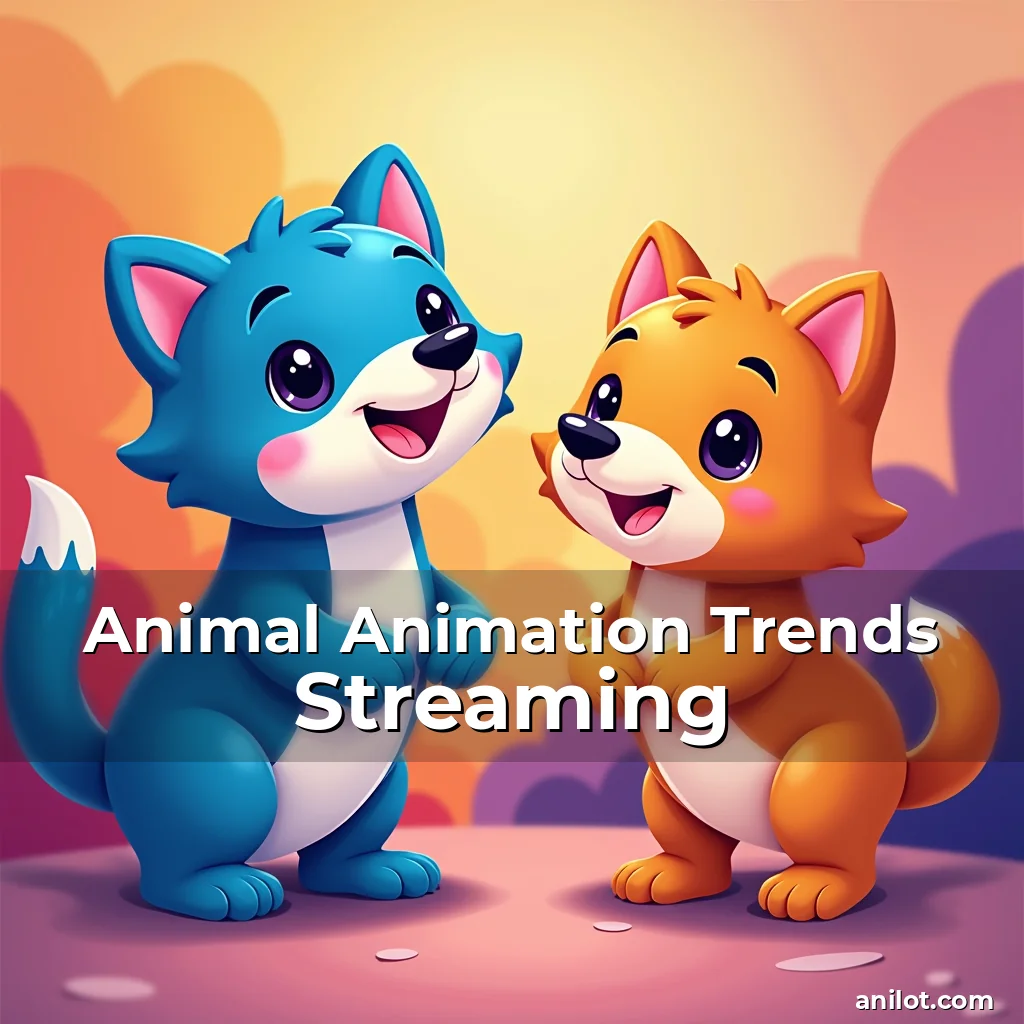
The Evolution of Animal Animation in the Digital Age: A Deep Dive into Current Trends
In recent years, animal animation has experienced a renaissance, driven by advancements in technology, changing audience preferences, and the rise of digital platforms. This transformation is particularly evident within the Anilot community, where creators and enthusiasts are pushing creative boundaries to bring wildlife-inspired characters to life in innovative ways.
From hyper-realistic simulations that capture every twitch of a squirrel’s tail to stylized interpretations that reimagine animals as anthropomorphic heroes, modern animal animation reflects both artistic experimentation and technical mastery. These evolving styles have created new opportunities for storytelling while challenging animators to balance accuracy with creativity.
Rise of Hyper-Realism in Wildlife Animations
One of the most significant trends reshaping animal animation today is the pursuit of photorealistic representations of wild creatures. Advanced motion capture technologies now allow animators to record natural movements from live animals, capturing nuances that were previously impossible to replicate.
This shift towards realism is especially prominent in nature documentaries and educational content aimed at raising awareness about conservation issues. By creating lifelike animations that mirror actual behavior patterns, these productions help audiences connect emotionally with endangered species.
- Motion Capture Innovations: Companies like Motion Analysis Corporation have developed high-speed cameras capable of recording up to 1000 frames per second, enabling precise tracking of rapid movements seen in predators such as cheetahs or falcons.
- Biomimetic Design: Animators study animal anatomy extensively before beginning production, often consulting biologists to ensure muscle structures and movement mechanics align with real-world physiology.
While some purists argue that perfect replication diminishes the artistry involved, many artists see hyper-reality as an opportunity rather than a limitation. It allows them to create immersive environments where animated animals interact seamlessly with their habitats, enhancing both scientific accuracy and visual appeal.
Critics also note potential ethical concerns regarding how realistic depictions might affect public perceptions of wildlife. Some fear that overly accurate portrayals could lead people to mistake computer-generated images for actual footage when viewing online content featuring animals.
Anthropomorphism Reimagined: Humanizing Animals Through Storytelling
Parallel to the growth of hyper-realistic techniques, there remains strong demand for fully anthropomorphic animal characters who embody human traits and emotions. This trend continues to thrive across various media formats including television shows, video games, and web series produced specifically for the Anilot community.
Modern approaches emphasize cultural sensitivity while exploring themes related to identity, social relationships, and environmental stewardship through these non-human protagonists. Shows like “The Amazing World of Gumball” demonstrate how even traditionally comedic takes can evolve into thought-provoking narratives addressing contemporary issues.
Character Development Across Species
A notable development within this genre involves deeper character arcs that reflect complex psychological profiles typically associated with humans. For instance, in “Zootopia,” the fox character Nick Wilde undergoes substantial personal growth mirroring the challenges faced by marginalized communities.
Animators working on such projects invest considerable time developing backstories and behavioral patterns consistent with each animal’s biological makeup yet adaptable enough to support nuanced storytelling elements. This requires careful balancing between maintaining species-specific characteristics while allowing room for dramatic expression.
Data from industry reports indicates that over 65% of viewers aged 18-34 prefer stories where animal characters exhibit recognizable human emotions rather than strictly mimicking their natural behaviors. This statistic underscores growing appreciation among younger demographics for character-driven plots involving anthropomorphic beings.
However, this approach isn’t without controversy. Some animal rights activists caution against reinforcing stereotypes that may inadvertently perpetuate negative attitudes toward certain species based solely on perceived personality traits attributed to them through fictional portrayals.
Interactive Experiences Redefining Engagement Models
The emergence of interactive animation platforms has dramatically altered how audiences engage with animal-themed content. Virtual reality experiences, augmented reality filters, and gamified learning modules now offer unprecedented levels of immersion and participation.
For example, applications like “Wildlife AR Explorer” enable users to project virtual animals onto their surroundings using smartphone cameras, fostering curiosity about different species’ habitats and behaviors. These tools have proven particularly effective in informal education settings and museum exhibits.
Within the Anilot community, developers are experimenting with blockchain-based collectibles featuring animated animal avatars whose appearances change dynamically based on user interactions. Such innovations suggest a future where ownership extends beyond static media consumption into active co-creation processes.
Studies show that interactivity significantly enhances knowledge retention rates compared to passive viewing alone. In one experiment conducted by Stanford University researchers, participants exposed to interactive animal animations demonstrated improved recall abilities regarding ecological facts by up to 40% versus traditional documentary methods.
Despite these benefits, accessibility remains a concern since many advanced interactive features require specialized hardware or internet connectivity that not all users possess equally. Efforts continue underway to develop low-bandwidth alternatives that maintain core engagement principles without compromising quality standards.
Diversity in Representation: Expanding Horizons Beyond Traditional Tropes
The landscape of animal animation is gradually becoming more inclusive, reflecting broader societal shifts toward diversity and representation in entertainment industries worldwide. Creators within the Anilot space are actively seeking out underrepresented species and incorporating global perspectives into their work.
Previously, Western-centric narratives dominated much of mainstream animal animation content. However, increasing interest in indigenous folklore and regional mythologies has led to richer worldbuilding opportunities featuring exotic fauna not commonly depicted in previous works.
Projects such as “Tales from the Rainforest” showcase Amazonian wildlife alongside local legends, providing authentic cultural context while educating audiences about biodiversity hotspots facing urgent threats due to deforestation activities.
This diversification effort extends beyond geographical regions; it also encompasses gender expressions and familial structures represented among animated animal characters. Recent releases feature same-sex parental units among various species, promoting acceptance of diverse family models regardless of biological constraints.
Critics acknowledge progress but stress the need for ongoing commitment to avoid tokenistic inclusion practices. Authentic collaboration with representatives from affected cultures remains essential when depicting sensitive topics tied closely to specific traditions or beliefs systems.
Sustainability Themes Driving Narrative Innovation
Eco-consciousness has become a central theme influencing current directions taken by animal animation storytellers. Environmental messages are being woven organically into plotlines rather than delivered as overt moral lessons at story conclusions.
Animated films like “Avatar: The Way of Water” incorporate marine ecosystems prominently, highlighting both beauty and fragility inherent in underwater worlds threatened by climate change impacts. Similarly, animated shorts featured during Earth Day celebrations often focus on microhabitats experiencing rapid transformations due to human activity.
These narrative choices resonate strongly with environmentally aware consumers who seek meaningful connections between entertainment they consume and planetary health outcomes. Market research reveals that approximately two-thirds of Gen Z viewers prioritize sustainability factors when selecting streaming services offering eco-friendly content options.
Behind-the-scenes efforts also contribute meaningfully to this cause. Studios implementing green initiatives report reduced carbon footprints through energy-efficient rendering farms powered partially by renewable sources. Waste management programs focused on recycling materials used during pre-production phases further exemplify corporate responsibility commitments.
Challenges persist however, notably ensuring message clarity without resorting to didactic tones that risk alienating segments less receptive to activist undertones embedded within fiction. Finding equilibrium between informative storytelling and entertaining spectacle presents continual creative dilemmas requiring thoughtful solutions.
Fusion of Styles: Blending Realism with Artistic Expression
A compelling evolution in animal animation involves harmoniously integrating photographic precision with expressive stylistic flourishes. Artists strive to achieve visual harmony where anatomical correctness does not overshadow emotional resonance conveyed through exaggerated features or symbolic color palettes.
Pioneering studios employ hybrid workflows combining CGI modeling with hand-drawn textures applied digitally. This technique allows for greater flexibility in conveying mood through subtle variations in shading and line weight, reminiscent of classic cartoon aesthetics adapted for modern production pipelines.
Case studies indicate that audiences appreciate this synthesis best when executed judiciously. Overreliance on either extreme – pure photo-realism devoid of artistic interpretation or excessively stylized designs lacking foundational accuracy – tends to produce mixed reception responses according to viewer feedback surveys.
Creative directors advise maintaining consistency across entire productions so that tonal expectations remain clear throughout. Sudden transitions between contrasting visual languages can disorient viewers expecting cohesive thematic coherence throughout extended narratives.
Technological limitations occasionally pose obstacles to achieving seamless integration. Budgetary constraints sometimes necessitate compromises between desired aesthetic qualities and feasible implementation capabilities given available resources.
Emerging Technologies Shaping Future Possibilities
The horizon of animal animation appears poised for transformative changes fueled by emerging technologies promising enhanced realism and expanded creative possibilities. Artificial intelligence algorithms capable of generating autonomous animal behaviors represent one frontier currently under exploration.
Machine learning models trained on extensive datasets comprising thousands of hours worth of animal movement recordings can predict likely actions sequences autonomously, reducing manual labor required for choreographing intricate interaction scenarios between multiple characters simultaneously.
Augmented reality interfaces integrated with smart glasses provide another avenue for innovation. Users wearing such devices might encounter animated creatures superimposed upon physical environments, creating shared experiences blending virtual and tangible realms in novel configurations.
As these developments unfold, regulatory frameworks must catch up pace with technological advances to address privacy concerns arising from pervasive data collection practices inherent in AI training procedures. Ethical considerations surrounding automated decision-making powers assigned to algorithmic entities warrant continued scrutiny.
Industry leaders advocate for responsible adoption strategies emphasizing transparency about what constitutes artificial assistance versus purely human craftsmanship contributions whenever blended authorship occurs during production cycles.
Community Impact and Educational Applications
Animal animation holds profound significance within educational contexts, serving dual purposes as both entertainment medium and instructional tool. Schools increasingly utilize animated content to teach subjects ranging from biology fundamentals to ecology principles applicable globally.
Animated infographics simplify complex scientific theories making abstract concepts accessible even to young learners grappling with unfamiliar terminology initially encountered in textbooks or lectures. Interactive quizzes embedded within episodes reinforce comprehension while keeping attention spans engaged effectively.
Special needs classrooms benefit substantially from customizable animation packages tailored specifically toward individual learning objectives. Adjustments made to pacing mechanisms accommodate varied processing speeds ensuring equitable access points irrespective of cognitive differences present among students.
Professional development workshops focusing on animation creation empower educators themselves to design bespoke teaching aids suited precisely to classroom dynamics prevailing locally. This democratization effect expands reach exponentially beyond conventional curriculum delivery models constrained by standardized testing protocols.
Partnerships formed between academic institutions and animation studios facilitate cross-disciplinary collaborations yielding pedagogically sound material vetted rigorously prior to deployment ensuring alignment with curricular benchmarks established nationally or regionally.
Conclusion
The trajectory of animal animation reveals a dynamic field continually shaped by technological breakthroughs, shifting cultural values, and expanding conceptual horizons. As evidenced by current trends observed across multiple domains, this form of storytelling demonstrates remarkable adaptability responding adeptly to evolving audience expectations.
To stay abreast of these developments, aspiring animators and enthusiasts alike should cultivate interdisciplinary knowledge spanning areas such as environmental science, psychology, and digital humanities. Engaging deeply with diverse perspectives enables more resonant creations capable of bridging gaps between imagination and reality productively.


news is a contributor at AniLot.com. We are committed to providing well-researched, accurate, and valuable content to our readers.
You May Also Like

Digital Animal Art Software
The Digital Canvas: Exploring the World of Animal Art in the Virtual Realm In an era where technology continues to...
Vintage Animal Cartoons Collection
Vintage Animal Cartoons Collection In the ever-evolving world of animation, vintage animal cartoons hold a special place in the hearts...
Funny Animal Videos Reactions
Funny Animal Videos Reactions In today's fast-paced digital world, people are constantly searching for moments that bring them joy. One...
Animal Animation Films Awards Winners
The Golden Era of Animal Animation Films: A Celebration of Creativity and Craftsmanship In recent years, animal animation films have...