


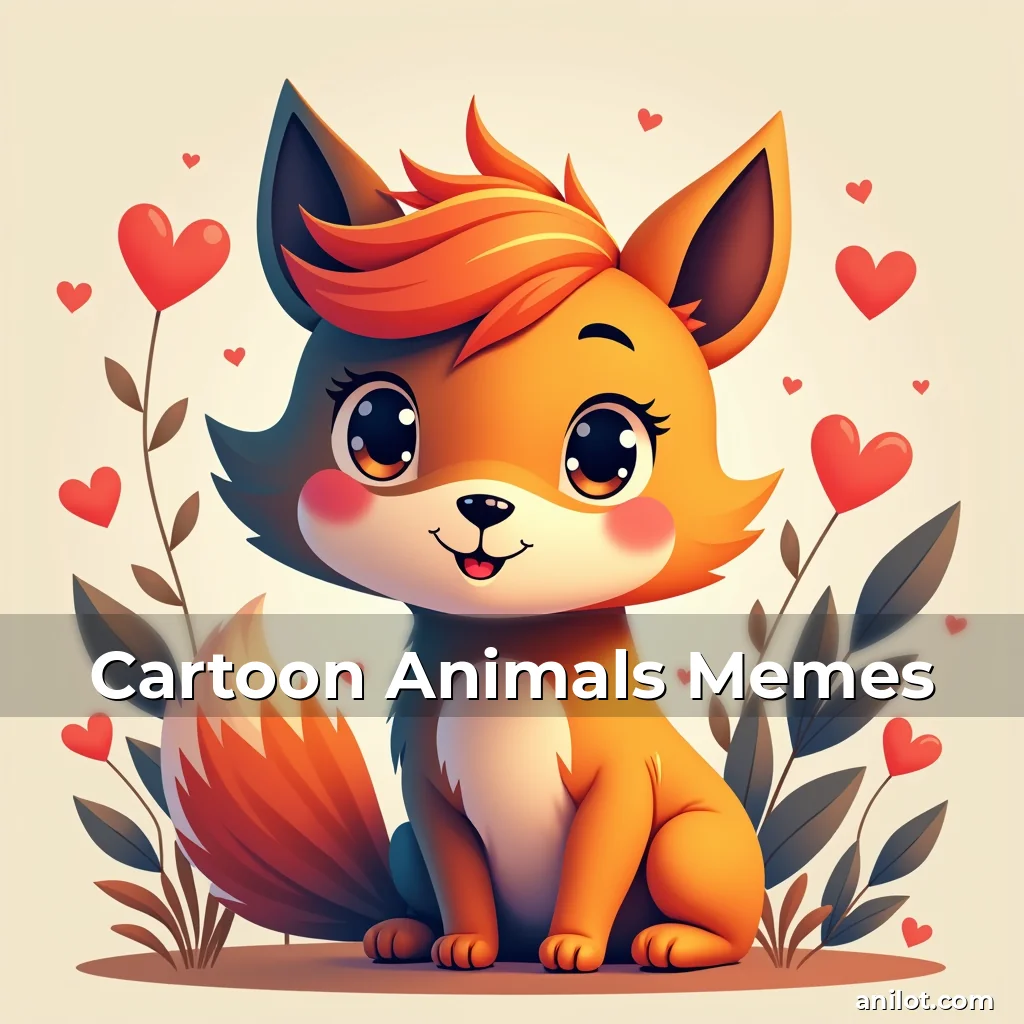
The Endless Delight of Cartoon Animals in Popular Culture
In today’s vibrant digital landscape, cartoon animals have become a cornerstone of global entertainment and internet culture. These whimsical characters capture our imaginations through their exaggerated features, playful personalities, and universal appeal that transcends language barriers.
From classic animated series to modern memes circulating on social media platforms, cartoon animal imagery continues to evolve while maintaining its core charm. This enduring popularity has created a thriving community where fans share, create, and celebrate these beloved characters across various online spaces.
The Evolution of Cartoon Animal Characters
Cartoon animals trace their roots back to early 20th century animation pioneers who sought creative ways to personify nature. The first known instance dates back to Winsor McCay’s Gertie the Dinosaur in 1914, which marked a significant milestone in character animation history.
This groundbreaking work paved the way for future creators to explore anthropomorphized animal characters. By the mid-century, Looney Tunes introduced iconic figures like Bugs Bunny and Daffy Duck, whose clever antics redefined what audiences expected from animated performances.
As television became widespread in the 1950s, shows like The Huckleberry Hound Show brought colorful animal characters into homes worldwide. These early examples established foundational elements still seen in contemporary cartoon creations.
- Multicultural Influence: Global animation traditions contributed diverse perspectives, such as Japan’s Studio Ghibli creating spiritual animal portrayals unlike Western counterparts.
- Technological Advancements: Digital animation techniques revolutionized how animators bring animal characters to life, enabling greater expressive range and visual complexity.
Modern streaming services now offer entire libraries dedicated to animal-centric cartoons, reflecting both changing viewer preferences and technological capabilities shaping current productions.
The Psychology Behind Our Love for Cartoon Animals
Scholars suggest several psychological factors explain why cartoon animals resonate so deeply with people. Their simplified forms make them instantly recognizable while allowing ample room for creative interpretation by artists and viewers alike.
A study published in the Journal of Animation Studies found that audiences connect emotionally with cartoon animals due to their childlike simplicity combined with relatable human traits. This dual nature allows viewers to project themselves onto these characters effortlessly.
Moreover, the anthropomorphic aspect enables us to see ourselves reflected in non-human beings, making complex emotions easier to understand and process through familiar narratives involving animals we inherently find endearing.
Research also indicates that viewing cartoon animals can trigger mirror neuron activity similar to observing real-life interactions, enhancing emotional engagement beyond mere visual appreciation.
Iconic Cartoon Animal Franchises Across Decades
Several long-running franchises demonstrate the lasting impact of well-crafted animal characters. SpongeBob SquarePants remains one of the most successful children’s programs featuring sea creatures since its debut in 1999.
The show’s success lies in its ability to balance humor with heartwarming moments between its sponge and starfish protagonists. Its longevity proves there’s enduring value in consistently entertaining yet meaningful storytelling centered around animals.
Pixar’s Toy Story franchise offers another compelling example through its talking toys, though the central relationship between Woody and Buzz Lightyear showcases emotional depth often associated with animal friendships.
More recently, DreamWorks’ How to Train Your Dragon series has captivated audiences with its portrayal of Viking-boy relationships with dragons, blending fantasy with genuine emotional connection between species.
These varied approaches illustrate different methods for creating impactful stories through animal characters, each finding its own unique audience and cultural footprint.
Cartoon Animals in Social Media and Meme Culture
The rise of social media platforms has transformed how we engage with cartoon animal content. Memes featuring popular characters spread rapidly, often taking on new meanings within different communities.
TikTok trends frequently feature animated animals used in humorous situations that comment on societal issues without being overtly political. For example, the “Distracted Boyfriend” meme gained renewed attention when adapted with animal versions expressing consumer behavior patterns.
Reddit threads dedicated to fan art regularly showcase user-created variations of classic cartoon animals in unexpected contexts. This participatory culture fosters creativity among users who reinterpret existing characters according to their personal experiences.
Twitter’s character limit encourages brevity, leading to punchier memes where cartoon animals are used effectively to convey nuanced messages within limited space constraints.
Instagram influencers often incorporate cartoon animal avatars into their brand identities, leveraging nostalgia factor while appealing to younger demographics seeking retro aesthetics.
Famous Cartoon Animal Artists and Studios
Behind every beloved cartoon animal is a team of talented artists working tirelessly to bring them to life. Walt Disney Studios pioneered many animation techniques that continue influencing the industry today.
DreamWorks Animation has made notable contributions with films like Madagascar and Kung Fu Panda, showcasing versatile animal characters ranging from lemurs to pandas.
Studio Ghibli maintains a distinct artistic style emphasizing environmental themes through their animal portrayals, as seen in My Neighbor Totoro and Princess Mononoke.
Independent studios like Cartoon Network’s Adult Swim division push creative boundaries with shows like Rick and Morty, though their primary focus isn’t solely on animal characters.
Newer digital studios experiment with interactive formats, letting audiences influence storylines through choices involving animal characters in virtual environments.
Educational Value of Cartoon Animal Content
Beyond entertainment, cartoon animals serve crucial educational purposes. Animated documentaries like Earth: One Amazing Day present wildlife information in digestible formats suitable for all ages.
Kids’ programming often uses anthropomorphic animals to teach moral lessons subtly rather than through direct instruction. Shows like Wild Kratts combine education with adventure using animal-themed narratives.
Interactive learning apps employ cartoon animal characters to help children grasp complex concepts like mathematics or science through gamified experiences.
Language learners benefit from cartoon animals appearing in educational materials, providing context clues through visual cues alongside textual information.
Even adults find value in educational animations explaining scientific phenomena using animal metaphors that simplify abstract theories into understandable terms.
Preserving Traditions While Embracing Innovation
The ongoing evolution of cartoon animals requires balancing tradition with innovation. Classic shows like The Simpsons maintain their signature style despite decades-long production runs.
Meanwhile, newer series integrate cutting-edge technology such as motion capture to enhance realism while keeping the essence of animal characters intact.
Traditional hand-drawn animation faces challenges but persists through niche markets and indie productions valuing its unique aesthetic qualities.
Voice acting remains essential even in CGI-heavy productions, ensuring characters retain distinctive personalities regardless of medium advancements.
Collaborations between veteran animators and emerging talent foster knowledge transfer, preserving artistic heritage while embracing fresh perspectives.
The Future of Cartoon Animal Entertainment
Advances in AI-driven animation promise exciting developments for cartoon animal content creation. Machine learning algorithms could assist in generating dynamic animal behaviors previously difficult to animate manually.
Virtual reality experiences may allow deeper immersion with cartoon animal worlds, offering interactive adventures where users can explore fantastical ecosystems populated by animated creatures.
Augmented reality applications might enable personalized encounters with cartoon animals overlaid onto real-world environments, blurring lines between fiction and reality in innovative ways.
Streaming platforms continue expanding their catalogs with original content focusing specifically on animal-centric narratives, indicating strong market demand for such material.
Despite rapid changes, fundamental aspects of cartoon animal storytelling will likely remain unchanged – they’ll continue serving as vessels for exploring human experiences through their fascinating personas.
Conclusion
Cartoon animals occupy a special place in our collective consciousness, bridging gaps between generations and cultures through shared visual languages.
Whether enjoyed through traditional media, digital platforms, or educational tools, these charming characters enrich our lives in countless ways that extend far beyond simple entertainment value.


news is a contributor at AniLot.com. We are committed to providing well-researched, accurate, and valuable content to our readers.
You May Also Like

Animated Animal Content Monetization
Animated Animal Content Monetization Strategies for Creators In today’s digital landscape, animated animal content has emerged as a powerful medium...
Creating Kids Animation
The Magic Behind Creating Captivating Kids’ Animations In today's digital age, kids' animations have become more than just entertainment; they're...
Digital Animal Art Portfolio
The Evolution and Mastery of Digital Animal Artistry In recent years, digital animal art has emerged as a vibrant medium...
Animal Cartoons Saturday Morning
Animal Cartoons Saturday Morning The world of animal cartoons has captivated generations of viewers, blending humor, adventure, and creativity through...