


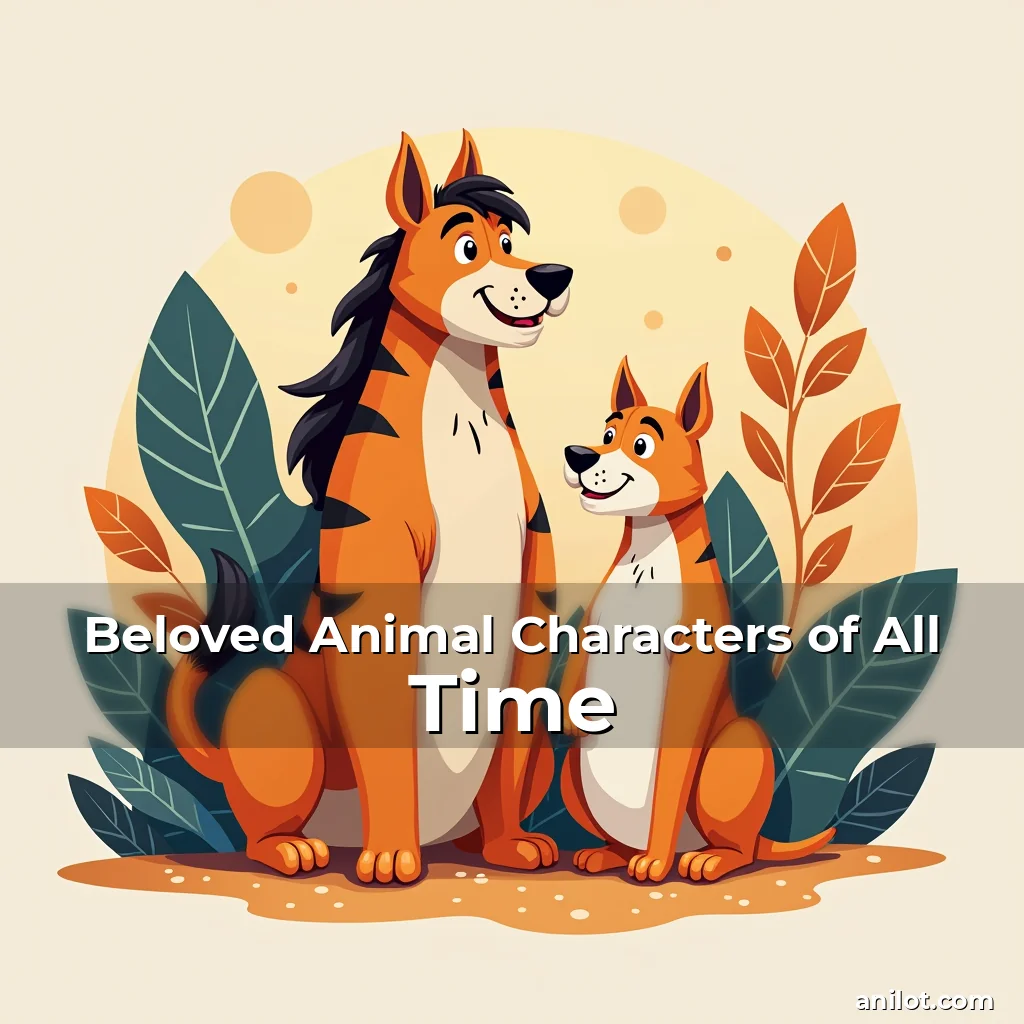
Beloved Animal Characters of All Time
In the vast landscape of storytelling, animal characters have long held a special place in our hearts. From ancient fables to modern animated films, these creatures bring life, humor, and wisdom to narratives that captivate audiences across generations.
Their universal appeal stems from their ability to embody human traits while remaining relatable through familiar forms. Whether they’re wise old owls or mischievous raccoons, animals provide a lens through which we can explore complex emotions and moral lessons without the weight of realism.
The Enduring Legacy of Classic Animal Characters
Few characters resonate as deeply as those who’ve stood the test of time. These figures are not merely fictional beings but cultural touchstones that continue to shape how we perceive both stories and nature itself.
Tales such as Aesop’s Fables introduced anthropomorphic animals centuries ago, using them to convey profound truths about human behavior. The tortoise’s perseverance against the hare’s arrogance remains one of literature’s most enduring parables.
Disney’s adaptations brought new dimensions to classic tales, transforming simple fables into cinematic experiences that shaped childhoods worldwide. Their interpretations often emphasized themes of friendship and courage over mere moral instruction.
- Aesopic Influence: Ancient Greek fables established foundational character archetypes still used today
- Cultural Adaptations: Different regions reinterpreted animal symbols based on local traditions and values
Modern retellings frequently blend traditional elements with contemporary sensibilities, creating fresh yet recognizable versions of beloved characters. This evolution ensures their relevance even as societal norms change dramatically.
Classic animal characters also serve as bridges between past and present, allowing each generation to find meaning in timeless stories while connecting with ancestral knowledge systems.
Pioneers of Animation: Animals That Shaped the Industry
The golden age of animation saw groundbreaking work featuring animal protagonists that would define entire genres. These creations laid the foundation for visual storytelling techniques still employed today.
Mickey Mouse’s debut in Steamboat Willie marked a turning point in entertainment history. As a mouse with remarkable agility and charm, he became synonymous with Disney magic and set high standards for character design.
Gerald McBoing Boing revolutionized sound effects by showcasing a cat whose vocalizations could be manipulated to create musical expressions. This innovation demonstrated the potential of combining audio and visual elements seamlessly.
Looney Tunes introduced a pantheon of iconic animal characters including Bugs Bunny, Daffy Duck, and Elmer Fudd. Their slapstick comedy and clever dialogue defined cartoon humor for decades.
These pioneers proved that animals could carry complex personalities and emotional depth, challenging perceptions about what constitutes compelling storytelling.
The legacy of early animators lives on through current creators who draw inspiration from these trailblazing works when developing new animal-centric narratives.
Animal Companions in Literature and Film
Literature has always featured animals as loyal companions, providing comfort and insight to human characters during pivotal moments. These relationships often reflect deeper themes about loyalty and understanding.
Sherlock Holmes’ dog Toby offered quiet support rather than direct involvement, representing the value of steadfast presence in times of stress. His role highlighted the importance of non-verbal communication in human-animal bonds.
Huck Finn’s adventures with Jim were accompanied by various animals that symbolized different aspects of freedom and survival. Each creature played a distinct symbolic role within the narrative framework.
Children’s books especially emphasize the transformative power of animal friendships. Winnie-the-Pooh’s interactions with his friends demonstrate the beauty of simple pleasures and shared joy.
Even in darker literary contexts, animal companions serve crucial functions. In Charlotte’s Web, Wilbur’s relationship with Charlotte offers hope amid inevitable mortality.
These examples illustrate how animal characters enrich stories with layers of meaning beyond surface-level plot developments.
Animals as Symbols in Storytelling
Throughout history, cultures have assigned deep significance to particular animals, shaping collective consciousness around certain species. These associations persist in modern media and influence how we interpret animal characters.
Eagles represent strength and vision in many Western traditions, while dragons signify both danger and hidden wisdom in Eastern mythology. Such symbolism provides shorthand meanings that instantly connect with audiences.
Rabbits often symbolize fertility and renewal due to their rapid reproduction rates, making them natural choices for springtime narratives or rebirth themes. Similarly, snakes commonly represent transformation because of their shedding process.
Understanding these cultural associations helps creators craft characters that resonate intuitively with viewers. It allows for instant recognition of thematic elements without needing explicit exposition.
However, modern storytellers increasingly challenge traditional symbolism by subverting expectations. Animated series might portray eagles as cunning tricksters instead of noble warriors, adding complexity to familiar icons.
This evolution reflects changing social attitudes and expanding perspectives about the roles animals play in human society.
The Rise of Anthropomorphic Heroes
The twentieth century witnessed an explosion of anthropomorphic characters taking center stage in popular culture. These figures blurred the line between human and animal identities in fascinating ways.
Bugs Bunny’s witty banter and self-awareness made him arguably the first truly personified animal protagonist. His famous catchphrase “What’s up, doc?” showcased a level of sophistication rarely seen before in cartoons.
Dumbo’s story of overcoming physical limitations through determination resonated strongly with audiences facing personal challenges. His flying elephant persona became an emblem of resilience.
Garfield’s grumpy yet lovable personality created a paradoxical charm that appealed to adults seeking humor with edge. His disdain for Mondays became part of mainstream vernacular.
These characters succeeded precisely because they maintained their essential animal characteristics while expressing distinctly human emotions and conflicts.
The success of these anthropomorphs paved the way for future generations of animal heroes who would further redefine what it means to be both animal and human simultaneously.
Contemporary Innovations in Animal Character Design
Today’s creators push boundaries with innovative approaches to designing animal characters that challenge previous conventions. These advancements reflect evolving artistic sensibilities and technological capabilities.
CGI technology enables unprecedented levels of detail and movement, allowing for hyper-realistic animations that blur the lines between actual animals and fictional characters. This has opened new possibilities for immersive storytelling experiences.
Designers now experiment with hybrid forms, blending features from different species to create entirely new creatures. These chimeras offer fresh metaphors for exploring complex themes.
Environmental concerns have influenced recent character development, leading to more ecologically conscious representations that highlight conservation issues through narrative structure.
Interactive media platforms allow users to engage directly with animal characters, fostering deeper connections through personalized experiences. Virtual reality applications take this engagement to new heights.
These innovations ensure that animal characters remain relevant in an ever-changing media landscape, continually adapting to capture audience imaginations in novel ways.
Animal Characters in Educational Media
Educational programs frequently employ animal characters to make learning more accessible and engaging for young minds. These figures help demystify complex subjects through relatable personas.
Show & Tell uses talking animals to explain scientific principles in entertaining formats. Its approach makes abstract concepts tangible through humorous interactions.
Bill Nye the Science Guy incorporated live-action animals alongside animated ones to bridge theoretical knowledge with real-world observations. This combination enhanced comprehension significantly.
Public television initiatives like Sesame Street use Muppets with animal features to teach literacy skills. Their playful nature keeps children motivated to learn despite challenges.
These educational tools prove that effective teaching doesn’t require sacrificing fun. When learning becomes enjoyable, retention improves dramatically.
As pedagogical methods evolve, so too do the strategies behind incorporating animal characters into curriculum-focused content.
The Global Appeal of Animal Characters
Despite language barriers, animal characters transcend geographical boundaries to become universally understood symbols. Their simplicity allows for cross-cultural interpretation that fosters global connections.
Cartoon Network’s programming reaches millions worldwide, proving that well-crafted animal characters need no translation to be appreciated. Simple designs and clear motivations facilitate international accessibility.
Japanese anime often features animal mascots that achieve global popularity, demonstrating that cultural specificity doesn’t hinder widespread appeal. Pikachu’s success is a prime example of this phenomenon.
International collaborations in film production showcase how animal characters can unite diverse creative teams under common goals. Shared understandings about these figures enable successful cross-border projects.
Streaming services have amplified this reach by making globally produced content available to niche audiences everywhere. This democratization of access reinforces the universality of animal characters.
From urban centers to remote villages, people of all backgrounds recognize and relate to these creatures, cementing their status as true global ambassadors of storytelling.
The Future of Animal Characters in Storytelling
As technology advances at breakneck speed, the future promises exciting transformations in how we experience animal characters. New mediums will emerge to expand storytelling possibilities beyond current limitations.
Virtual reality environments may soon allow users to interact with fully realized digital animals in lifelike settings. These immersive experiences could redefine what it means to engage with fiction.
Artificial intelligence integration opens intriguing possibilities where animal characters respond dynamically to user input, creating personalized narrative paths never before imagined.
Biotechnology breakthroughs might eventually lead to bioengineered creatures capable of performing tasks previously reserved for mechanical devices. This convergence of biology and technology raises ethical questions worth considering.
Regardless of these developments, the core essence of animal characters—their ability to evoke empathy and provoke thought—will likely endure unchanged. They’ll simply manifest in new, unexpected forms.
Future generations will inherit a rich tradition of animal-based storytelling while forging original pathways that reflect contemporary realities and aspirations.
Conclusion
The journey through beloved animal characters reveals their enduring impact on culture and imagination. These creatures have transcended simple entertainment to become powerful vessels of meaning and connection.
Whether guiding us through moral dilemmas or sparking laughter, they’ve enriched countless narratives across generations. Their versatility allows them to adapt continuously while maintaining fundamental emotional resonance.
Looking ahead, the continued evolution of these characters promises to inspire new forms of expression and understanding. Their presence reminds us of the unbreakable bond between humanity and the natural world.
By embracing both tradition and innovation, we honor the legacy of these extraordinary beings while welcoming the creative possibilities yet to unfold. Let us cherish and celebrate the magical world of animal characters that continues to delight and educate us daily.


news is a contributor at AniLot.com. We are committed to providing well-researched, accurate, and valuable content to our readers.
You May Also Like

Animated Wildlife Stories Nature
The Enchanting World of Animated Wildlife Stories: Bridging Culture and Conservation In an age where digital creativity intersects with environmental...
Quality Animation for Kids
The Magic World of Animation for Children: A Journey Through Creativity and Learning Animation holds a special place in the...
Designing Cartoon Animals
The Artistic World of Cartoon Animals: A Creative Exploration In today's vibrant artistic landscape, cartoon animals have emerged as a...
Wildlife Animation vs Photography
The Artistic Evolution and Technical Mastery Behind Wildlife Animation In an era where digital creativity reigns supreme, wildlife animation has...