


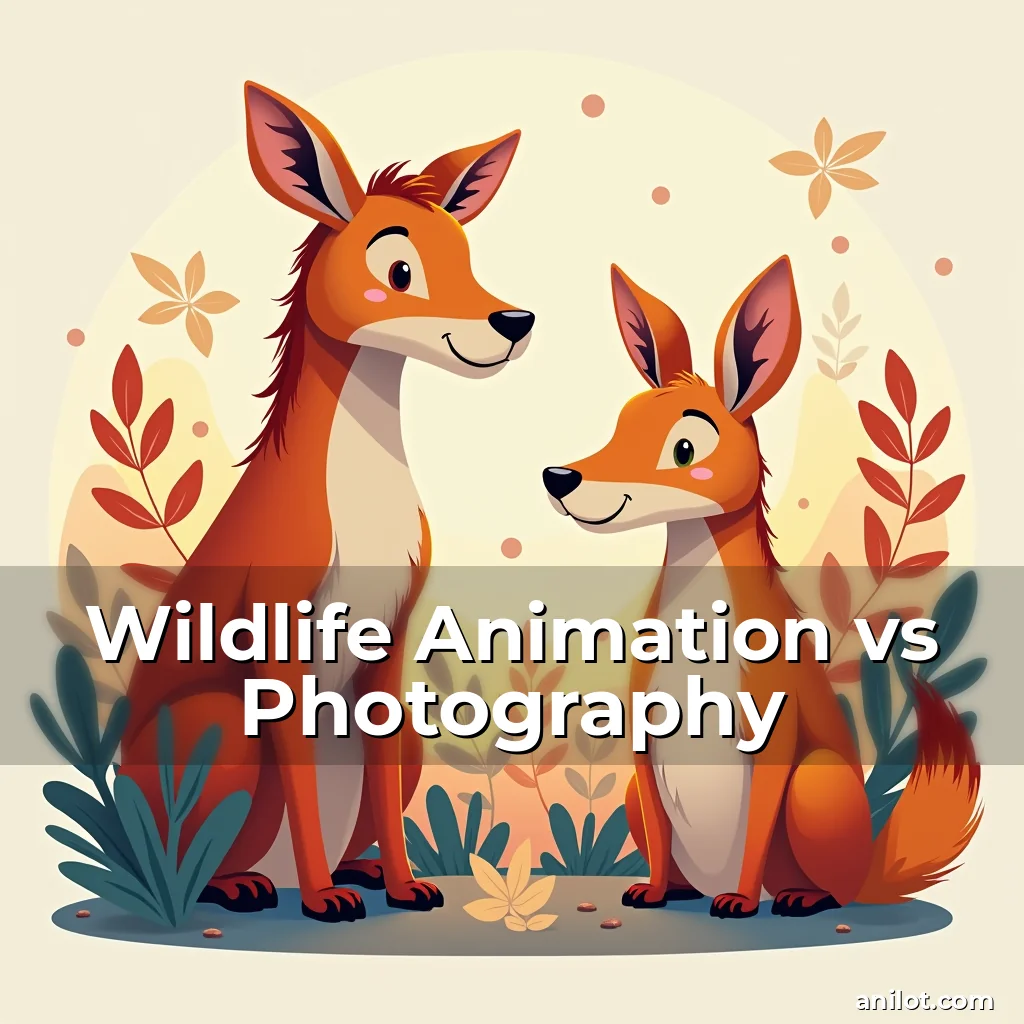
The Artistic Evolution and Technical Mastery Behind Wildlife Animation
In an era where digital creativity reigns supreme, wildlife animation has emerged as a captivating medium that bridges nature’s wonders with artistic expression. This intricate craft allows animators to breathe life into animals, ecosystems, and natural phenomena through meticulously crafted visuals that enchant audiences worldwide.
From the lush rainforests of Southeast Asia to the icy tundras of Antarctica, animated representations of wildlife offer unparalleled opportunities to explore biodiversity while preserving authenticity in visual storytelling. The synergy between technology and artistry in this field continues to push creative boundaries, making it both scientifically informative and artistically compelling.
The Intersection of Science and Creativity in Wildlife Animation
At its core, wildlife animation demands a delicate balance between scientific accuracy and artistic interpretation. Animators must first immerse themselves in extensive research to understand animal behavior patterns before translating these observations into dynamic motion sequences.
This process begins with studying real-world footage of target species, analyzing their movements down to minute details such as gait mechanics and body posture. Researchers often collaborate closely with biologists to ensure that every flicker of fur movement or subtle change in eye color remains faithful to reality.
- Biological Accuracy: Incorporating verified anatomical data ensures that creatures move according to their actual physiology rather than stylistic preferences.
- Ecosystem Representation: Depicting habitats accurately helps maintain ecological context, which is crucial for educational animations aimed at conservation awareness.
Animals’ interactions within environments also require careful consideration – from how predators stalk prey to the way migratory birds navigate vast distances using celestial cues. These nuances are painstakingly recreated through advanced motion capture technologies combined with traditional hand-drawn techniques when necessary.
Creative liberties come into play only after establishing solid foundations in factual representation. Artists might enhance certain features for dramatic effect without compromising essential biological truths, creating visually stunning narratives that remain grounded in scientific integrity.
Making Nature Move: Techniques Used in Wildlife Animation
Creating lifelike animations involves a multi-faceted approach combining various cutting-edge methodologies. Traditional frame-by-frame animation still holds relevance today, especially when depicting complex organic movements requiring precise control over each individual element.
Digital tools have revolutionized the industry by offering powerful software solutions capable of simulating realistic physics-based behaviors. Programs like Maya and Blender allow artists to manipulate virtual environments with remarkable precision, enabling them to experiment with different scenarios safely and efficiently.
One particularly transformative technique involves rigging systems that enable animators to create flexible skeletons for characters. These rigs consist of interconnected joints controlled through intuitive interfaces, allowing for smooth transitions between poses during animation sessions.
For aquatic scenes involving marine life, specialized fluid dynamics simulations help recreate water resistance effects accurately. Such simulations consider factors like viscosity differences across various types of liquids encountered underwater, ensuring believable interactions between animals and their surroundings.
Lighting plays another critical role; accurate shading algorithms replicate how light interacts differently with diverse surfaces found in natural settings – from the reflective properties of wet feathers to the translucency of jellyfish bodies.
Recent advancements include AI-assisted animation tools that analyze existing motion data sets to generate new sequences automatically. While human oversight remains vital, these innovations significantly reduce production time without sacrificing quality standards.
The Role of Sound Design in Enhancing Wildlife Visuals
Sonic elements serve as invisible brushstrokes painting atmospheric depth onto animated landscapes. A well-crafted soundscape can transform flat images into immersive experiences that resonate emotionally with viewers regardless of their prior knowledge about specific animals.
Nature documentaries have long demonstrated the power of sound design in evoking strong emotional responses – from the haunting calls echoing through dense forests to the rhythmic beat of wings against air currents. These auditory cues not only inform but also deeply engage audiences on subconscious levels.
Animators carefully curate audio libraries containing authentic recordings collected from various global locations. They then apply sophisticated editing techniques to blend these raw materials seamlessly with synthesized components tailored specifically for particular scenes.
Voice modulation capabilities enable creators to adjust pitch frequencies subtly, mimicking vocalizations across different species realistically. For instance, adjusting resonance characteristics allows for distinguishing between avian songs versus mammalian growls effectively.
Environmental ambience layers add further dimensionality by incorporating background noises like rustling leaves or distant thunder rumbling overhead. These layered soundscapes build rich auditory tapestries that complement visual elements perfectly.
Auditory illusions created through panning effects simulate spatial orientation – placing listeners virtually inside simulated habitats by manipulating directional acoustics accordingly. Such techniques make even simple animations feel incredibly vivid and present.
Case Studies: Iconic Examples of Wildlife Animation Excellence
Several landmark projects showcase how mastery of technical skills converges beautifully with narrative artistry in wildlife animation. One notable example is Disney’s “The Lion King,” which reimagined African savannahs with breathtaking attention to detail despite being primarily fictionalized interpretations.
This film utilized groundbreaking computer-generated imagery alongside traditional hand-painting methods to depict majestic lions moving gracefully across golden plains under expansive skies. Every movement was studied extensively based on real lion behavior observed by researchers working closely with the production team.
“Finding Nemo” presents another fascinating case study focusing on marine biology accuracy. Pixar invested heavily in consulting oceanographers who provided invaluable insights regarding fish schooling behaviors and coral reef ecosystems depicted throughout the movie.
The result was a visually stunning portrayal of underwater worlds filled with vibrant colors and mesmerizing patterns characteristic of tropical seas. Even minor details like bubble trails left behind swimming creatures were meticulously rendered for added realism.
More recently, BBC Earth’s animated series “Blue Planet II” employed state-of-the-art CGI techniques combined with real-life footage captured via deep-sea submersibles. This hybrid approach allowed viewers unprecedented access to previously unseen marine life forms thriving in extreme conditions beneath the waves.
Each project demonstrates varying degrees of technological advancement applied toward achieving distinct storytelling goals. Whether aiming for pure entertainment value or educational purposes, successful wildlife animations consistently prioritize viewer engagement above all else.
Conservation Awareness Through Animated Storytelling
Animated depictions of wildlife hold immense potential beyond mere aesthetic appreciation – they actively contribute to environmental education initiatives worldwide. By presenting endangered species in relatable formats, animations raise public consciousness about pressing ecological issues facing our planet today.
Documentaries featuring animated segments often highlight habitat destruction caused by deforestation activities or illegal poaching operations targeting rare animals for profit motives. These messages become more impactful when delivered through engaging narratives rather than dry statistical reports alone.
Interactive platforms now utilize gamified learning modules where users encounter animated versions of threatened animals encountering challenges related to climate change impacts. Players learn survival strategies indirectly while experiencing vicarious connections with these creatures.
Some organizations develop mobile applications featuring augmented reality features that superimpose animated animals onto real-world backgrounds using smartphone cameras. Users can observe virtual polar bears wandering Arctic regions overlaid digitally onto urban landscapes, prompting reflections on melting ice caps due to rising temperatures.
These innovative approaches demonstrate how modern technology enables educators to reach broader demographics effectively. Younger generations growing up immersed in digital media find animated content particularly appealing compared to conventional teaching methods.
By leveraging emotive storytelling techniques, animated presentations foster deeper empathy towards wildlife conservation efforts. Viewers form personal attachments to animated characters representing real animals, increasing likelihood of supporting protective measures aimed at preserving natural habitats globally.
Educational Applications Beyond Entertainment
While many associate wildlife animation solely with blockbuster films or television programs, its utility extends far beyond entertainment value. Educational institutions increasingly incorporate animated resources into science curriculum designs focused on zoology studies.
Virtual dissections conducted entirely through interactive 3D models replace traditional laboratory procedures potentially harmful to live specimens. Students gain hands-on experience exploring internal structures of various organisms safely and repeatedly without ethical concerns associated with physical experimentation.
Animated timelines illustrating evolutionary processes provide clearer understanding of gradual changes occurring over millennia periods difficult to grasp intuitively otherwise. These visual aids break down complex theories into digestible information suitable for learners at any age level.
Augmented reality headsets equipped with specialized software let students examine microscopic details of plant cells or insect exoskeletons magnified hundreds times larger than normal visibility limits. Such innovations open doors to exploration possibilities once unimaginable within standard classroom environments.
Online learning platforms host vast repositories containing thousands of curated animations explaining everything from photosynthesis mechanisms to predator-prey relationships within food chains. These resources cater specifically to remote learners lacking direct access to physical museums or botanical gardens.
Teachers benefit immensely from customizable lesson plans integrating pre-designed animated segments addressing specific topics aligned precisely with standardized testing requirements. This flexibility ensures consistent delivery of key concepts regardless of geographical location or institutional constraints.
Fostering Future Animators: Education Pathways and Career Opportunities
As demand grows exponentially for high-quality wildlife animations across industries ranging from advertising campaigns to documentary filmmaking, aspiring professionals need structured pathways guiding them toward mastering relevant skill sets.
Pursuing formal education through accredited animation schools provides foundational knowledge covering essential principles including character development, storyboarding, cinematography basics, and special effects creation. Coursework typically includes intensive practice sessions refining drawing abilities crucial for producing clean line work required in professional productions.
Internship programs offered by studios specializing in nature-related projects expose trainees firsthand to collaborative workflows typical within large-scale animation enterprises. Mentoring from experienced directors teaches practical aspects of managing tight deadlines inherent in commercial assignments.
Specialization areas vary widely depending upon interests – some may choose concentrating exclusively on creature design while others prefer focusing on environmental modeling expertise. Electives courses available at top-tier universities cover niche subjects such as biomechanics analysis applicable directly to wildlife animation tasks.
Continuing education remains vital given rapid pace of technological evolution shaping current trends. Professionals regularly attend workshops demonstrating latest rendering engines or participate in online forums exchanging ideas about emerging tools transforming workflow efficiencies significantly.
Career prospects span numerous sectors beyond conventional media outlets – video game developers seek skilled animators capable of designing non-playable characters interacting naturally within virtual worlds; scientific visualization experts rely heavily on those adept at translating complex datasets into comprehensible graphical representations; even fashion designers sometimes employ animators helping conceptualize fabric textures inspired by animal camouflage patterns.
Challenges Facing Wildlife Animators Today
Despite remarkable achievements made so far, wildlife animators continue confronting formidable obstacles impeding progress toward greater realism and efficiency. Technological limitations persist concerning simulation fidelity achievable currently within reasonable budgetary confines.
Accurately replicating intricate physiological functions remains challenging task requiring substantial computational power exceeding capacities affordable by independent creators operating outside major studio infrastructures. Solutions involve optimizing asset complexity through smart LOD management techniques reducing polygon counts selectively without perceptibly affecting overall visual quality.
Acquiring high-resolution reference material proves equally problematic since many species reside in inaccessible terrains or nocturnal lifestyles making observation difficult without disturbing natural behaviors. Drone photography combined with infrared imaging offers partial remedies though still falls short of perfect clarity desired ideally.
Collaboration hurdles arise frequently between artists possessing divergent visions regarding final product aesthetics versus scientists prioritizing strict adherence to empirical evidence over stylistic embellishments. Mediating these conflicting priorities necessitates clear communication channels established early during project planning phases.
Legal considerations surrounding intellectual property rights complicate matters further whenever depicting protected species governed by international treaties restricting unauthorized reproductions. Securing appropriate permissions becomes mandatory step preceding any official release schedules.
Lastly, sustainability concerns surface periodically regarding energy consumption levels involved in running high-performance hardware necessary for executing demanding render jobs. Eco-conscious studios implement green computing practices minimizing carbon footprints generated throughout entire production pipelines.
The Future Landscape of Wildlife Animation Innovation
Ongoing developments promise exciting transformations poised to redefine what constitutes possible within wildlife animation domain going forward. Emerging technologies continually expand horizons opening up novel avenues never before considered feasible technologically speaking.
Artificial intelligence integration stands out prominently among most anticipated breakthroughs capable of reshaping workflows fundamentally altering how animations get produced altogether. Machine learning algorithms trained extensively on massive databases comprising motion capture records now assist in generating plausible action sequences autonomously.
Real-time rendering capabilities enabled through cloud computing architectures eliminate previous bottlenecks imposed by processing delays traditionally hampering iterative refinement cycles common place in conventional pipeline setups. This shift empowers teams experimenting rapidly with multiple variations simultaneously improving productivity dramatically.
Haptic feedback devices connected wirelessly facilitate tactile interaction experiences enhancing immersion levels substantially surpassing purely visual stimulation alone could achieve. Virtual reality environments populated by animated wildlife entities respond dynamically to user inputs creating bidirectional engagements unlike anything witnessed hitherto.
Quantum computing potentials loom ominously promising exponential increases in calculation speeds potentially solving longstanding problems relating to photorealism attainment heretofore deemed impractical economically viable options. Though still largely theoretical at present stage, ongoing research suggests eventual feasibility within foreseeable future timelines.
Biometric sensors integrated into wearable tech represent another frontier worth noting wherein physiological responses measured instantaneously influence animated outputs adaptively. Imagine viewing a scene where protagonist’s heart rate detected via wristband affects environment lighting intensity changing accordingly reflecting emotional states conveyed implicitly through ambient illumination shifts.
Such speculative advancements underscore why wildlife animation remains perpetually evolving discipline warranting continuous investment into R&D initiatives pushing ever closer approximation toward achieving full photorealism aspirations sought relentlessly throughout history spanning decades of dedicated innovation efforts thus far.
Conclusion
The journey through the world of wildlife animation reveals a multifaceted discipline blending science, artistry, and technology into seamless creations that captivate and educate. From the meticulous research required to understand animal behaviors to the cutting-edge techniques used in bringing these creatures to life, every aspect contributes to the magic we see on screen.
Aspiring animators and enthusiasts alike will find endless inspiration in the continued growth and innovation within this field. Embracing both the technical challenges and creative opportunities ahead promises a future where wildlife animation not only entertains but profoundly influences perspectives on conservation and natural preservation efforts globally.


news is a contributor at AniLot.com. We are committed to providing well-researched, accurate, and valuable content to our readers.
You May Also Like


Best Animal-Themed Shows Kids
The Ultimate Guide to Captivating Animal-Themed Television Shows for Young Viewers In today's vibrant world of children’s television programming, animal-themed...
Best Animated Wildlife Stories
The Enchanting World of Animated Wildlife Stories: A Journey Through Nature’s Tales In a world where technology meets imagination, animated...
Wildlife Animation Series
The Artistry of Wildlife Animation: Bringing Nature's Creatures to Life Through Digital Craftsmanship In an era where digital storytelling has...

Animation for Kids Screen Time
Animation for Kids Screen Time In today’s digital age, animation has become a powerful tool for engaging children across various...