


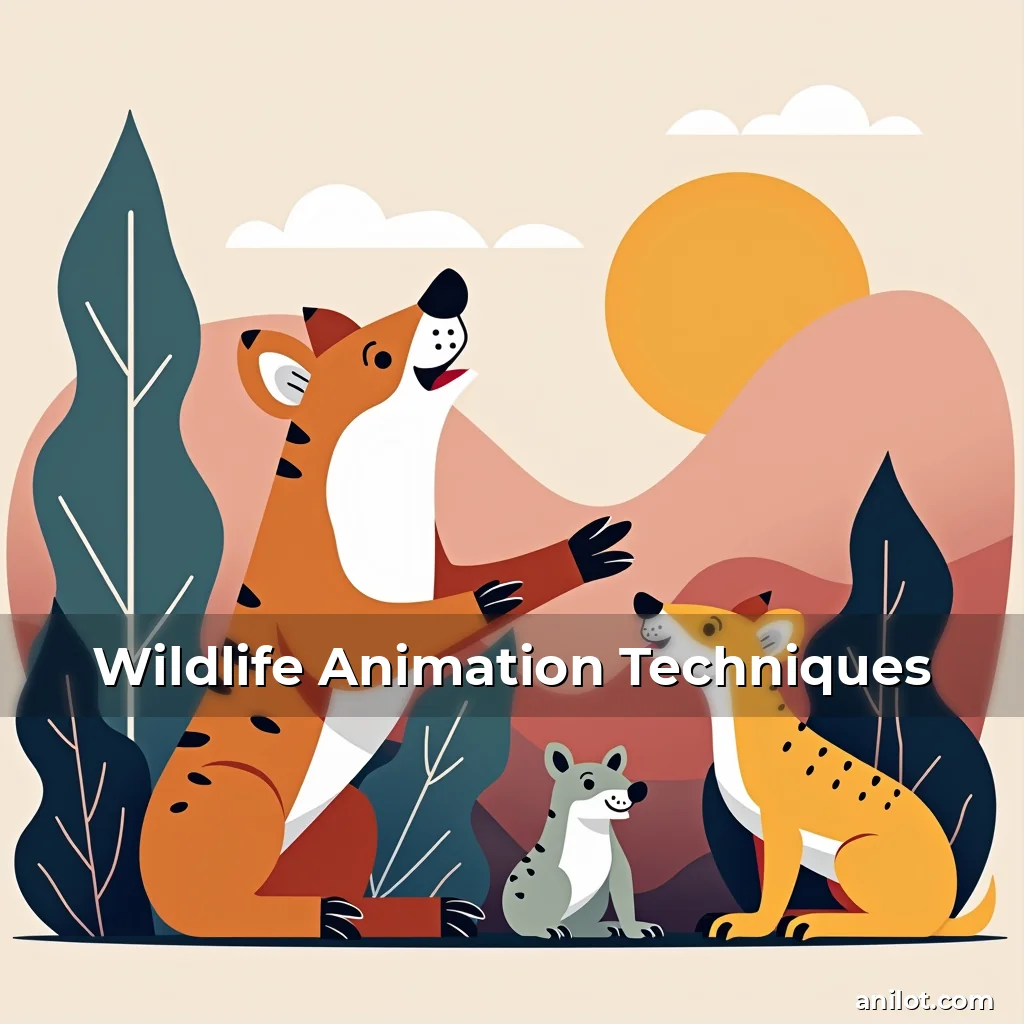
The Artistry Behind Wildlife Animation: Crafting Life from Imagination
In the vibrant world of digital storytelling, wildlife animation stands as a testament to human creativity and technological innovation. This specialized field brings nature’s most captivating creatures to life through intricate designs and dynamic movements, offering audiences immersive experiences that bridge reality and fantasy.
From majestic elephants roaming ancient savannas to elusive snow leopards prowling alpine peaks, wildlife animators transform static sketches into living beings. Their work requires mastery over both biological accuracy and artistic expression, ensuring each creature maintains its natural essence while remaining visually compelling.
Fundamental Principles of Wildlife Animation
Creating believable wildlife animations begins with understanding the core principles that govern animal movement and behavior. Animators must study real-world references extensively before translating these observations onto digital canvases.
This process involves meticulous research into anatomical structures, locomotion patterns, and environmental interactions. By analyzing footage of animals in their habitats, artists gain invaluable insights into how creatures move, interact, and respond to stimuli.
- Anatomical Accuracy: Precise skeletal and muscular structure representation ensures realistic motion without compromising creative freedom
- Movement Analysis: Frame-by-frame studies reveal subtle nuances in gait, posture, and interaction between different body parts during various activities
Artists often collaborate with zoologists and biologists to validate their interpretations, creating animations that are scientifically sound yet artistically expressive. This interdisciplinary approach enhances the authenticity of animated wildlife portrayals across films, documentaries, and educational materials.
The balance between scientific fidelity and aesthetic appeal is crucial. While maintaining biological correctness is essential, artists also apply stylistic choices that enhance visual impact and narrative effectiveness.
Technological Tools Shaping Modern Wildlife Animation
Advancements in computer graphics technology have revolutionized wildlife animation capabilities, enabling unprecedented levels of realism and complexity. From high-resolution rendering engines to sophisticated simulation software, modern tools empower animators to create lifelike creatures with remarkable precision.
Software such as Maya, Blender, and ZBrush provide powerful platforms for modeling, rigging, and texturing wildlife characters. These programs offer extensive toolsets for sculpting intricate fur systems, simulating realistic skin textures, and achieving accurate lighting effects.
Digital sculpting techniques allow artists to build detailed anatomy models by manipulating virtual clay-like material. This method enables precise control over every aspect of an animal’s form, from microscopic follicle arrangements to macroscopic musculature.
Specialized plug-ins and add-ons further expand creative possibilities. Programs like FurShader enable complex hair simulations, while physics-based rendering engines produce photorealistic surface reflections and subsurface scattering effects.
The integration of machine learning algorithms has introduced new dimensions to wildlife animation. AI-driven motion capture systems now analyze vast amounts of reference data to generate highly accurate movement patterns automatically.
Crafting Realistic Animal Movements
Achieving authentic animal movement requires deep understanding of biomechanics and kinematics. Animators break down motions into fundamental components, studying how muscles contract and joints articulate during various actions.
By dissecting movements frame by frame, artists identify key poses and transitional phases that define an animal’s motion. This analytical approach allows them to replicate natural rhythms and accelerations accurately.
Simulating weight distribution is particularly critical when depicting quadrupedal movement. Properly balancing forces across limbs creates convincing locomotion patterns that reflect an animal’s physical characteristics.
Spatial awareness plays a vital role in group behaviors. When animating herds or flocks, artists ensure individuals maintain appropriate distances while following collective movement patterns dictated by environmental factors and social dynamics.
Dynamic interactions with surroundings require careful consideration. Whether an animal is traversing rough terrain or swimming through water, the environment significantly influences movement patterns and energy expenditure.
Color Theory and Textural Representation in Wildlife Animation
Accurate coloration is essential for conveying species-specific traits and adapting to different environments. Artists meticulously research pigmentation patterns, considering how light interacts with various surfaces at different angles.
Texture mapping techniques allow for detailed representation of scales, feathers, and fur. Procedural generation methods can simulate natural variations in pattern density and orientation across an animal’s body.
Shading techniques play a crucial role in defining three-dimensional forms. Subsurface scattering mimics the way light penetrates translucent tissues, producing lifelike translucency in features like ears or wings.
Environmental considerations influence color perception. Artists adjust hues based on ambient lighting conditions, ensuring colors remain consistent under varying illumination scenarios.
Hierarchical texturing approaches help manage complexity. Base layers establish general surface properties, while additional layers refine fine details such as individual feather barbs or fur strands.
Emotional Expression Through Wildlife Character Design
Conveying emotion in wildlife animations requires nuanced character design that reflects both innate behavioral tendencies and situational context. Facial expressions, postures, and body language all contribute to emotional communication.
Certain species exhibit distinctive emotive cues. For example, primates display complex facial expressions, while predators often communicate through body postures and tail positions.
Animators use exaggeration selectively to emphasize emotions without losing biological plausibility. Slight modifications to eye shape or ear position can dramatically alter perceived mood without violating anatomical constraints.
Contextual appropriateness guides emotional portrayal. A predator’s alert stance might convey fear in some situations but confidence in others, depending on surrounding circumstances and interactions.
Non-verbal communication is especially important for herd animals. Researchers have identified dozens of distinct signals used by wildebeest during migration, which animators strive to represent authentically.
Educational Applications of Wildlife Animation
Wildlife animation serves as a powerful educational tool, transforming abstract ecological concepts into tangible visual experiences. Interactive animations make complex topics accessible to learners of all ages and backgrounds.
Virtual ecosystems created through animation allow students to explore biodiversity firsthand. They can observe predator-prey relationships, witness camouflage mechanisms, and understand food chain dynamics in immersive environments.
Animations support conservation education efforts by highlighting endangered species and their habitats. Simulations demonstrate habitat destruction impacts and illustrate potential recovery strategies visually.
Educational institutions increasingly incorporate interactive wildlife animations into curricula. Digital textbooks feature animated diagrams that explain physiological processes and evolutionary adaptations dynamically.
Accessibility improvements benefit diverse learners. Animated tutorials accommodate those with reading difficulties, providing alternative ways to absorb information through visual storytelling.
Pioneering Studios and Individual Contributions
Several studios have made significant contributions to advancing wildlife animation techniques. Pixar’s work on the film Finding Nemo showcased groundbreaking marine life animation that influenced industry standards.
Disney’s The Lion King demonstrated exceptional achievements in portraying African wildlife, combining traditional hand-drawn techniques with emerging CGI technologies. Its success highlighted the commercial viability of wildlife-themed projects.
Individual artists have also left lasting impressions. John Lasseter’s early experiments with animal movement laid foundational principles still applied today. His emphasis on emotional storytelling remains influential in current practices.
Rising talents continue pushing boundaries. Young animators leverage open-source software to develop innovative approaches, democratizing access to professional-grade tools previously limited to established studios.
Collaborative platforms foster knowledge sharing among professionals worldwide. Online communities facilitate mentorship opportunities, allowing experienced artists to guide newcomers in mastering wildlife animation techniques.
Future Directions in Wildlife Animation
Ongoing developments in artificial intelligence promise transformative changes for wildlife animation. Machine learning algorithms may soon predict and generate realistic animal movements autonomously.
Augmented reality applications could redefine how audiences engage with animated wildlife. Imagine exploring a rainforest where augmented animals interact naturally within your environment.
Immersive technologies like VR headsets will likely become standard tools for wildlife animation production. These devices enable creators to walk alongside their characters, observing movements from first-person perspectives.
Biomechanical research continues influencing animation practices. Scientists’ discoveries about muscle function and neural pathways inform more accurate depictions of animal physiology and behavior.
As climate change alters ecosystems globally, wildlife animation will play a growing role in environmental education. Visualizations of shifting habitats and species migrations will become increasingly important for public awareness campaigns.
Conclusion
The art of wildlife animation represents a fascinating intersection of science, technology, and creative expression. It demands technical expertise combined with a deep appreciation for the natural world.
Whether bringing extinct species back to life through digital resurrection or preserving endangered habitats through virtual reconstructions, wildlife animators shape our understanding of the planet’s rich biodiversity.
For aspiring artists entering this field, continuous learning and interdisciplinary collaboration remain essential. Mastery comes not only from refining technical skills but also from cultivating genuine curiosity about the natural world.
Ultimately, wildlife animation transcends entertainment value; it becomes a medium for environmental stewardship and scientific discovery. As we advance technologically, let us remember that our greatest creations stem from our deepest connections with nature itself.


news is a contributor at AniLot.com. We are committed to providing well-researched, accurate, and valuable content to our readers.
You May Also Like

Animal Animation Trends Social Media
The Rise of Animal Animations on Social Media Platforms In recent years, animal animations have taken social media by storm,...
Cartoon Animals in Advertising
The Endless Charm of Cartoon Animals in Popular Culture In a world increasingly dominated by digital media, cartoon animals remain...
Animated Animal Content Production
The Art of Animated Animal Content Creation: A Deep Dive into Captivating Wildlife Narratives In recent years, animated animal content...
Age-Appropriate Animation for Kids
Age-Appropriate Animation for Kids The world of animation has evolved dramatically over the years, becoming a powerful tool for both...