


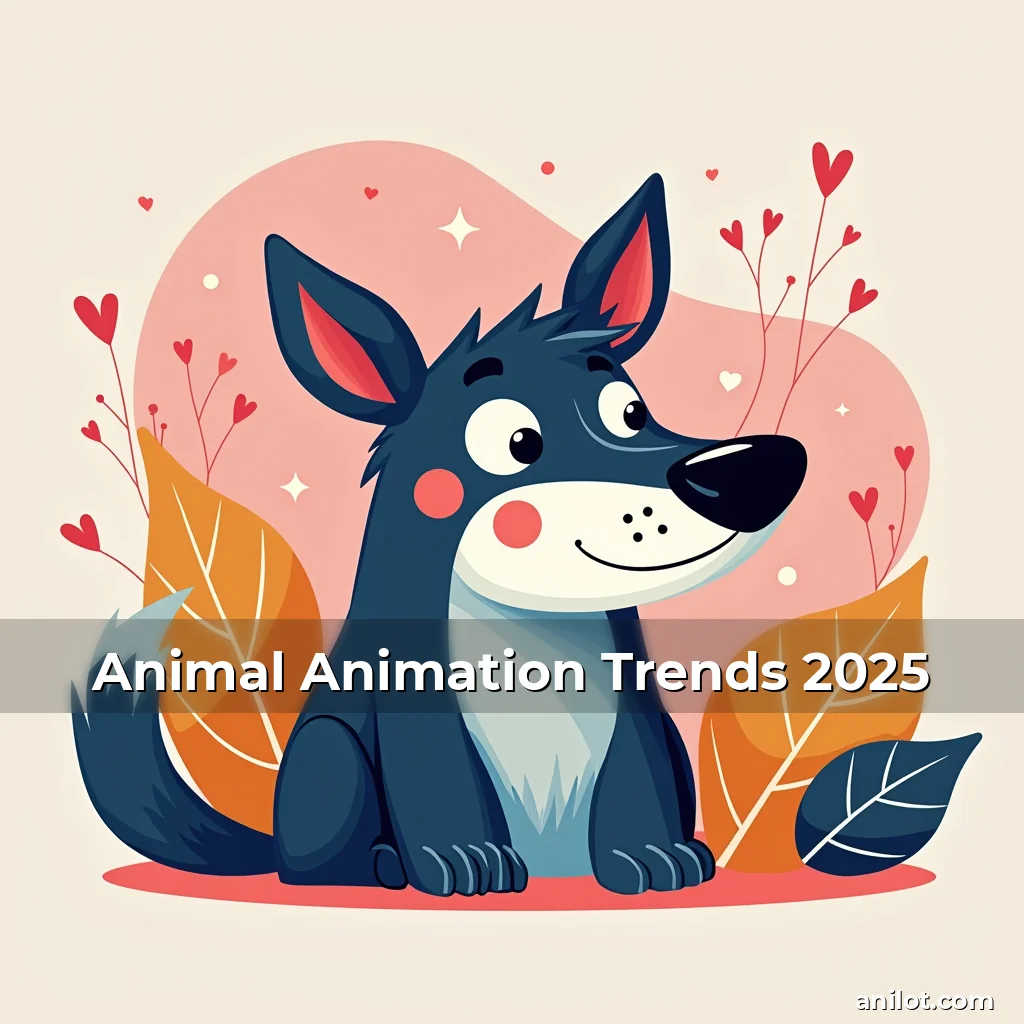
The Future of Animal Animation: Emerging Trends Shaping the Industry in 2025
In 2025, animal animation has reached new creative heights, blending cutting-edge technology with artistic storytelling that resonates across cultures and age groups. From hyper-realistic CGI creatures to stylized anthropomorphic characters, animators are pushing boundaries while maintaining emotional depth and authenticity.
This year’s innovations reflect both technological advancements and evolving audience expectations. As virtual reality integration becomes standard and environmental themes gain prominence, animal animations are becoming more immersive, educational, and socially conscious than ever before.
Redefining Realism Through Photorealistic Rendering
Photorealistic rendering techniques have transformed how animals appear in animated media. Advanced ray tracing algorithms now capture intricate fur textures, realistic eye reflections, and dynamic movement patterns that were previously impossible to achieve.
Animators use high-resolution 8K scans of real animals as reference points, creating digital models that mimic natural behaviors down to the smallest twitch of a whisker or blink of an eyelid. These lifelike portrayals create deeper viewer engagement by blurring the line between fantasy and reality.
For example, studios employ motion capture suits equipped with hundreds of sensors to record every nuance of animal movement. This data is then translated into digital animations that maintain biomechanical accuracy while allowing creative interpretation.
Despite these advances, artists must balance realism with aesthetic appeal. Overly precise renderings can sometimes feel sterile rather than magical, prompting many creators to adopt hybrid approaches combining photorealism with stylized features.
- Fur Simulation: New physics-based simulations allow individual hair strands to react naturally to wind, water, and physical contact, enhancing visual fidelity without compromising performance efficiency.
- Eye Tracking Technology: Adaptive pupil dilation and corneal reflection systems make animal eyes appear more expressive and emotionally responsive during complex scenes.
- Bone Structure Mapping: Digital skeletons based on anatomical research ensure accurate limb movements and weight distribution during running, jumping, and other physical activities.
The Rise of Anthropomorphic Storytelling
Anthropomorphism continues to thrive in animal animation, but with fresh narratives that challenge traditional tropes. Modern stories often explore complex social issues through animal protagonists who embody human experiences in unexpected ways.
Creative teams are moving beyond simple caricatures to develop well-rounded characters with distinct personalities, motivations, and moral dilemmas. This approach allows for richer character development while maintaining the inherent charm of non-human perspectives.
Recent productions demonstrate this shift by incorporating nuanced relationships between species, exploring themes such as interspecies cooperation, ecological interdependence, and cultural diversity within animal communities.
Notable examples include series where different animal families navigate modern urban environments together, facing challenges that parallel human societal problems while offering unique solutions through their biological advantages.
Evolution of Character Design
Character design processes have become significantly more sophisticated, integrating psychological profiling alongside traditional aesthetics. Animators now consult behavioral scientists to ensure expressions match emotional states accurately.
One studio developed a proprietary system that maps vocal inflections to facial expressions in real-time, ensuring consistency between dialogue delivery and visual cues. This innovation enhances believability during intense emotional sequences.
Data from audience response studies shows that viewers connect more deeply with characters whose designs incorporate subtle species-specific traits while still being relatable to human audiences.
Designers also pay close attention to proportionality, using golden ratio principles to create visually pleasing forms that evoke empathy without overwhelming the viewer’s senses.
Immersive Experiences Through Virtual Reality Integration
Virtual reality (VR) platforms are revolutionizing animal animation consumption, allowing users to interact with animated worlds in unprecedented ways. VR headsets enable full immersion in ecosystems populated by digitally rendered animals behaving according to their natural instincts.
Interactive elements let users influence animal behavior through gestures, voice commands, or even brainwave monitoring devices. These interactions create personalized viewing experiences that adapt dynamically to user input.
Pioneering projects combine haptic feedback systems with spatial audio to simulate the sensation of touching an animal’s fur or hearing its heartbeat from inches away. Such sensory details enhance emotional connection and learning outcomes when used for educational purposes.
Developers face challenges in optimizing performance for VR environments, requiring specialized rendering engines capable of maintaining frame rates above 90 FPS without compromising visual quality or interaction responsiveness.
Sustainability Themes in Animated Narratives
Animal animation is increasingly serving as a platform for environmental education and advocacy. Stories highlight climate change impacts on wildlife habitats, promote conservation efforts, and showcase successful ecosystem restoration initiatives.
Animated documentaries featuring real-life animals contribute to raising awareness about endangered species and habitat destruction. These productions blend factual information with compelling storytelling to engage younger audiences effectively.
Some studios collaborate with ecologists to ensure scientific accuracy in depicting animal behaviors related to environmental changes. This partnership results in more credible representations of ecological threats and potential solutions.
Interactive elements allow users to experience different scenarios illustrating consequences of various environmental decisions, fostering greater understanding through experiential learning methods.
AI-Powered Animation Workflows
Artificial intelligence is streamlining production pipelines, enabling faster creation of complex animal animations while maintaining high-quality standards. Machine learning algorithms analyze vast databases of existing animations to generate new sequences automatically.
Generative adversarial networks (GANs) assist in creating diverse animal variations, suggesting alternative color schemes, body structures, and movement styles that might not occur organically in traditional workflows.
However, AI tools require careful oversight to prevent over-reliance on automated outputs. Creative directors emphasize the importance of human judgment in selecting which algorithm-generated options best serve the narrative goals.
These technologies also facilitate real-time previews of animations, allowing artists to see how their work will look under different lighting conditions and camera angles instantly.
Global Cultural Influences on Animal Animation Styles
As globalization accelerates, animal animation reflects a broader range of cultural influences. Traditional folklore motifs from various regions inspire new visual languages that celebrate regional uniqueness while appealing to international audiences.
Multinational collaborations bring together diverse artistic traditions, resulting in hybrid styles that merge Eastern brushwork techniques with Western three-dimensional modeling approaches. These fusions create distinctive visual identities that stand out in crowded markets.
Language localization goes beyond subtitles; entire animation styles may vary regionally to better resonate with local sensibilities regarding animal symbolism and representation conventions.
Cultural consultants advise on appropriate depictions of sacred animals, avoiding misinterpretations that could lead to unintended offense or misunderstanding among target demographics.
Education and Conservation Applications
Animal animation plays a crucial role in science education, making complex biological concepts accessible through entertaining formats. Interactive software uses animated creatures to illustrate evolutionary processes, food chains, and symbiotic relationships.
Conservation organizations leverage animated videos to explain pressing environmental issues in ways that captivate children and adults alike. These materials often feature endangered species portrayed with dignity and respect.
Augmented reality applications allow users to observe virtual animals interacting with real-world environments, promoting appreciation for biodiversity and encouraging responsible stewardship practices.
Research indicates that students exposed to animal-themed educational animations retain information better than those relying solely on textbook materials, highlighting the effectiveness of this teaching method.
Ethical Considerations in Animal Animation
With increased emphasis on realism comes heightened responsibility towards ethical portrayal of animals. Studios must consider how their depictions affect public perceptions and attitudes toward wildlife conservation efforts.
Consultation with wildlife experts ensures that animated representations do not inadvertently encourage harmful behaviors or spread misinformation about animal capabilities and needs.
Special care is taken to avoid reinforcing negative stereotypes associated with certain species, particularly those commonly misunderstood or misrepresented in popular culture.
Transparency about the creative process helps build trust with audiences, demonstrating commitment to respectful and informed representation of animal life.
Future Directions and Technological Innovations
Ongoing research explores neuroaesthetic principles to determine what visual elements most strongly engage viewers’ brains when watching animal animations. These findings inform design choices aimed at maximizing emotional impact.
Advancements in quantum computing promise breakthroughs in simulation accuracy, potentially enabling fully autonomous animal animations that respond intelligently to changing circumstances in real time.
Emerging display technologies like volumetric screens may soon replace conventional monitors, projecting three-dimensional animal figures that occupy physical space and react to viewer proximity.
Collaborations between biologists and animators continue to yield innovative portrayals of extinct species, bringing prehistoric creatures back to life with scientifically grounded yet artistically enhanced characteristics.
Conclusion
The evolution of animal animation in 2025 showcases remarkable progress driven by technological innovation and creative vision. These developments open exciting possibilities for future storytelling while addressing contemporary concerns about sustainability and ethics.
As we move forward, embracing emerging technologies responsibly while preserving artistic integrity will be key to shaping the next generation of impactful animal animations that educate, entertain, and inspire global audiences.


news is a contributor at AniLot.com. We are committed to providing well-researched, accurate, and valuable content to our readers.
You May Also Like

Wildlife Animation Conservation Messages
Wildlife Animation Conservation Messages In today's digital age, wildlife animation has emerged as a powerful medium to spread awareness about...
Wildlife Animation Series
The Artistry of Wildlife Animation: Bringing Nature's Creatures to Life Through Digital Craftsmanship In an era where digital storytelling has...
Memorable Animal Characters Quotes
Memorable Animal Characters Quotes Animal characters have captured human imagination across cultures and centuries, offering both entertainment and insight through...
Kids Animation for Toddlers
The Enchanting World of Kids' Animation: A Gateway to Creativity and Learning In today's digital age, kids' animation has become...