
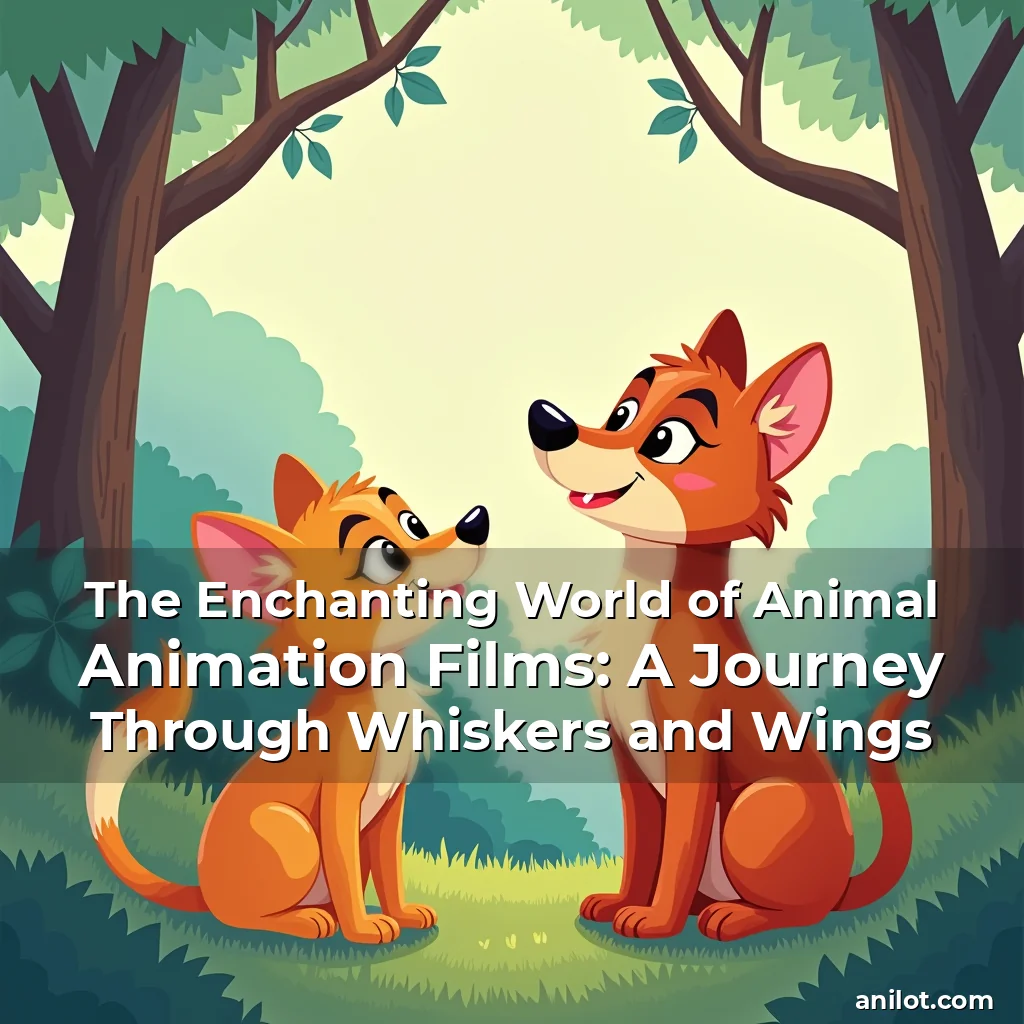
The Enchanting World of Animal Animation Films: A Journey Through Whiskers and Wings
In recent years, the realm of animated cinema has seen a remarkable shift towards narratives that celebrate our planet’s diverse fauna. This trend has given rise to a vibrant genre known as animal animation films, where creatures from every corner of the Earth take center stage. These movies offer audiences not only entertainment but also a deeper understanding of wildlife behavior and ecological balance.
From anthropomorphic rodents navigating urban landscapes to majestic elephants embarking on epic journeys, these films have captured hearts across generations. They blend humor, adventure, and life lessons while showcasing the beauty and complexity of the natural world through imaginative storytelling techniques.
The Evolution of Animal Animation: From Classic Shorts to Blockbuster Features
The origins of animal-centric animations can be traced back to early 20th-century cartoons. Pioneering animators used simple line drawings to create charming characters like Felix the Cat and Betty Boop, who often featured animals as central figures in their adventures.
During the Golden Age of American Animation, studios such as Warner Bros. and Disney began developing more sophisticated stories featuring talking animals. Looney Tunes introduced Wile E. Coyote and Road Runner’s hilarious chases, while Disney created iconic characters like Donald Duck and Goofy who embodied various animal traits.
With technological advancements in the late 20th century, computer-generated imagery (CGI) revolutionized how animal characters were portrayed on screen. The release of Pixar’s Cars (2006), though primarily focused on vehicles, showcased groundbreaking character modeling techniques that would later influence animal animation.
This digital transformation allowed for greater realism in depicting fur textures, movement patterns, and emotional expressions in animal characters. Studios could now render lifelike lions roaring at sunset or dolphins leaping through water with stunning accuracy.
The transition from traditional hand-drawn animation to CGI marked a significant turning point in creating immersive worlds populated by realistic yet expressive animal characters. This evolution paved the way for modern classics like Zootopia and Finding Nemo.
Key developments:
- Early experimentation: Early pioneers laid the foundation for portraying animal characters with personality and charm using limited resources.
- Golden Age innovations: Studio rivalry led to creative breakthroughs in voice acting and visual design that defined classic animal animation styles.
- Digital renaissance: Modern technology enables unprecedented levels of detail and realism when bringing animal characters to life on screen.
Exploring Themes in Contemporary Animal Animation
Modern animal animation films tackle complex themes while maintaining accessibility for younger viewers. These stories often explore universal human experiences through the lens of different species, offering fresh perspectives on familiar topics.
One recurring theme is social cohesion within animal communities. Films frequently depict groups working together to overcome challenges, mirroring human societal structures without being overtly didactic. This approach allows children to grasp fundamental concepts about cooperation and teamwork naturally.
Animal characters often serve as metaphors for human conditions. For example, some stories feature protagonists dealing with anxiety or fear through relatable scenarios involving predators or environmental threats. This indirect approach makes difficult subjects easier for young audiences to process.
Moral dilemmas presented in these films are usually resolved through empathy rather than conflict resolution. Characters learn important life lessons by showing kindness toward others, regardless of differences in appearance or background.
Environmental messages are increasingly common in current productions. While never preachy, these films subtly highlight issues like habitat destruction and climate change through visually compelling narratives set in endangered ecosystems.
A notable subgenre focuses on inter-species relationships, exploring what happens when different types of animals interact in unexpected ways. These stories challenge stereotypes and promote cross-cultural understanding among viewers of all ages.
Pioneering Filmmakers Shaping the Genre
Veteran directors have played crucial roles in shaping the landscape of animal animation. Their visionary approaches continue to inspire new generations of filmmakers tackling similar themes.
John Lasseter, co-founder of Pixar, revolutionized how animal characters could express emotion through subtle physical gestures. His work on Toy Story demonstrated that even non-human entities could develop rich emotional arcs.
Kyle Balda, director of Despicable Me and its sequels, brought a fresh perspective to animal characters by focusing on their individual personalities rather than relying solely on species-based tropes. His approach emphasized psychological depth over mere caricature.
Chris Sanders, co-director of Lilo & Stitch, pioneered the use of exotic animals as leads in mainstream animation. His innovative casting choices helped diversify representation within the medium.
Newcomers to the field are building upon these foundations while experimenting with novel storytelling formats. Emerging talents bring contemporary sensibilities to age-old themes, ensuring the genre remains relevant and dynamic.
Collaborations between established directors and up-and-coming talent foster innovation within the industry. Such partnerships allow for risk-taking that might otherwise be discouraged in larger studio environments.
The Artistic Process Behind Creating Believable Animal Characters
Designing convincing animal characters requires meticulous attention to biological accuracy combined with artistic interpretation. Animators must strike a delicate balance between scientific precision and creative expression.
Artists begin by studying real-world anatomy through extensive research. Zoological references help ensure accurate depiction of skeletal structure, muscle distribution, and movement mechanics in each species’ portrayal.
While adhering to anatomical principles, artists also incorporate stylistic elements that enhance visual appeal. Exaggerated features may be employed to emphasize certain characteristics or convey emotions more effectively.
Skin texture rendering presents particular challenges due to varying surface properties among different animals. Special algorithms calculate light reflection patterns to accurately simulate fur, scales, feathers, or other integumentary coverings.
Facial expressions pose another layer of complexity since animals communicate differently from humans. Animators develop systems that translate human-like expressions onto non-human faces while preserving authenticity to each species’ natural behaviors.
Motion capture technology plays an essential role in achieving lifelike movements. Performers wear suits equipped with sensors that record minute body motions which are then translated into digital models.
Despite advances in technology, many scenes still require manual refinement by skilled artists who add nuanced touches that machines cannot replicate naturally.
Technological Innovations Driving the Industry Forward
Rapid advancements in animation software have dramatically changed production workflows within the industry. New tools enable faster creation cycles without compromising quality standards.
Real-time rendering engines now allow animators to preview changes instantly during production instead of waiting for lengthy processing times. This interactive feedback loop significantly improves efficiency throughout the development cycle.
Machine learning algorithms assist in automating repetitive tasks such as rigging and texturing, freeing artists to focus on more creative aspects of character development.
Cloud computing platforms facilitate collaborative projects by providing shared storage spaces accessible from anywhere worldwide. This capability supports international teams working simultaneously on different components of a single film.
Virtual reality (VR) technologies are beginning to impact pre-production stages by enabling directors to walk through virtual sets before finalizing designs. This immersive experience helps identify potential issues earlier in the development process.
Augmented reality (AR) applications offer new possibilities for promotional materials and interactive experiences that extend beyond traditional movie screenings into digital realms.
These technological strides not only streamline production processes but also open doors for experimental filmmaking techniques previously deemed impractical or too costly to implement.
Global Perspectives on Animal Animation
Cultural variations shape how animal animation films are perceived around the world. Different regions interpret themes related to nature and wildlife according to local traditions and values.
In Japan, Studio Ghibli’s My Neighbor Totoro showcases the country’s deep connection with forest spirits through gentle, whimsical portrayals of supernatural creatures living alongside humans.
Chinese animation studios produce works reflecting Confucian ideals about harmony between humanity and nature. These films often emphasize collective well-being over individual achievements when depicting animal societies.
European animation tends to favor more philosophical undertones in its treatment of animal characters. French films sometimes explore existential questions through allegorical representations of wild animals facing moral quandaries.
African-inspired stories highlight communal living practices observed among indigenous tribes, illustrating how cooperative survival strategies apply equally to both people and animals in their respective ecosystems.
South American creators draw inspiration from Amazon rainforest biodiversity, crafting tales centered around rainforest dwellers whose lifestyles reflect sustainable coexistence with surrounding flora and fauna.
Recognizing these cultural nuances enriches global appreciation for animal animation films by revealing how universal themes manifest uniquely through regional lenses shaped by history, geography, and tradition.
Educational Value Beyond Entertainment
Beyond sheer enjoyment, animal animation films contribute meaningfully to education across multiple disciplines. They provide accessible entry points for complex scientific concepts through engaging narratives.
Biology students benefit from observing realistic depictions of animal physiology and behavioral patterns in action. These visual examples make abstract textbook information more tangible and memorable.
Ecology classes find value in films that illustrate food chains, migration routes, and ecosystem interactions without requiring specialized equipment or fieldwork opportunities.
Psychologists study how these films influence childhood development by analyzing narrative structures that mirror cognitive growth milestones experienced by young viewers.
Educators utilize these films as teaching aids to spark discussions about conservation efforts, ethical considerations regarding wildlife management, and responsible tourism practices affecting natural habitats.
Librarians curate collections including educational guides paired with popular films to support classroom activities that reinforce key curriculum objectives aligned with state-mandated academic standards.
The integration of factual information within entertaining storylines ensures knowledge retention without overwhelming young minds with excessive data presentation.
The Future of Animal Animation Cinema
As we look ahead, several trends suggest exciting directions for future animal animation films. Advances in artificial intelligence promise even more realistic portrayals of animal cognition and behavior.
Immersive technologies like VR and AR will likely become standard features in theatrical releases, allowing audiences to experience stories from entirely new vantage points within fictional worlds.
Interactive storytelling formats may emerge, giving viewers agency in shaping plot outcomes based on their choices within branching narrative paths.
Greater emphasis on diversity and inclusion will probably lead to richer character development representing wider spectrums of identity within animal populations depicted in these films.
Environmental consciousness appears poised to play an even stronger role in shaping thematic content, potentially leading to documentaries formatted as narrative-driven fiction pieces.
International collaborations will expand access to unique storytelling traditions from underrepresented cultures, broadening the scope of available narratives beyond Western-centric viewpoints.
Ultimately, the continued success of this genre depends on maintaining its core strengths – combining heartfelt storytelling with technical excellence to create meaningful cinematic experiences that resonate across generations.
Conclusion
The journey through the world of animal animation films reveals a rich tapestry woven from creativity, technology, and cultural insight. These films transcend simple entertainment by offering profound reflections on our relationship with nature and each other.
By embracing both the past’s foundational contributions and the present’s evolving innovations, this genre continues to captivate audiences worldwide. As we move forward, supporting and celebrating this form of storytelling ensures its enduring relevance in shaping our collective imagination and understanding of the animal kingdom.

news is a contributor at AniLot.com. We are committed to providing well-researched, accurate, and valuable content to our readers.
You May Also Like


About the Author
Related Articles
Animal Animation Films Different Studios
The Diverse World of Animal Animation Films Across Major Studios In recent years, animal animation…
Quality Animation for Kids
The Magic World of Animation for Children: A Journey Through Creativity and Learning Animation holds…
The Endearing World of Cartoon Animals: A Journey Through Whimsy and Imagination
The Endearing World of Cartoon Animals: A Journey Through Whimsy and Imagination In the vibrant…