
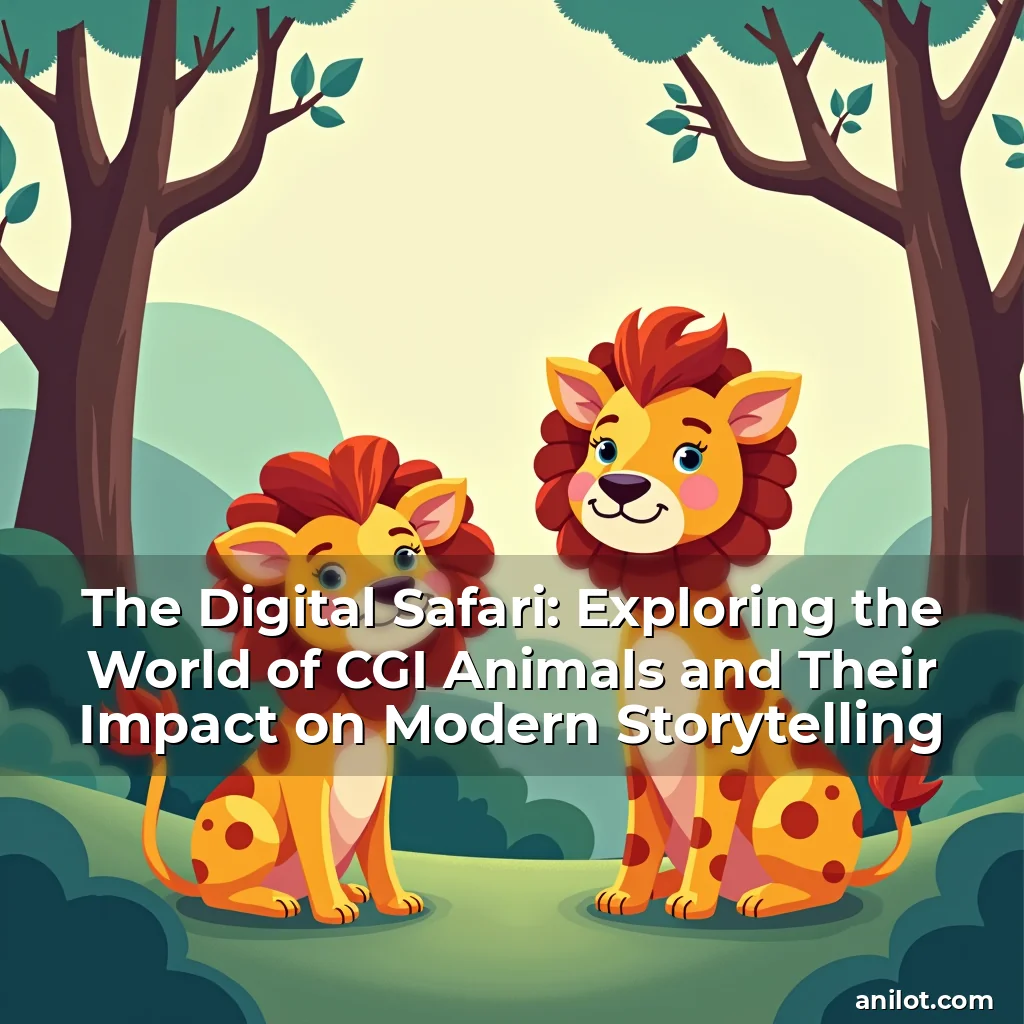
The Digital Safari: Exploring the World of CGI Animals and Their Impact on Modern Storytelling
In an era where technology continually blurs the lines between reality and imagination, CGI animals have emerged as powerful tools that transform how we experience stories, documentaries, and even scientific research. These digital creatures are not merely visual effects; they represent a fusion of artistry, science, and storytelling that captivates audiences worldwide.
From blockbuster films to wildlife conservation efforts, the use of computer-generated imagery in depicting animals has revolutionized entertainment and education alike. This exploration delves deep into the realm of CGI animals, uncovering their significance, techniques behind their creation, and their evolving role in various industries.
The Artistic Revolution Behind CGI Animal Creation
The process of creating CGI animals begins with concept art and design, where artists sketch out potential characters based on real-life counterparts or entirely fictional species. This foundational step is crucial for establishing the aesthetic direction of the project.
Once the designs are finalized, animators move into modeling phase using specialized software such as Maya or Blender. Here, each animal’s form is meticulously crafted down to its smallest features—fur texture, eye shape, and muscle structure—all contributing to realism.
- Concept Art: Artists create initial sketches and color studies that define the look and feel of the final CGI animal.
- Modeling: Using advanced 3D modeling software, creators build detailed representations of the animal’s anatomy and surface characteristics.
After modeling comes rigging—a complex process involving setting up skeletons within the model so that it can be animated realistically. Rigging allows for precise control over movements like walking patterns or facial expressions which bring life to these digital beings.
Rigging requires expertise in biomechanics since accurate movement simulation depends heavily on understanding how actual animals move naturally. For instance, replicating the graceful gait of a cheetah demands thorough study of feline locomotion mechanics.
Beyond Entertainment: The Practical Applications of CGI Animals
Cinema might be the most visible application of CGI animals but their utility extends far beyond screens. In fields ranging from environmental science to veterinary medicine, digitally created models serve critical functions that enhance our understanding and interaction with nature.
Educational institutions increasingly rely on high-quality CGI animations when teaching biology courses due to ethical concerns surrounding live specimen usage during dissections or field trips outside classroom settings.
Environmental Education Through Virtual Experiences
Virtual reality platforms incorporate realistic CGI animals to simulate ecosystems allowing students immersive learning experiences without physical travel requirements. A recent survey found that schools utilizing VR-based ecological lessons reported higher engagement levels among learners compared traditional methods.
This shift towards interactive educational tools not only makes learning more accessible but also fosters deeper emotional connections between young minds and wildlife preservation initiatives globally.
Film Industry Innovations Driving Realism in CGI Creatures
Hollywood continues pushing boundaries by integrating cutting-edge technologies into making believable animal characters. Motion capture sessions often involve trained actors wearing suits embedded with sensors capturing every subtle motion that gets translated onto digital avatars later.
Advancements in AI algorithms enable faster rendering times while maintaining intricate detailing necessary for lifelike appearances. These improvements significantly reduce production costs associated with lengthy animation cycles typically required before.
- Motion Capture Technology: Allows seamless transfer of human actor movements onto digital creatures enhancing authenticity.
- AI Rendering Tools: Accelerate image generation processes ensuring timely delivery of visually stunning results.
Moreover, collaboration across disciplines plays vital roles too; biologists consult closely with designers to ensure anatomical accuracy reflecting true biological traits observed in living organisms.
Such interdisciplinary approaches yield outcomes that resonate emotionally with viewers because they mirror natural behaviors seen daily through documentaries or personal encounters outdoors.
Conservation Efforts Enhanced By Digital Imaging Techniques
Digital imaging isn’t solely confined to creative sectors—it actively supports ongoing global conservation missions aimed at protecting endangered species against threats posed by habitat loss and poaching activities.
Researchers utilize photogrammetry scans combined with machine learning capabilities to track population changes remotely without disturbing sensitive environments inhabited by rare fauna types.
- Photogrammetric Scanning: Enables precise measurement analysis useful for monitoring individual growth rates and migration trends effectively.
- Machine Learning Integration: Facilitates predictive analytics regarding future challenges faced by vulnerable populations aiding proactive measures implementation strategies.
Additionally, virtual reconstructions help visualize what extinct species looked like providing invaluable data sources for paleontological studies attempting decipher ancient evolutionary pathways accurately.
These technological interventions empower scientists working tirelessly under challenging conditions while promoting wider public awareness campaigns essential for sustaining long-term protective actions toward biodiversity maintenance goals set forth internationally.
Challenges Faced During Development Of High-Quality CGI Wildlife Models
Despite remarkable achievements achieved thus far there remain several hurdles still needing resolution particularly concerning achieving perfect balance between technical feasibility versus artistic vision aspirations pursued simultaneously.
One significant challenge involves simulating authentic behavior sequences requiring extensive behavioral programming workloads exceeding typical expectations placed upon standard character development projects previously handled independently.
- Behavioral Programming Complexity: Requires detailed scripts mimicking instinctual responses exhibited by genuine wild animals necessitating substantial computational resources allocation.
- Computational Power Demands: Generating ultra-high-resolution textures alongside dynamic lighting effects consumes vast quantities energy potentially raising operational expenses notably.
Furthermore, cultural sensitivities must also be considered especially when representing indigenous communities whose traditions may perceive certain creatures differently than mainstream Western perspectives generally assume universally applicable interpretations exist inherently.
To navigate these complexities successfully developers engage experts specializing relevant domains ensuring respectful portrayals aligning appropriately local customs values upheld diligently throughout entire creative lifecycle stages involved therein comprehensively.
Ethical Considerations Surrounding Use Of Artificially Generated Fauna
As reliance increases upon synthetic depictions replacing conventional filming methodologies employing real animals raises pertinent questions related ethics involved here specifically about implications stemming from altered perceptions held towards non-human entities inhabiting planet earth.
Skeptics argue that excessive exposure could lead people developing distorted views regarding actual wildlife leading them possibly misjudging importance assigned native species deserving protection afforded legally mandated protections established nationally internationally.
- Potential Misinformation Risks: Over-representation might skew public perception distorting factual information available regarding true habitats preferences displayed naturally occurring specimens organically.
- Impact On Conservation Awareness: While beneficial initially educating masses ultimately risks diminishing urgency felt amongst populace regarding pressing need safeguard remaining wilderness areas threatened relentlessly encroachment urbanization expansion endeavors perpetually.
Conversely proponents highlight advantages gained including eliminating stress inflicted captive subjects forced participate productions violating fundamental rights guaranteed sentient beings regardless classification bestowed upon them categorically.
Ultimately finding equilibrium remains paramount balancing innovation progress against responsibility owed preserving integrity maintained relationships formed historically humans wildlife coexisting harmoniously together sustainably forward indefinitely.
The Future Landscape Of Computer Graphics Imagery Applied To Zoology Fields
Looking ahead advancements anticipated will further refine capabilities enabling unprecedented levels interactivity immersion experienced users interacting virtually constructed ecosystems populated artificially generated fauna elements seamlessly integrated surroundings dynamically responding inputs provided participants engaged scenarios unfolding continuously.
Emerging technologies such quantum computing promise breakthroughs capable processing massive datasets instantaneously unlocking new dimensions analytical possibilities hitherto unattainable through current frameworks employed today.
- Quantum Computing Potential: Could drastically shorten timeframes needed executing complex simulations facilitating rapid prototyping iterations refining output quality efficiently.
- Augmented Reality Interfaces: Permitting overlays superimposing digital creatures onto real-world landscapes enriching experiential learning opportunities exponentially surpassing limitations imposed purely digital confines alone.
Collaborative ventures between academia industry sectors likely foster groundbreaking discoveries redefining paradigms governing present understandings biological systems operating intricately interconnected webs life forms existing symbiotically dependent mutual survival conditions prevailing constantly changing planetary climate circumstances affecting all organisms equally irrespective geographical locations occupied respectively.
With continued investment directed toward fostering cross-disciplinary dialogues nurturing shared objectives advancing collective knowledge base benefiting society broadly encompassing diverse demographics embracing inclusive approach valuing contributions made individuals irrespective backgrounds origins united common goal enhancing comprehension appreciation intrinsic value preserving Earth’s rich tapestry wildlife heritage legacy entrusted humanity stewardship responsibilities undertaken earnestly conscientiously.
Conclusion
The journey through the world of CGI animals reveals a fascinating intersection of technology, creativity, and purposeful application spanning entertainment realms extending impactful influences shaping contemporary society positively.
By recognizing both benefits derived utilization artificial intelligence driven solutions alongside acknowledging inherent challenges requires thoughtful consideration guiding responsible practices adopted moving forward ensuring sustainable trajectories aligned ethical standards prioritizing well-being preserved biodiversity cherished globally celebrated symbol resilience adaptation thriving amidst adversity encountered throughout history civilization’s progression.
“`html
“`

news is a contributor at AniLot.com. We are committed to providing well-researched, accurate, and valuable content to our readers.
You May Also Like
About the Author
Related Articles
Realistic Wildlife Animation
Realistic Wildlife Animation: Capturing Nature’s Beauty Through Digital Artistry In today’s digital age, wildlife animation…

Kids Animation Series Netflix
Kids Animation Series Netflix In recent years, kids’ animated series have become a cornerstone of…

Binge-Worthy Animal-Themed Shows
Binge-Worthy Animal-Themed Shows In recent years, animal-themed television programming has captured global audiences across diverse…