


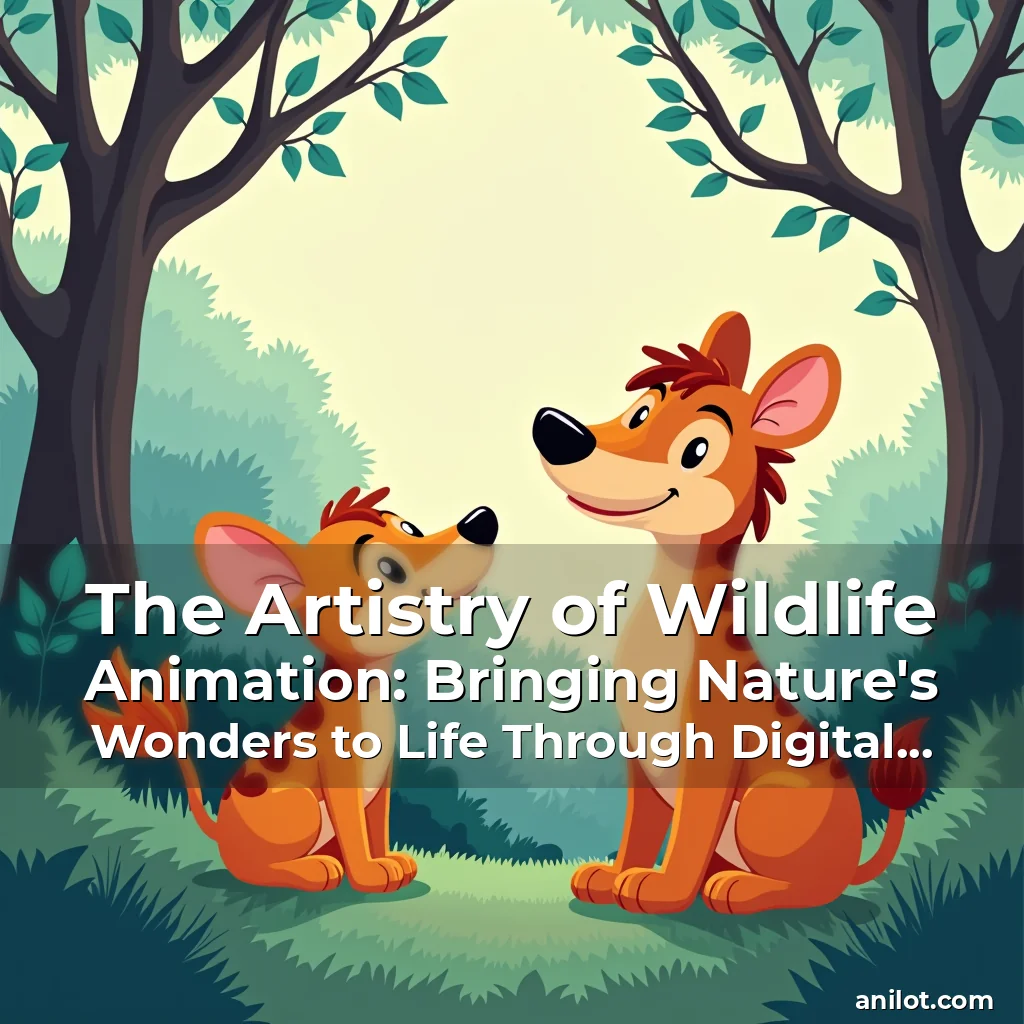
The Artistry of Wildlife Animation: Bringing Nature’s Wonders to Life Through Digital Storytelling
In the vibrant world of digital media, wildlife animation stands as a powerful medium that bridges artistry with ecological awareness. This dynamic field transforms the natural world into captivating visual narratives through meticulous craftsmanship and technological innovation.
From animated documentaries to children’s educational programs, wildlife animation plays a crucial role in fostering appreciation for biodiversity while entertaining global audiences across various platforms.
Understanding Wildlife Animation: A Fusion of Science and Creativity
Wildlife animation is not merely about drawing animals; it involves deep research into animal behavior, habitats, and ecosystems to ensure accuracy and authenticity in every frame.
Creatives in this field often collaborate with biologists and environmental scientists to gather precise data about movement patterns, coloration changes, and interaction behaviors among species.
- Biological Accuracy: Animators study real footage, scientific illustrations, and even consult experts to replicate lifelike movements and features.
- Ecosystem Representation: Every environment depicted must reflect actual geographical locations, climate conditions, and plant life interactions accurately.
This interdisciplinary approach ensures that animations serve both entertainment purposes and educational value effectively without compromising artistic expression.
The Evolution of Wildlife Animation Techniques Over Time
Early wildlife animations relied heavily on hand-drawn techniques, which required immense skill but limited realism due to technical constraints.
The advent of computer-generated imagery (CGI) revolutionized the industry by allowing animators to create highly realistic simulations of nature scenes with greater precision and flexibility.
Modern tools now enable seamless integration between traditional sketching methods and advanced digital modeling software, offering unprecedented creative possibilities.
These advancements have significantly expanded storytelling capabilities within conservation messages and immersive experiences related to wildlife preservation efforts globally.
Diverse Applications Across Industries
Wildlife animation finds its place in numerous sectors beyond just film production, influencing areas such as education, tourism marketing, virtual reality applications, and interactive games development.
Educational institutions increasingly utilize these animations to teach students about complex biological processes through visually engaging formats suitable for different age groups.
Tourism boards employ high-quality wildlife animations in promotional materials showcasing pristine environments before potential visitors experience them firsthand.
Gaming companies integrate richly detailed creature designs inspired from real-life counterparts into their worlds enhancing player immersion levels dramatically.
Case Study: Animated Documentaries Reshaping Conservation Efforts
A prime example includes National Geographic’s animated series focusing on endangered species where intricate character design combined with compelling storylines raised significant public interest around habitat loss issues.
Such projects demonstrate how effective storytelling can translate into tangible support for wildlife protection initiatives when executed thoughtfully under expert guidance.
Data shows increased funding allocations towards conservation after airing episodes highlighting charismatic megafauna whose survival depends critically upon human intervention strategies.
By merging factual information seamlessly with emotional engagement tactics used commonly in narrative films, these productions achieve dual objectives simultaneously.
Challenges Faced by Wildlife Animators Today
Creating accurate depictions poses ongoing challenges since many creatures exhibit behaviors difficult to capture fully using current technology alone.
Limited access to certain remote habitats restricts direct observation opportunities essential for developing authentic representations particularly concerning nocturnal activity cycles.
Additionally, ethical considerations arise regarding portrayal standards ensuring no harm comes either indirectly via misrepresentation or directly through promoting harmful practices unknowingly.
To address these concerns responsibly requires continuous dialogue between creators and subject matter specialists maintaining rigorous fact-checking protocols throughout development phases.
Technological Innovations Driving Future Trends
Artificial intelligence is beginning to play pivotal roles in automating repetitive tasks involved during pre-production stages thereby freeing up time spent manually adjusting minor elements repeatedly.
Virtual reality technologies offer new dimensions where viewers might virtually explore simulated ecosystems experiencing first-hand what it feels like being amidst wild populations safely controlled digitally.
Augmented reality applications allow users to overlay animated versions onto real-world settings creating hybrid spaces ideal for interactive learning sessions focused specifically on local flora/fauna identification exercises.
Together these emerging trends promise exciting developments reshaping expectations surrounding what constitutes impactful wildlife storytelling moving forward.
Skills Required To Excel In Wildlife Animation Careers
Pursuing a career in wildlife animation demands mastering diverse skill sets ranging from basic illustration abilities right through specialized knowledge relating uniquely to motion graphics principles.
Proficiency in popular software packages such as Maya, Blender, or Adobe After Effects becomes necessary prerequisites enabling professionals produce professional-grade outputs consistently meeting client requirements efficiently.
Strong understanding of anatomy fundamentals especially applicable when designing non-human characters accurately representing physical structures correctly according to taxonomic classifications available publicly online resources.
Creative problem solving skills prove invaluable whenever unexpected obstacles emerge requiring innovative approaches quickly adapted appropriately without sacrificing quality standards expected industry wide today.
Community Impact And Educational Value Of Wildlife Animation
Through carefully crafted content aimed at raising consciousness about pressing environmental matters affecting our planet currently facing rapid degradation rates alarmingly fast compared historical averages recorded so far.
Interactive modules embedded inside mobile apps help track personal contributions made toward protecting specific endangered organisms encouraging sustained participation long-term benefits derived therefrom.
School curriculums incorporating multimedia presentations featuring animated sequences enhance comprehension levels notably higher than conventional textbook readings alone could manage achieving similarly desired outcomes much faster timelines.
Collaborative projects involving artists working alongside researchers generate cross-disciplinary synergies producing results neither party would likely reach independently attempting similar goals separately pursued earlier periods history show clearly documented evidence proving effectiveness conclusively established already confirmed scientifically validated studies published recently too.
Future Prospects For Wildlife Animation Industry Growth
With growing emphasis placed upon sustainable living practices worldwide governments are investing more funds supporting green initiatives including those centered around digital representation solutions capable conveying critical messages succinctly yet powerfully enough reaching broader demographics effectively.
Corporate social responsibility campaigns frequently feature bespoke wildlife animations tailored precisely matching brand values aligned closely together reinforcing positive associations beneficial business operations conducted ethically conscious manner respecting ecological limits imposed naturally occurring systems inherently self-regulating mechanisms exist keeping balance maintained automatically unless disrupted externally intentionally sometimes accidentally unintentionally caused people interacting regularly daily basis.
As demand increases steadily over next decade predicted market expansion figures indicate substantial growth trajectories forthcoming years ahead providing ample employment opportunities attracting fresh talents entering profession eager contribute meaningfully shaping future directions taken collectively society moves forward addressing common challenges faced universally confronting simultaneously.
Emerging markets present untapped potential ripe exploration opening doors previously closed restricting accessibility limiting scope envisioning possibilities extending far beyond current limitations experienced hitherto encountered thus far.
Conclusion
Wildlife animation serves as vital bridge connecting modern audiences with Earth’s incredible diversity through mesmerizing visual interpretations rendered faithfully capturing essence true wilderness experiences realistically.
Whether aiming educate inspire entertain or advocate change this multifaceted discipline offers endless avenues pursuing passion driven purposeful endeavors contributing positively evolving landscape digital creativity continuously expanding horizons redefining boundaries possible achieved harmoniously blending science art seamlessly integrated cohesively unified whole.


news is a contributor at AniLot.com. We are committed to providing well-researched, accurate, and valuable content to our readers.
You May Also Like

Funny Animal Videos Montage
The Unstoppable Rise of Funny Animal Videos: A Digital Age Phenomenon In an era where digital entertainment is king, funny...
Animated Movies Emotional Scenes
The Timeless Magic of Animated Movies: A Journey Through Imagination and Emotion Animated movies have long held a special place...
Animated Wildlife Stories Conservation
The Enchanting World of Animated Wildlife Stories: Bridging Nature and Imagination In a world increasingly dominated by technology and urbanization,...
Animal Animation Trends 2025
The Future of Animal Animation: Emerging Trends Shaping the Industry in 2025 In 2025, animal animation has reached new creative...