
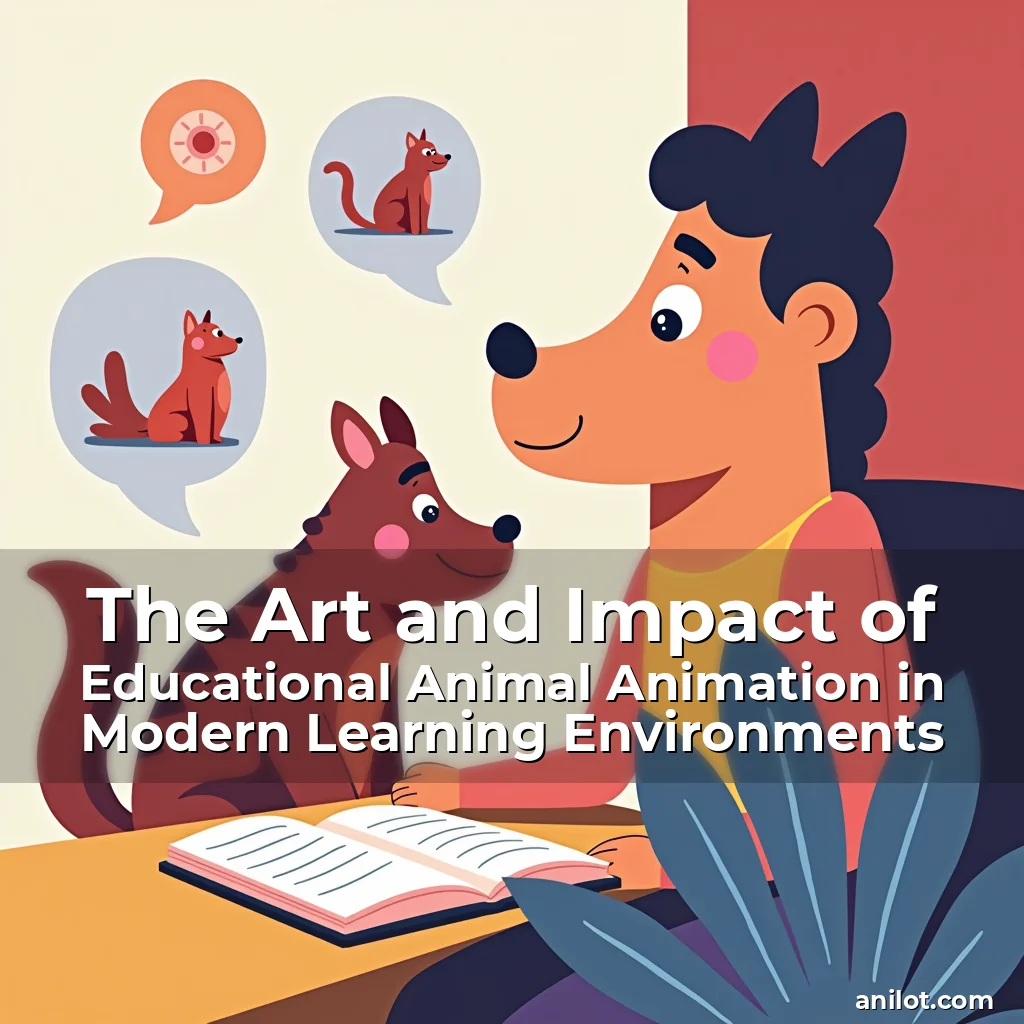
The Art and Impact of Educational Animal Animation in Modern Learning Environments
Educational animal animation has emerged as a powerful tool that combines entertainment with informative storytelling to enhance learning experiences across various age groups.
This innovative approach not only captivates young learners but also provides accessible educational content through relatable characters and scenarios involving animals.
The Rise of Educational Animal Animation
In recent years, there has been a noticeable surge in demand for animated content featuring animals aimed at teaching subjects ranging from science to environmental awareness.
Schools, educators, and parents alike have recognized the value of such animations in making complex topics digestible and enjoyable for children.
The evolution of digital technology has made high-quality animation production more affordable and widely available, contributing significantly to its popularity.
Creative studios now specialize in producing content that aligns with curricular standards while maintaining an engaging format.
- Accessibility: Digital platforms provide easy access to educational animal animations for students worldwide regardless of location.
- Interactive Elements: Many modern animations incorporate interactive features that encourage active participation and knowledge retention.
Pedagogical Benefits of Animal-Based Animated Content
Using animals as protagonists in educational materials leverages their natural appeal to make lessons more memorable and effective.
Animal characters often embody traits that help illustrate human behaviors, moral lessons, or scientific principles in a simplified manner.
Research indicates that incorporating familiar elements like animal behavior into learning enhances comprehension among early learners.
Furthermore, studies show that emotional engagement fostered by anthropomorphized animals can lead to better information recall.
Scientific Accuracy Meets Creativity
Balancing scientific accuracy with creative narrative is essential when developing educational animal animations.
Rigorous research ensures that any biological facts presented are correct, preventing misinformation and reinforcing trust in the material.
Creativity plays a crucial role in transforming these factual components into compelling stories that resonate emotionally with audiences.
This synthesis of science and imagination helps maintain viewer interest without compromising educational integrity.
- Factual Basis: All character actions must be rooted in real-world biology to maintain credibility.
- Engagement Techniques: Storytelling methods are designed to keep attention spans aligned with developmental needs across different ages.
Diverse Applications Across Learning Settings
Educational animal animations find applications beyond traditional classrooms, reaching homes, museums, and virtual learning environments globally.
These versatile formats cater specifically to individual learning styles and paces, allowing personalized education paths tailored towards each learner’s needs.
Public institutions frequently utilize them as supplementary resources within formal curriculum frameworks enhancing overall student performance metrics.
Moreover, they support inclusive education policies by offering adaptable tools suitable for diverse populations including those with special needs or language barriers.
Technological Innovations Driving Development
Advancements in computer graphics and artificial intelligence contribute to richer visual experiences and more dynamic narratives within educational content.
Gaming engines used in animation development allow creators greater flexibility in crafting immersive worlds where viewers become participants rather than passive observers.
Virtual reality integration offers unprecedented opportunities for experiential learning through simulated encounters with exotic species or endangered habitats.
Such innovations ensure continuous improvement of pedagogically sound yet technologically advanced products meeting evolving user expectations effectively.
The Role of Narrative Structures in Effective Teaching
Effective educational animal animations rely heavily on well-crafted story arcs to convey messages clearly and memorably.
Narratives structure complex ideas logically so they flow naturally between scenes ensuring coherence throughout entire episodes or modules.
Character development within stories serves dual purposes: both driving plot progression and modeling appropriate behavioral norms relevantly linked to subject matter being taught.
By embedding lesson objectives within engaging plots viewers absorb information intuitively rather than passively consuming facts.
- Lesson Objectives Embedded Naturally: Important takeaways emerge organically during unfolding events instead of direct instruction style delivery typical elsewhere.
- Emotional Connection Fostered Through Characters: Audiences connect personally with depicted beings which makes subsequent message acceptance smoother organic process rather forced indoctrination attempt.
Evaluation Methods for Assessing Effectiveness
To measure impact accurately, developers implement varied evaluation techniques after releasing new series or updating existing ones periodically.
Feedback mechanisms include surveys targeting users post-viewing sessions alongside comparative analyses showing improvements over time.
Data collection efforts track metrics related cognitive gains measurable via pre/post tests assessing knowledge acquisition rates among sampled demographic groups.
Additionally qualitative feedback gathered from teachers regarding observable changes in classroom dynamics offers additional insight complementary quantitative data sets collected elsewhere.
Future Directions And Expanding Horizons
Ongoing research continues exploring how best integrate emerging technologies even further pushing boundaries what currently exists possible today within field.
Collaborative projects between tech firms academia institutions aim redefine future possibilities through joint initiatives experimenting cutting edge approaches applicable tomorrow’s challenges faced society broadly.
Emerging trends indicate growing importance placed global citizenship themes interwoven seamlessly throughout programming offerings thus preparing youth adequately confront international issues impacting planet collectively.
Ultimately goal remains consistent helping nurture generation scientifically literate environmentally conscious citizens capable critically analyzing world around them responsibly taking part shaping decisions affecting environment we share together now moving forward generations ahead.
Conclusion
Educational animal animation represents a vital intersection between creativity and didactic purpose enabling meaningful lifelong learning journeys for many individuals across globe.
Its capacity transform abstract theoretical concepts concrete realities experienced vicariously through animated creatures demonstrates immense potential improving accessibility quality education available everywhere always.
By embracing continued innovation dedicated craftsmanship behind productions ongoing commitment maintaining highest standard accuracy relevance these resources will undoubtedly remain cornerstone pillars sustainable bright future filled knowledgeable empathetic members communities wherever found throughout Earth home shared amongst us all.

news is a contributor at AniLot.com. We are committed to providing well-researched, accurate, and valuable content to our readers.
You May Also Like

About the Author
Related Articles
Creating Animation for Kids
The Magic of Bringing Stories to Life Through Animation for Kids In today’s digital age,…

Top Animated Series 2025
The Rise of Animated Storytelling: Exploring the Best Animated Series of 2025 In 2025, animated…
The Artistry Behind 3D Animal Animation: Crafting Living Creatures in Digital Realms
The Artistry Behind 3D Animal Animation: Crafting Living Creatures in Digital Realms In the vibrant…