


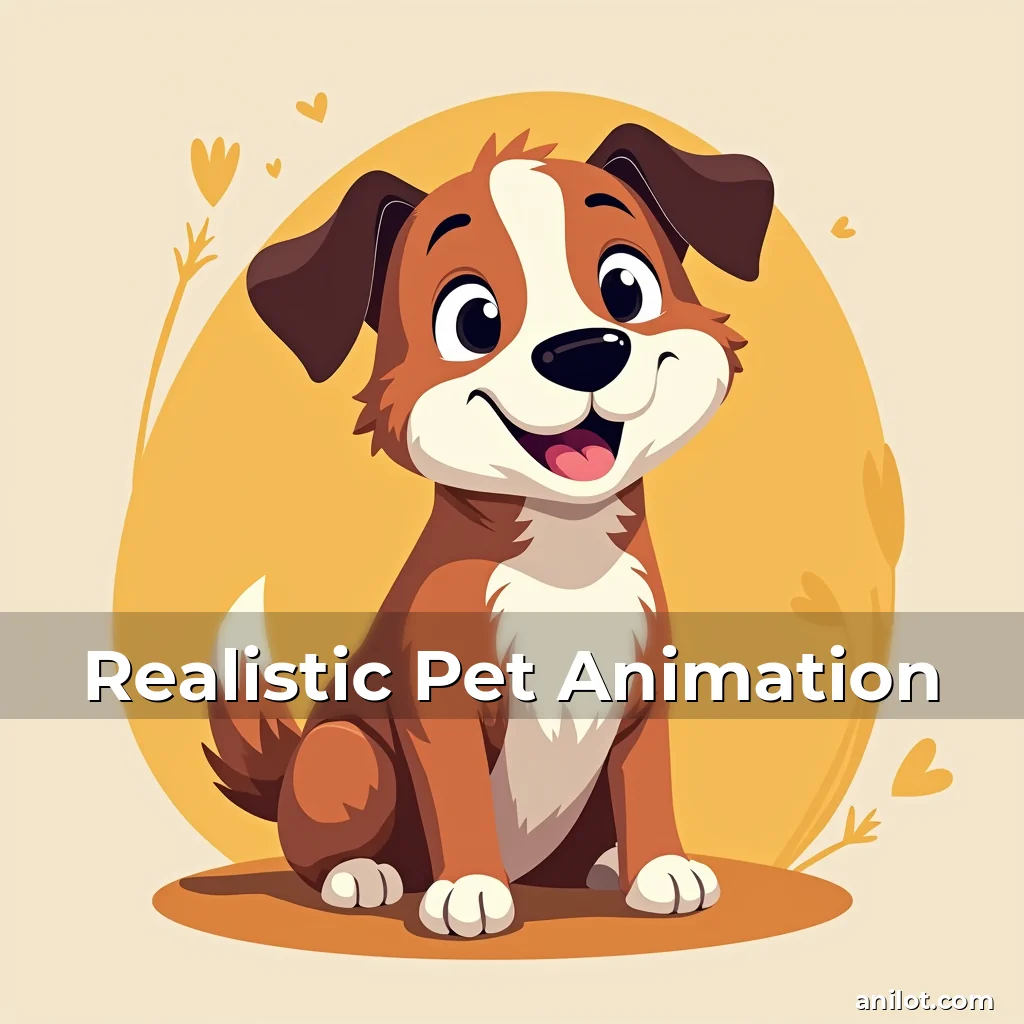
The Artistry Behind Realistic Pet Animation: A Deep Dive into Capturing Furry Friends in Motion
In the ever-evolving world of digital entertainment, pet animation has emerged as both a technical marvel and an artistic expression that resonates deeply with audiences worldwide. From animated films featuring anthropomorphic animals to video games where pets interact seamlessly within virtual environments, the field of realistic pet animation continues to push creative boundaries.
This exploration delves into the intricate process behind bringing our beloved furry companions to life through animation techniques that blend science and artistry. As we journey through various aspects—from character design to motion capture—we uncover how animators achieve lifelike movements and expressions that evoke genuine emotional responses from viewers.
Fundamental Principles of Realistic Pet Animation
Creating realistic pet animations begins with understanding the fundamental principles that govern animal movement and behavior. Animators must study real-life footage extensively to grasp nuances such as gait patterns, muscle tension during different activities, and subtle body language cues that define each species’ personality traits.
The role of anatomy knowledge cannot be overstated when designing accurate representations of domesticated animals like dogs or cats. Proper skeletal structure modeling ensures that movements appear natural rather than mechanical, allowing characters to perform actions ranging from simple walking to complex acrobatics without losing authenticity.
- Anatomy accuracy: Detailed research into musculature and bone structures helps maintain proportionality across varying sizes and breeds
- Movement studies: Observing live animals provides essential data for replicating authentic locomotion patterns in animations
Moreover, environmental interaction plays a crucial role in enhancing realism; animators consider factors like surface texture underfoot, weather conditions affecting fur dynamics, and even scent-based reactions which influence behavioral choices made by their animated counterparts.
Character Design and Personality Development
Designing compelling pet characters involves more than just visual appeal—it requires developing distinct personalities that resonate emotionally with audiences. This phase often includes creating backstory elements for each character, shaping their demeanor based on breed characteristics while also incorporating human-like quirks for relatability.
The color palette chosen significantly impacts perceived temperament; warm tones might suggest friendliness whereas cooler shades could imply aloofness or intelligence depending upon cultural associations tied to those colors in society at large.
Breed-Specific Characteristics in Character Creation
Different dog breeds exhibit varied physical attributes influencing not only appearance but also movement styles—Bulldogs have distinctive squashed faces requiring specialized facial rigging solutions compared to Greyhounds whose lean bodies allow for swift acceleration capabilities reflected accurately through motion scripts.
Cat designers face similar challenges regarding posture variations between relaxed versus alert states, necessitating flexible spine controls capable of depicting arches indicative of curiosity or fear depending on context provided within storylines.
By meticulously studying these biological differences among species, artists can craft visually rich yet biologically plausible creatures that serve narrative purposes effectively while maintaining scientific integrity throughout production cycles.
Motion Capture Technologies & Their Applications
Modern advancements in motion capture technology have revolutionized the way animators approach pet animation projects. High-resolution optical systems track reflective markers placed strategically over living subjects capturing minute shifts in position enabling precise replication onto digital models.
While traditionally used for humanoid performances, recent innovations now support quadrupedal tracking allowing filmmakers greater flexibility when portraying four-legged protagonists who require nuanced foot placement calculations mimicking actual weight distribution mechanisms found naturally in real-world animals.
One significant advantage offered by this method is reduced manual labor required for keyframing processes since captured data automatically generates base animation layers which artists then refine further adding stylistic embellishments tailored specifically toward project needs.
Software Tools and Workflow Optimization
Selecting appropriate software tools greatly influences efficiency levels achieved during any given project timeline. Industry-standard applications such as Maya offer robust rigging modules ideal for handling complex articulations necessary when dealing with multi-jointed limbs present commonly amongst most vertebrates.
Specialized plugins exist designed exclusively for fur simulation providing realistic interactions between individual strands enhancing overall believability especially noticeable during high-speed sequences involving dynamic changes in hair orientation caused by rapid movements executed by animated entities.
Collaboration platforms facilitate seamless integration between departments ensuring consistent styling guidelines remain intact throughout entire development phases thereby minimizing rework costs associated with mismatched aesthetics originating from disparate sources working independently outside unified frameworks.
Challenges in Achieving Photorealism
Achieving photorealistic depictions presents numerous obstacles despite technological progressions occurring continuously within relevant sectors. One primary challenge lies in simulating skin translucency effects particularly evident around areas containing thinner epidermis layers like ears or noses which refract light differently than thicker regions found elsewhere on animal forms.
Skin deformation algorithms must account for elasticity properties inherent in organic materials unlike rigid constructs found typically within industrial engineering contexts making predictive modeling considerably more complicated due to non-linear response behaviors observed frequently during experimental trials conducted prior implementation stages.
To overcome these limitations developers employ hybrid approaches combining procedural generation methods alongside traditional sculpting techniques resulting in composite surfaces exhibiting desired level of fidelity suitable for cinematic presentations targeting broad demographic segments seeking immersive experiences featuring believable animal likenesses rendered digitally.
Educational Resources and Skill Development Pathways
Aspiring professionals aiming to enter fields related to realistic pet animation benefit immensely from accessing diverse educational resources available globally today. Institutions offering degree programs focused entirely upon computer graphics provide foundational training covering core competencies deemed vital prerequisites before advancing towards specialized concentrations emphasizing creature animation disciplines.
Online tutorials accessible via streaming services cater well to self-directed learners preferring structured curricula delivered remotely eliminating geographical constraints usually encountered by individuals residing far away from prestigious academic centers located primarily within urban clusters known historically for housing leading studios involved heavily in media creation industries.
Additionally, participation in workshops hosted periodically by industry experts allows participants hands-on experience utilizing cutting-edge equipment currently deployed actively within professional settings thus bridging theoretical knowledge acquired previously against practical application scenarios faced daily by practitioners operating professionally within target domains.
Perspective Shifts Across Cultural Contexts
Varying interpretations concerning acceptable portrayals of animals manifest clearly across cultures prompting creators to adapt methodologies accordingly respecting local customs governing representation norms established centuries ago reflecting collective values upheld persistently among respective populations inhabiting particular territories identified geographically according to political divisions recognized internationally.
In some societies reverence afforded towards certain wildlife species necessitates symbolic treatment avoiding literal reproductions favoring stylized abstractions instead preserving sacred status maintained deliberately by indigenous groups resisting assimilation efforts aimed at homogenizing global perspectives through mass communication channels dominating modern information dissemination networks.
Conversely other regions embrace hyperrealistic renderings celebrating scientific achievements attained recently through interdisciplinary collaborations merging biology with computational sciences yielding unprecedented results demonstrating potential future trajectories likely unfolding rapidly given current rates of innovation witnessed consistently across multiple sectors simultaneously undergoing transformative changes driven largely by consumer demand increasing exponentially year after year.
Ethical Considerations and Animal Welfare Implications
The ethical implications surrounding use of real animals during filming sessions demand careful consideration balancing artistic aspirations against welfare concerns raised legitimately by concerned parties advocating protection measures ensuring humane treatment standards met strictly whenever live specimens participate voluntarily within productions.
Alternatives utilizing performance capture technologies eliminate direct contact reducing stress experienced inherently by organisms subjected otherwise potentially uncomfortable situations arising from prolonged exposure periods exceeding physiological thresholds considered safe limits determined scientifically through rigorous testing procedures performed systematically under controlled laboratory conditions supervised closely by veterinary professionals specializing in exotic fauna care protocols.
Transparency remains paramount informing stakeholders including investors public authorities regulatory bodies alike regarding intentions pursued explicitly detailing plans outlined comprehensively upfront preventing misunderstandings escalating unnecessarily risking reputational damage harming long-term viability prospects severely impacting sustainability initiatives already underway aimed at fostering responsible practices aligning corporate objectives harmoniously with societal expectations prevailing widely nowadays.
Future Trends and Innovations in Pet Animation
Ongoing developments promise exciting possibilities reshaping landscapes continually evolving dynamically influenced profoundly by emerging discoveries permeating adjacent scientific domains intersecting unexpectedly generating novel opportunities expanding horizons substantially surpassing previous limitations believed insurmountable until breakthroughs occurred recently triggering paradigm shifts altering perceptions drastically redefining what constitutes feasible achievable outcomes within foreseeable timelines projected cautiously conservatively estimated based upon historical growth curves extrapolated carefully considering variables fluctuating unpredictably complicating forecasts reliably.
Advancements in AI-driven automation streamline repetitive tasks freeing up time allocated initially towards mundane operations permitting focus redirected strategically towards higher value additions contributing meaningfully enhancing final product quality noticeably elevating user satisfaction metrics measured objectively through quantitative assessments gathered systematically employing validated analytical models proven effective repeatedly across varied datasets collected diligently following standardized protocols ensuring consistency crucial maintaining reliability demanded increasingly from contemporary consumers expecting superior experiences delivered efficiently without compromising on standards upheld rigorously throughout entire value chain extending beyond mere end result encompassing holistic journey undertaken collectively by all contributors participating collaboratively achieving common goals mutually beneficial everyone involved directly indirectly.
Conclusion
The realm of realistic pet animation stands at the intersection of technology, creativity, and empathy—an area ripe with endless possibilities waiting patiently to unfold as new generations of animators bring fresh ideas to life using innovative tools and techniques continually being developed. By embracing both scientific precision and artistic flair, creators can produce captivating stories featuring our favorite four-legged friends that not only entertain but also educate and inspire audiences globally.
For those eager to dive deeper into this fascinating field, exploring available educational resources, staying informed about ongoing research, and experimenting with emerging technologies will undoubtedly open doors to thrilling career paths filled with rewarding challenges and meaningful contributions to the vibrant tapestry of digital storytelling. Whether you’re an aspiring animator or simply someone fascinated by the magic behind animated pets, there’s never been a better time to engage with this dynamic and evolving discipline.


news is a contributor at AniLot.com. We are committed to providing well-researched, accurate, and valuable content to our readers.
You May Also Like


Long-Running Animated Series
The Enduring Legacy of Long-Running Animated Series In an era dominated by fleeting entertainment cycles, long-running animated series have carved...
Animated Animals 3D vs 2D
Animated Animals 3D vs 2D: A Deep Dive Into Movement and Expression The world of animated animals has evolved dramatically...
Animated Animals for Toddlers
The Enchanting World of Animated Animals: A Journey Through Creativity and Connection In today's digital age, animated animals have become...
Latest Animal Animation Trends
The Evolution of Animal Animation: Innovations Shaping the Future of Creature Design In recent years, animal animation has emerged as...