


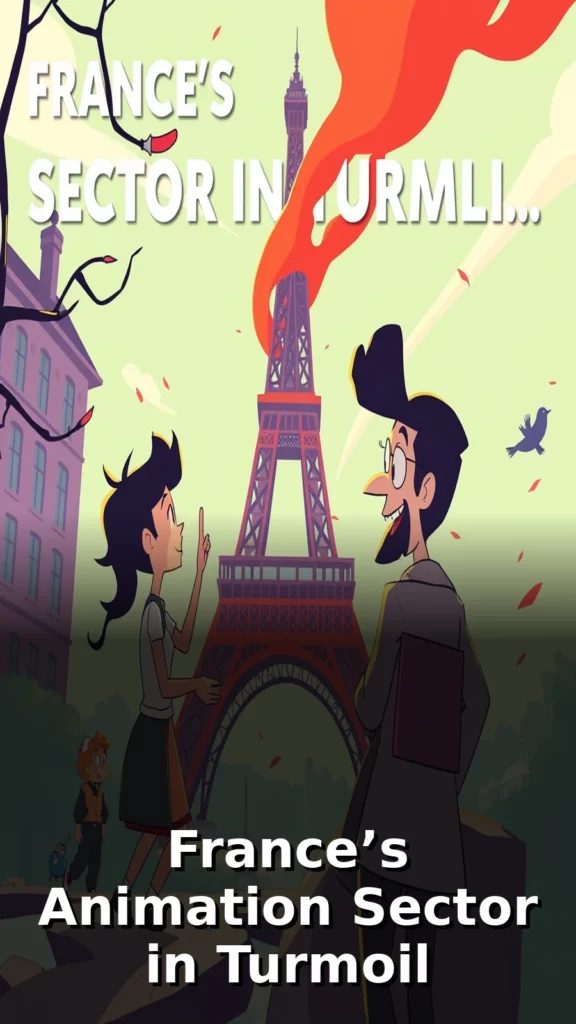

France’s animation sector, known for producing hit TV series like Miraculous: Tales of Ladybug & Cat Noir and The Adventures of Tintin, is facing its toughest period in recent history. The country’s exports of animated programmes have declined by 11.2% to €51.2m (US$56.7m) year-on-year, according to the UniFrance and CNC joint survey. This decline is attributed to a significant drop in sales to the US, which fell by 69.7% to €4.3m.
- Key contributors to the decline include increased competition from global players like Netflix and Amazon Prime, as well as the impact of inflation and restructuring in the industry.
- French animation companies are struggling to adapt to the changing market, with many studios downsizing operations and reducing staff.
- Despite the challenges, French animation remains a significant player in the global industry, with its commitment to public broadcasters, competitive tax incentives, and subsidies.
Industry experts attribute the decline in exports to the increasing global competition and the impact of the global economic crisis on local production and broadcasting. Emmanuele Petry, partner at animation studio Dandelooo, notes that broadcasters are facing a moral dilemma over commissioning new projects, as they may be forced to say no to certain projects, which could lead to the downfall of other companies.
“One of the broadcasters told me that, as someone with commissioning power, it’s very difficult because they sometimes have to say no to a specific project and then the company might become bankrupt. They can only give one show to each company because a lot of them are struggling, so it’s an ethical decision about whom they give a commission to. It’s a vicious circle; if one company goes under, that attracts others in the downfall. And that’s really, really scary.”
Recommended Reading: Animation for Kids Streaming
Julien Chheng, co-founder of Paris-based Studio La Cachette, notes that the studio grew rapidly to 150 employees during the animation peak, with credits including Netflix’s adult anthology series Love, Death & Robots and horror series Primal for Warner Bros Discovery’s Adult Swim. However, the studio had to downsize to about 30 to 40 staff last year after a dramatic drop in sales to the US.
“That was quite brutal, but it was also an opportunity for us as producers to develop our own IP and not rely too much on production service, so we can build up a catalogue that’s valuable with our experience from working with the streamers,” Chheng says.
Another key challenge facing French animation companies is the shift towards streaming platforms, which has led to a decline in sales to the US and a need to diversify their revenue streams. Studio La Cachette now relies more on regional public funding and traditional broadcasters, while also targeting adult animation films.
“We’ve never lost one euro with animation. Animated feature films always tend to travel; they always sell,” says Yohann Comte, chair and co-founder of animation film sales house Charades. According to Comte, there is “huge, huge appetite” for animated feature films, particularly those targeting adults.
| Industry Expert | Quote |
|---|---|
| Thibaut Ruby, partner at Folivari | “The figures have been going up since Covid. The animation industry in France has grown to an unprecedented size. We are at the bottom of the cycle right now, so hopefully we can only go up.” |
| Dandelooo’s Petry | “If you don’t have huge names and huge brands, they [the platforms] are not going to listen to anything you have. The big companies are getting bigger with their brands and the smaller companies are defined as ‘artsy’ with very small productions.” |
Despite the challenges, French animation companies are exploring new ways to adapt to the changing market. One area of opportunity is animated feature films, which have proven to be a reliable source of revenue. Studio La Cachette, for example, has shifted its focus towards developing its own IP and building up a catalogue of original content.
“One way to survive and keep active is to coproduce with European countries,” says Dandelooo’s Petry. “That’s a way to minimise risks; it helps a lot because we’re together in the same boat.”
French public broadcasters remain a cornerstone of the country’s animation sector, with many companies relying on their support and funding. However, the industry is also looking to diversify its revenue streams and adapt to the changing market. As one industry expert notes, “At some point, people will get tired of Paw Patrol season 12. They [the streamers] want something different, even if it’s loosely based on something people know.”
The future of French animation looks uncertain, but industry experts remain optimistic.


news is a contributor at AniLot.com. We are committed to providing well-researched, accurate, and valuable content to our readers.
You May Also Like


The Artistry of Bringing Wildlife to Life Through 3D Animal Animation
The Artistry of Bringing Wildlife to Life Through 3D Animal Animation In the vibrant world of digital artistry, 3D animal...

Animated Animal Content Production
The Art of Animated Animal Content Creation: A Deep Dive into Captivating Wildlife Narratives In recent years, animated animal content...
Animated Animals Netflix Series
The Enchanting World of Animated Animal Characters: A Journey Through Animation History and Modern Mastery In recent years, animated animal...
Nostalgic Animated Series 90s
The Golden Age of Nostalgic Animated Series from the 90s The 1990s were a transformative decade for animated television, marking...