
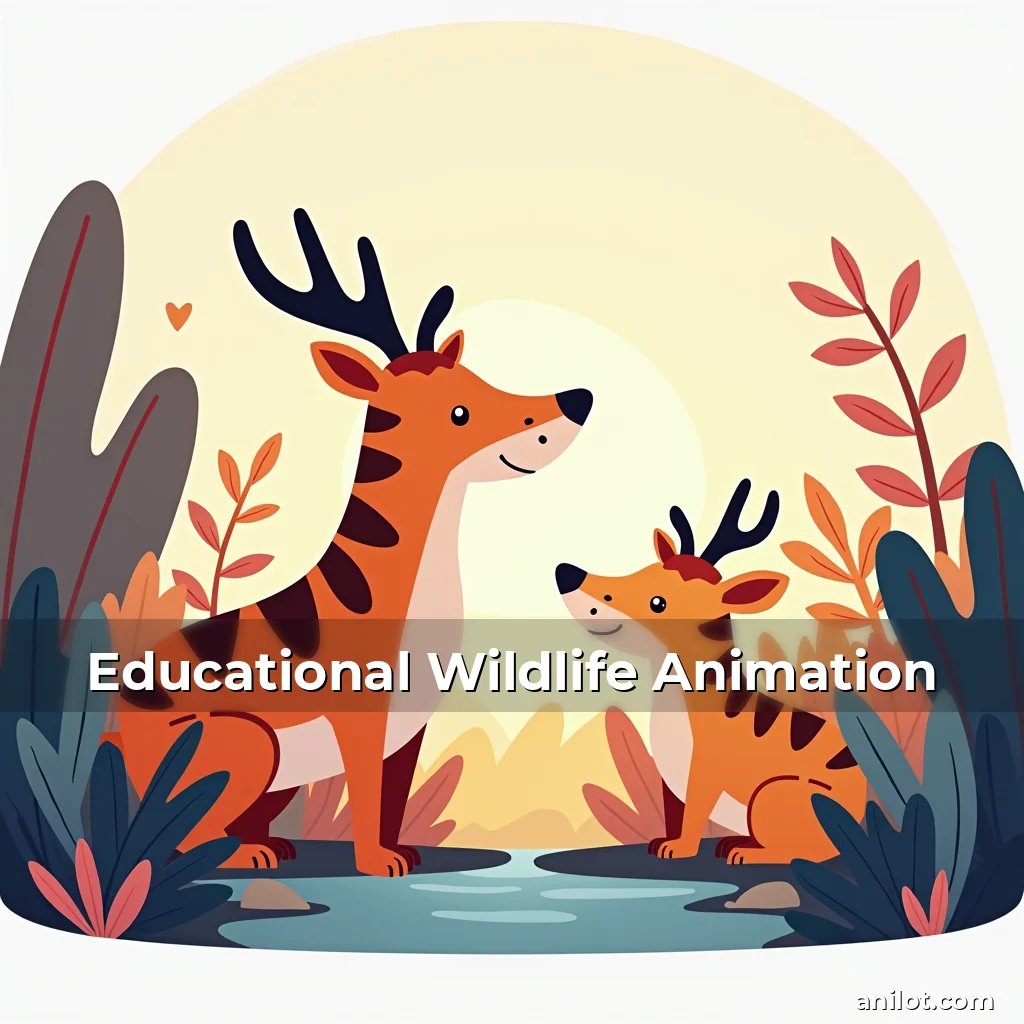
The Art of Educational Wildlife Animation: Bringing Nature to Life Through Digital Storytelling
In an age where digital media dominates our daily lives, wildlife animation has emerged as a powerful tool for education and conservation. By blending artistry with science, creators craft vivid portrayals of animals that not only entertain but also inform audiences worldwide.
This form of visual storytelling bridges the gap between complex ecological concepts and public understanding, making it accessible to people of all ages. From documentaries to interactive learning platforms, animated wildlife content is reshaping how we connect with nature.
Fundamentals of Wildlife Animation Craftsmanship
Creating compelling wildlife animations begins with mastering the fundamentals of traditional and digital art techniques. Animators must develop strong drawing skills, color theory knowledge, and composition principles before transitioning to specialized software tools.
The process involves meticulous research into animal anatomy, movement patterns, and behavioral characteristics. This foundation ensures accuracy while allowing creative liberties to enhance visual appeal without compromising educational value.
Animators often use reference materials such as field studies, scientific publications, and high-resolution photographs to capture precise details. These resources help recreate textures, fur patterns, and physiological features accurately.
A crucial aspect of wildlife animation is understanding biomechanics – how different species move their bodies in relation to their environment. This includes studying locomotion styles from terrestrial mammals to aquatic creatures.
- Morphology Studies: Detailed analysis of skeletal structures helps animators replicate natural movements convincingly
- Bioacoustics Integration: Incorporating realistic sounds enhances immersion and authenticity in animated environments
Creative teams typically divide work across concept development, storyboarding, modeling, rigging, texturing, animation, lighting, and rendering phases. Each stage requires collaboration among artists, scientists, and educators.
Specialized software like Maya, Blender, and ZBrush enables artists to create lifelike models with intricate detailing capabilities. These tools allow for both photorealistic renderings and stylized interpretations depending on project goals.
Educational Impact of Animated Wildlife Content
Animated wildlife presentations have proven highly effective in conveying environmental messages to diverse audiences. Their ability to simplify complex ecosystems makes them invaluable teaching aids in classrooms around the world.
Studies show that students retain information better when presented through dynamic visuals rather than static images or text-based material. The motion and interaction elements significantly increase engagement levels during lessons.
Interactive wildlife animations offer hands-on learning experiences that traditional methods cannot match. Virtual dissections, habitat simulations, and predator-prey relationship demonstrations become possible through this medium.
School curriculums increasingly incorporate multimedia resources due to these benefits. Educators report improved student participation rates when using animated content compared to conventional textbooks.
Statistical Evidence Supporting Visual Learning
Research conducted by the University of California found that learners exposed to animated biology modules scored 28% higher on assessments than those who studied written materials alone. This highlights the effectiveness of visual reinforcement in comprehension.
An international survey revealed that 76% of teachers believe animated content improves conceptual understanding in life sciences subjects. The immersive quality helps students visualize abstract processes they might otherwise struggle to grasp.
Further data indicates that children under 12 years old demonstrate enhanced memory retention when learning through animated sequences. The combination of sound effects, music, and moving imagery creates stronger cognitive associations.
These findings reinforce the importance of investing in quality wildlife animation projects for educational purposes. They provide empirical support for integrating animated content into modern pedagogical approaches.
Conservation Awareness Through Digital Storytelling
Digital animation plays a vital role in raising awareness about endangered species and fragile ecosystems. It allows creators to depict real-world threats in visually impactful ways that resonate emotionally with viewers.
Animated narratives can effectively convey urgent conservation messages without resorting to fear-mongering tactics. Instead, they inspire action by highlighting successful preservation efforts and solutions being implemented globally.
Videos showcasing rehabilitation centers, anti-poaching initiatives, and reforestation projects give audiences tangible examples of positive change. These stories humanize conservation issues and make them more relatable.
Documentaries featuring animated reconstructions of extinct species help illustrate biodiversity loss over time periods humans might find difficult to comprehend. This visualization technique makes climate change impacts more immediate and understandable.
Virtual reality experiences combining live-action footage with computer-generated elements immerse users in threatened habitats. This technology fosters empathy by placing individuals within simulated environments facing real-world challenges.
Technological Innovations Shaping Modern Wildlife Animation
Rapid advancements in technology continue to expand the possibilities for wildlife animation. Real-time rendering engines now enable faster production cycles and more sophisticated visual effects.
Artificial intelligence algorithms assist in generating realistic animal behaviors automatically based on observed patterns. This reduces manual labor while maintaining biological accuracy in animations.
Cloud computing facilitates collaborative workflows across global teams working on large-scale projects simultaneously. Distributed processing power handles complex simulations efficiently without requiring expensive local hardware.
Advancements in motion capture technology allow for more accurate replication of animal movements. Sensors track subtle body motions that would be challenging to animate manually.
Immersive technologies like augmented reality are creating new opportunities for experiential learning. Users can interact with virtual animals in their physical surroundings, enhancing educational applications.
Cultural Significance of Wildlife Animation Across Societies
Wildlife animation holds cultural significance beyond its educational functions. It preserves indigenous knowledge systems by depicting traditional ecological practices passed down through generations.
Many cultures feature folklore and myths centered around animals that reflect their values and beliefs. Animated adaptations of these stories maintain cultural heritage while presenting them to contemporary audiences.
Traditional tales about animal spirits and shapeshifters find new expression through digital mediums. This fusion of ancient wisdom with modern technology creates fresh perspectives on timeless themes.
Animations based on oral traditions help bridge generational gaps by making ancestral knowledge accessible to younger populations. They serve as living archives of cultural identity and environmental stewardship philosophies.
Collaborative projects involving local communities ensure authentic representation of cultural narratives. This approach respects intellectual property rights while fostering cross-cultural exchanges.
Ethical Considerations in Wildlife Animation Production
While wildlife animation offers many benefits, ethical concerns arise regarding the portrayal of animals and ecosystems. Creators must balance artistic license with factual integrity to avoid misleading representations.
Accurate depictions require consulting experts in zoology and ecology to verify information before implementation. Misrepresentations could lead to misunderstandings about animal behavior and habitat requirements.
Careful consideration should be given to how threatened species are portrayed. Sensationalizing endangerment risks trivializing serious conservation issues instead of promoting genuine concern.
When recreating historical events or extinct species, clear distinctions must be made between fact and interpretation. Audiences deserve transparency about what aspects are speculative versus well-documented.
Responsible sourcing of reference material is essential. Using publicly available resources appropriately avoids copyright violations while ensuring access to necessary information for accurate portrayals.
Fostering Creativity Through Wildlife Animation Projects
Engaging in wildlife animation encourages artistic growth while deepening appreciation for natural worlds. Aspiring animators benefit from exploring various stylistic approaches to represent different species uniquely.
Experimentation with color palettes, line weights, and shading techniques allows for personalization of each character’s appearance. This flexibility enables distinct visual identities that align with individual artistic visions.
Perspective choices influence how animals appear in scenes. Understanding compositional rules helps create balanced frames that guide viewer attention naturally towards key elements.
Studying classical illustration techniques alongside digital methods provides versatile skill sets applicable across multiple mediums. This hybrid approach keeps artists adaptable in evolving industry landscapes.
Participating in online communities dedicated to wildlife animation offers networking opportunities and peer feedback. Collaborative projects facilitate skill sharing and innovation within the field.
Future Directions for Wildlife Animation Development
Ongoing developments suggest exciting possibilities for future wildlife animation endeavors. Emerging technologies promise even greater realism and interactivity in coming years.
AI-driven procedural generation may automate routine tasks like background creation, freeing artists to focus on more complex creative decisions. However, careful oversight will remain crucial to maintain quality standards.
Increased accessibility to advanced tools through subscription models democratizes entry into the profession. More individuals from diverse backgrounds can contribute innovative ideas to the field.
As demand grows for environmentally conscious content, sustainable practices in animation production will become increasingly important. Energy-efficient workflows reduce carbon footprints associated with digital creation.
Global collaborations will likely flourish as remote work becomes standard practice. Cross-border partnerships enable pooling of expertise from different regions enriching the diversity of wildlife animation outputs worldwide.
Conclusion
The intersection of art, science, and technology in wildlife animation presents unparalleled opportunities for education and conservation advocacy. Its potential extends far beyond mere entertainment value.
By embracing responsible storytelling techniques and leveraging cutting-edge innovations, creators can continue developing impactful content that inspires respect for nature. Engaging with this growing field offers meaningful contributions toward protecting Earth’s precious biodiversity.

news is a contributor at AniLot.com. We are committed to providing well-researched, accurate, and valuable content to our readers.
You May Also Like

About the Author
Related Articles
Drawing Animal Cartoons Tutorial
Drawing Animal Cartoons Tutorial Welcome to the world of animal cartoon drawing! Whether you’re an…
Digital Animal Art Styles
The Endless Canvas: Exploring Digital Animal Art Through Generative AI and Human Creativity In the…
Expanded Analysis of Netflix Kids Content Performance Report
The Netflix Kids Content Performance Report has been a cornerstone of the streaming giant’s efforts…