
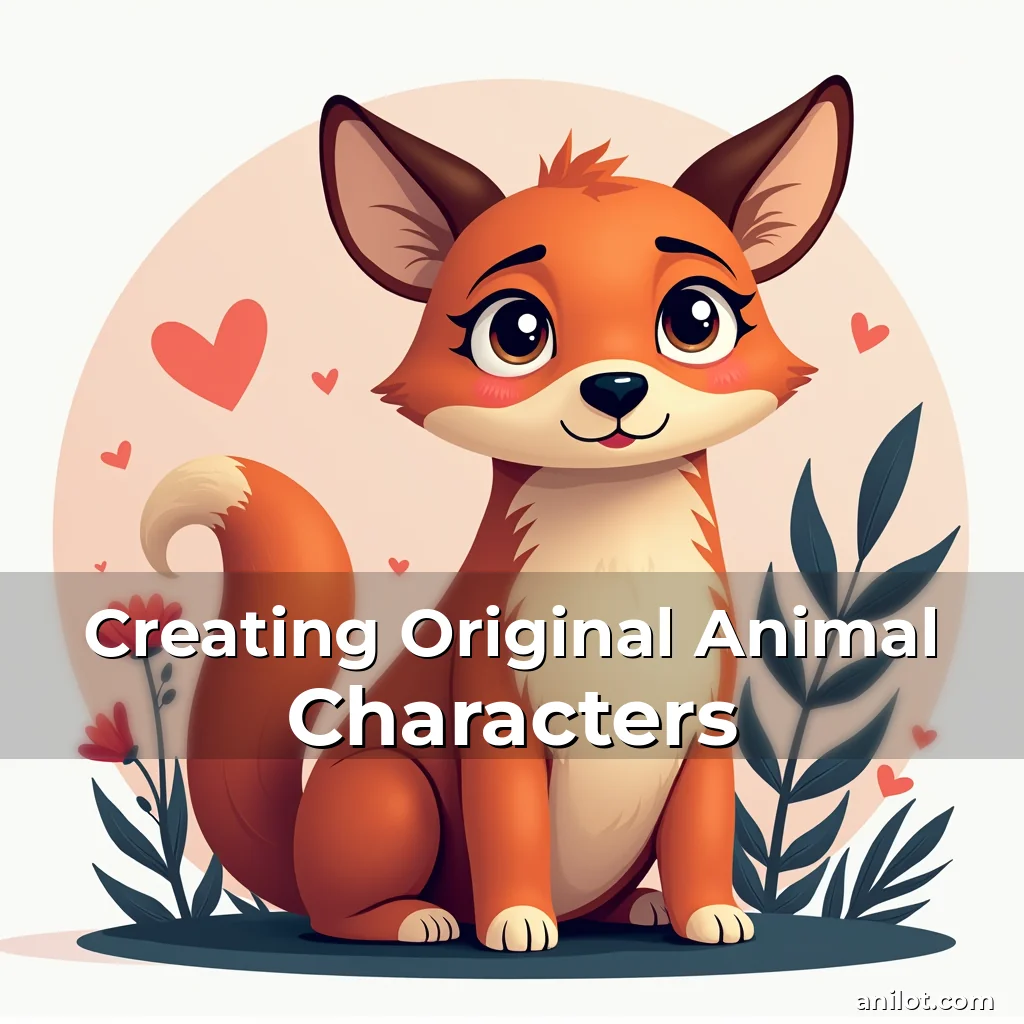
Creating Original Animal Character Designs for Storytelling and Artistic Expression
In today’s creative landscape, animal characters have become essential elements across various mediums such as animation, literature, video games, and visual art. From beloved cartoon mascots to symbolic figures in mythology, these creatures offer limitless possibilities for storytelling and artistic exploration.
The process of designing original animal characters involves combining biological accuracy with imaginative flair. This balance allows creators to develop unique beings that are both relatable and fantastical, capturing audiences’ imaginations while maintaining thematic consistency.
Fundamental Principles of Animal Character Design
An effective character design begins with understanding basic anatomical structures. While anthropomorphism is common, retaining recognizable features helps maintain audience connection. For instance, a fox character might retain its distinctive tail shape but incorporate human-like facial expressions.
Proportion adjustments play crucial role in defining personality traits. A larger-than-life bear could symbolize strength and protection, whereas a tiny mouse might represent cleverness and agility. These choices influence how viewers perceive the character’s abilities and motivations.
Color selection significantly impacts character perception. Warm hues often convey friendliness, while cool tones may suggest mystery or danger. However, cultural associations can vary widely—what signifies courage in one society might imply caution in another.
Texture application adds depth and realism. Combining natural fur patterns with artificial materials creates intriguing contrasts. A character with metallic scales alongside soft fur patches demonstrates hybridization potential that appeals to modern audiences seeking innovation.
- Biological Accuracy: Incorporating real-world anatomy ensures believability without sacrificing creativity. Observing actual animals provides foundational knowledge before adding imaginative twists.
- Motif Integration: Weaving symbolic elements from nature enhances meaning. A phoenix-inspired bird could represent rebirth themes within a narrative context.
- Cultural References: Drawing inspiration from mythological beasts enriches designs with historical significance. Mermaids blend aquatic characteristics with humanoid forms rooted in ancient legends.
Development Process for Unique Animal Creations
A successful character development journey typically follows several key stages. Initial concept sketches help visualize core ideas, followed by refinement through iterative feedback cycles. This approach ensures alignment with project goals and audience expectations.
Drafting preliminary sketches requires focusing on fundamental shapes rather than intricate details. Concentrating on silhouette forms establishes identity early in the process. Once basic structure is defined, additional features can be added progressively.
Refinement phase involves adjusting proportions based on practical considerations. Factors like movement capabilities and environmental interactions determine final dimensions. A desert-dwelling lizard needs different body ratios compared to a forest inhabitant.
Testing prototypes through various media formats reveals strengths and weaknesses. Digital models allow quick modifications, while physical maquettes provide tactile insights into form functionality. Both methods contribute to creating well-rounded designs.
Storytelling Through Animal Personas
Animal characters serve as powerful narrative tools when properly integrated into stories. Their innate behaviors naturally translate into compelling plot points, offering organic conflict resolution opportunities. A cunning raccoon’s resourcefulness becomes central to solving mysteries in children’s tales.
Symbiotic relationships between species create dynamic story arcs. Pairing predators with prey introduces tension that drives character growth. These interactions mirror real-world ecological balances while providing emotional resonance.
Cultural symbolism plays vital role in shaping narratives around animal personas. In some traditions, owls signify wisdom; others associate them with death omens. Understanding these connotations prevents unintentional misinterpretation during world-building processes.
Evolving roles over time reflect changing societal values. Historical portrayals of certain animals were heavily influenced by prevailing attitudes toward nature conservation efforts. Modern interpretations increasingly emphasize coexistence themes instead of dominance hierarchies.
Case Studies in Effective Animal Narratives
Animated films frequently showcase masterful use of animal characters. Pixar’s “Finding Nemo” utilizes fish protagonists who navigate underwater challenges using their inherent swimming skills. This seamless integration highlights natural behaviors while advancing the storyline effectively.
“Zootopia” demonstrates how diverse animal species can interact harmoniously despite physical differences. By establishing clear rules governing interspecies communication, the film maintains internal logic while exploring complex social issues metaphorically.
Video game franchises like “The Legend of Zelda” employ mythical creatures whose appearances align closely with folklore references. Yet they also introduce novel mechanics derived from creature-specific attributes, enhancing gameplay experiences through biologically inspired abilities.
Children’s literature continues to leverage animal archetypes successfully. Beatrix Potter’s Peter Rabbit series established enduring templates for portraying anthropomorphic wildlife in educational contexts without compromising authenticity.
Artistic Techniques for Rendering Animal Characters
Traditional drawing techniques remain invaluable for developing expressive animal characters. Sketchbook practice builds muscle memory necessary for accurate line work. Mastering gesture drawing enables artists to capture motion and emotion efficiently.
Digital illustration software offers advanced tools for refining details. Layered approaches facilitate experimentation with color schemes and lighting effects without permanent alterations. Non-destructive editing ensures flexibility during revision phases.
Perspective control is critical when depicting animal characters within environments. Establishing correct vanishing points maintains spatial coherence. Dynamic angles add interest while preserving proportionality across different viewpoints.
Shading techniques enhance three-dimensional appearance. Cross-hatching creates texture variation, while gradient fills simulate realistic skin tones. Balancing light sources according to scene requirements improves overall composition quality.
Design Considerations Across Mediums
Adapting animal characters to different platforms requires tailored approaches. Film necessitates exaggerated expressions for clarity at distance, while comics demand sharp outlines for legibility against varied backgrounds.
Video games impose technical constraints affecting character complexity. Polygon counts limit detail levels, requiring prioritization of essential features. Animation rigging demands simplification for efficient movement simulation.
Literary depictions rely on descriptive language to compensate for visual absence. Metaphors and similes bridge gaps between textual descriptions and reader imagination. Consistent terminology aids in building vivid mental images.
Interactive installations benefit from tactile elements enhancing engagement. Incorporating responsive materials reacts to viewer interaction, transforming static representations into immersive experiences that evolve with participation.
Evolution of Animal Character Representation
Historical perspectives reveal shifting attitudes towards animal portrayal. Ancient Egyptian art depicted feline deities with idealized forms emphasizing divine qualities rather than biological precision.
Renaissance illustrations began incorporating scientific observations alongside religious symbolism. Artists like Albrecht Dürer meticulously documented animal anatomy, blending empirical study with aesthetic presentation.
Modern digital age introduced unprecedented transformation possibilities. CGI technology enables complete morphing between species, allowing creation of entirely new biomechanical entities previously unimaginable through traditional means.
Contemporary trends prioritize inclusivity and diversity. Designers now consider gender fluidity, disability representation, and cultural sensitivity when conceptualizing animal characters, reflecting broader societal progressions in these areas.
Community Engagement and Collaboration Opportunities
Participatory design workshops foster collective creativity among enthusiasts. Collaborative projects allow sharing of expertise across disciplines, resulting in innovative solutions neither individual contributor could achieve alone.
Online forums enable global exchange of ideas and techniques. Virtual critique sessions provide constructive feedback loops that refine skill sets continuously. Shared resources expand access to specialized knowledge otherwise difficult to obtain individually.
Artist residencies promote cross-pollination between professionals and emerging talents. Mentorship programs accelerate learning curves through hands-on guidance. Joint exhibitions celebrate collaborative achievements visually.
Open-source repositories store communal assets available for modification and enhancement. Standardized file formats ensure compatibility across different software ecosystems. Version control systems track changes systematically facilitating team coordination.
Ethical Implications in Animal Character Creation
Creativity must be balanced with ethical responsibility regarding animal representation. Avoiding harmful stereotypes preserves dignity associated with real-life counterparts. Sensitivity towards endangered species influences depiction choices respecting their ecological importance.
Cultural appropriation concerns arise when borrowing symbols from indigenous communities. Proper research and consultation ensure respectful usage aligned with source cultures’ values and beliefs. Acknowledging origins prevents exploitation of sacred imagery.
Educational aspects extend beyond mere entertainment value. Including factual information enhances awareness about wildlife conservation issues. Accurate portrayals discourage misinformation while promoting appreciation for biodiversity.
Psychological impact considers how characters affect young audiences. Age-appropriate content filters prevent exposure to inappropriate material. Positive reinforcement encourages empathy development through relatable animal companions.
Future Directions in Animal Character Innovation
Emerging technologies promise exciting advancements in character design possibilities. Augmented reality applications allow interactive encounters with virtual creatures superimposed onto real-world settings.
Biomechanical engineering principles inspire next-generation creations merging organic lifeforms with synthetic components. Hybrid entities challenge conventional definitions of what constitutes ‘natural’ versus ‘artificial’ existence.
Data-driven design methodologies utilize AI algorithms analyzing existing works to identify successful patterns. Machine learning assists in generating variations based on proven formulas while suggesting novel combinations.
Immersive storytelling formats integrate sensory experiences beyond visual elements. Haptic feedback devices transmit vibrations corresponding to character actions, deepening emotional connections formed during interactions.
Conclusion
Creating compelling animal characters requires careful consideration of biological foundations, artistic expression, and narrative function. Successful designs strike equilibrium between familiarity and novelty ensuring universal appeal while remaining distinctively original.
Aspiring creators should experiment boldly yet thoughtfully, embracing continuous learning through observation, practice, and collaboration. Engaging with vibrant communities fosters growth enabling contribution to ongoing evolution of this richly rewarding field.

news is a contributor at AniLot.com. We are committed to providing well-researched, accurate, and valuable content to our readers.
You May Also Like
About the Author
Related Articles
Pet Animation for Kids
The Enchanting World of Pet Animation: Crafting Digital Companionship In today’s digital age, pet animation…
Animal Cartoons Voice Actors
The Magic Behind Animal Cartoon Voice Acting: A Deep Dive into Iconic Performances In the…
Funny Animal Videos TikTok
Funny Animal Videos TikTok In today’s fast-paced digital world, funny animal videos have become a…