
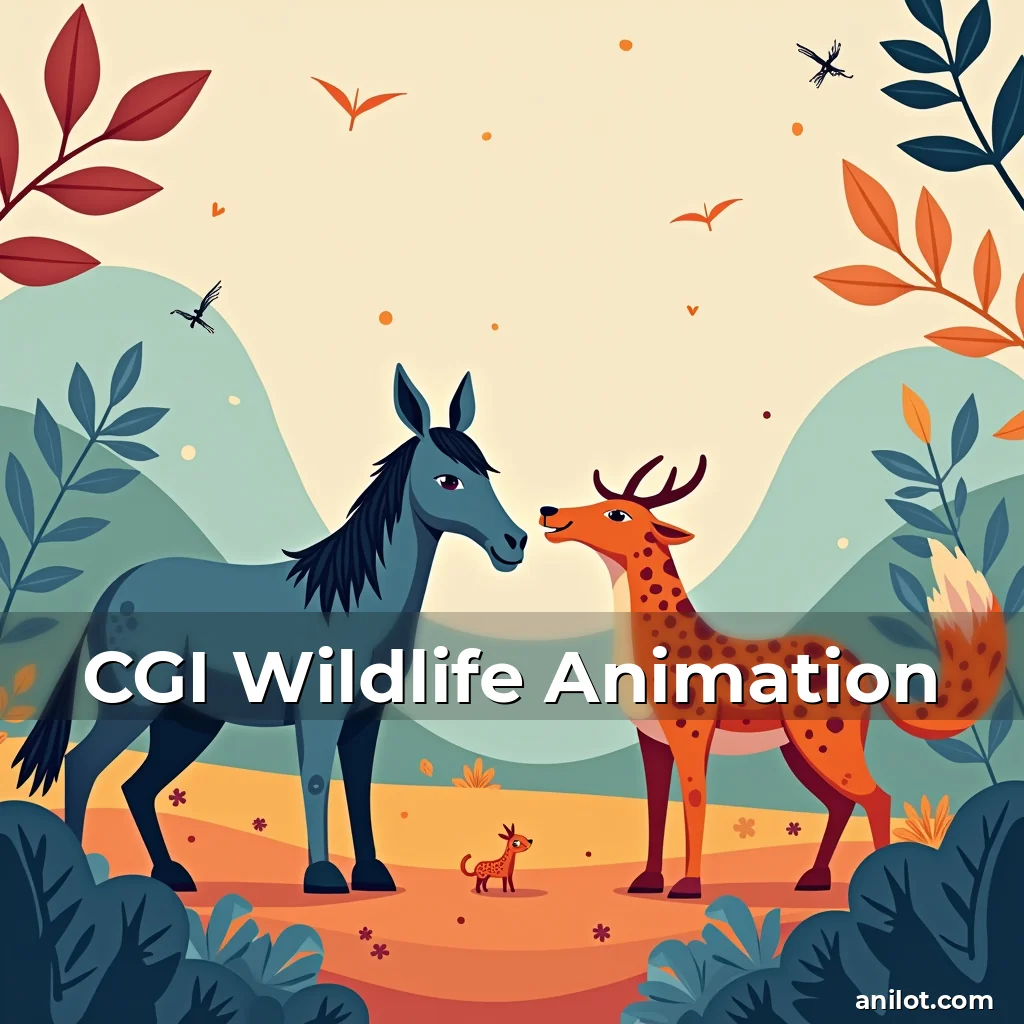
CGI Wildlife Animation: Bringing Nature’s Majesty to Life Through Digital Artistry
In the realm of visual storytelling, few fields blend artistry, science, and technology as seamlessly as CGI wildlife animation. This dynamic discipline captures the essence of our planet’s diverse ecosystems, from the delicate flutter of butterfly wings to the thunderous charge of elephants across savannahs.
The rise of digital animation has revolutionized how we experience nature through film, television, and interactive media. Wildlife animators now craft lifelike creatures that not only entertain but also educate audiences about conservation efforts and biodiversity preservation.
The Evolution of Wildlife Animation Techniques
The journey of wildlife animation began in the early days of hand-drawn cel animation, where artists painstakingly sketched each frame of animal movement by hand. These techniques laid the foundation for understanding animal locomotion patterns and anatomical structures that remain relevant today.
With the advent of computer-generated imagery (CGI) in the late 20th century, wildlife animation underwent a dramatic transformation. Digital tools enabled animators to create three-dimensional models that could be manipulated with unprecedented precision, allowing for more realistic motion simulations.
Modern wildlife animations incorporate advanced technologies such as motion capture systems and artificial intelligence algorithms. These innovations allow animators to study real animals’ movements and translate them into digital representations with remarkable accuracy.
- Motion Capture Technology: By tracking real animal movements using specialized sensors, animators can recreate natural behaviors with high fidelity
- AI-Powered Simulation: Machine learning algorithms analyze vast datasets of animal behavior to generate authentic-looking actions and interactions
Recent breakthroughs include photogrammetry techniques that digitally scan actual animals to create hyper-realistic textures and shapes. This method allows for precise replication of fur patterns, skin textures, and even microscopic features visible under magnification.
As computational power continues to increase, so does the complexity of animated environments. Animators now simulate entire ecosystems with detailed vegetation, weather effects, and terrain variations that react realistically to creature movements.
Fundamental Principles of Wildlife Animation Design
Creating convincing wildlife animations requires mastering several core principles that govern both form and function. The primary objective is to achieve realism while maintaining artistic integrity in every aspect of the production process.
Anatomical accuracy forms the cornerstone of effective wildlife animation. Understanding skeletal structure, muscle physiology, and biomechanics ensures that animated creatures move in ways consistent with their biological makeup.
Animators must pay meticulous attention to detail when recreating textures and surface properties. From the iridescent sheen of bird feathers to the rough texture of reptilian scales, these subtleties contribute significantly to overall believability.
Kinematic studies play a crucial role in capturing accurate movement patterns. By analyzing footage of live animals, animators develop reference materials that guide the creation of fluid, natural motions in their digital counterparts.
Lighting and shading are equally important considerations. Proper illumination enhances visibility of fine details while creating depth perception that makes scenes feel immersive rather than flat.
A well-balanced composition considers spatial relationships between subjects within a scene. Proper perspective, scale, and positioning ensure that animations appear proportionate and grounded in reality.
Crafting Realistic Animal Behaviors
Authenticity in animal behavior is achieved through rigorous research and observation of species-specific traits. Ethologists and zoologists often collaborate with animation teams to ensure behavioral accuracy in various contexts.
Animal personalities vary widely among individuals of the same species. Some may exhibit bold curiosity while others display cautious wariness, requiring nuanced character development approaches in animation projects.
Social hierarchies influence group dynamics in many species. For example, lion prides have complex social structures involving cooperation and competition that must be accurately represented in narrative sequences.
Instinctual responses need careful consideration during scene design. Predatory instincts, mating rituals, and territorial defense mechanisms should all reflect scientifically validated animal behaviors.
Bioacoustics plays an essential role in creating immersive experiences. Sound designers work closely with animators to synchronize vocalizations with corresponding physical expressions and environmental cues.
Environmental interaction adds another layer of authenticity. How an animal navigates its habitat, interacts with vegetation, or responds to changing conditions reflects deeper ecological knowledge.
Case Study: The Making of ‘Wild Encounters’
The documentary series ‘Wild Encounters’ showcases groundbreaking achievements in wildlife animation technology. It took over two years to complete, featuring over 50 different species rendered in stunning detail.
Photorealistic rendering required developing custom shaders that replicated animal camouflage effectively. Special attention was given to how light interacted with different coat types across varying lighting conditions.
The team used extensive field recordings to match vocalizations precisely with on-screen actions. They developed proprietary software to synchronize audio tracks with visual elements down to individual frames.
Advanced physics engines simulated realistic water interactions, enabling accurate depictions of aquatic lifeforms moving through liquid environments with appropriate resistance forces.
Interactive segments allowed viewers to explore virtual habitats at their own pace, enhancing educational value through experiential learning opportunities.
Applications Beyond Entertainment Media
While wildlife animation finds widespread use in films and documentaries, its applications extend far beyond entertainment sectors. Scientific visualization relies heavily on accurate representations for research purposes.
Educational institutions utilize animated models to teach anatomy lessons that would otherwise require dissections. Virtual labs provide safe, repeatable experiments without harming living specimens.
Conservation organizations employ animated content to raise awareness about endangered species and habitat destruction. Interactive exhibits engage visitors emotionally while conveying critical information about ecosystem fragility.
Gaming industries integrate wildlife animations into simulation programs that train rangers and researchers. These platforms help professionals prepare for fieldwork scenarios in controlled environments.
Architectural firms use animated renderings to demonstrate proposed developments’ impact on local wildlife populations before construction begins. This proactive approach helps mitigate potential environmental damage.
Ethical Considerations in Wildlife Animation
The increasing sophistication of wildlife animation raises ethical questions regarding its implications for public perceptions of animals. There’s growing concern about the line between factual representation and anthropomorphization.
Some critics argue that excessive dramatization might distort viewers’ understanding of animal capabilities. While compelling narratives enhance engagement, they risk oversimplifying complex natural processes.
Accurate portrayal of predator-prey relationships remains challenging due to sensitivity around depicting violent acts. Animated sequences must balance educational value with viewer comfort levels.
When portraying extinct species, there’s always uncertainty surrounding appearance details since direct observations aren’t possible. Artists rely on fossil records and comparative anatomy to make educated guesses.
Collaboration with scientific experts becomes especially crucial when dealing with rare or poorly understood species whose characteristics haven’t been extensively documented yet.
Future Trends in Wildlife Animation Innovation
Rapid advancements in quantum computing promise exponential improvements in rendering speeds and simulation capabilities. This will enable more intricate modeling of ecosystems and complex organismal interactions.
Holographic displays offer new possibilities for experiencing wildlife animations in three dimensions without traditional screens. These immersive interfaces change how audiences perceive and interact with animated content.
Virtual reality integration creates fully interactive wildlife experiences that transcend passive viewing formats. Users can explore simulated environments and observe animals up close in ways previously unimaginable.
Nanotechnology may soon allow for molecular-level modeling of organisms, revealing biological processes invisible to the naked eye. This level of detail could transform both education and medical illustration practices.
Artificial intelligence continues evolving rapidly, opening avenues for autonomous animation generation based on input parameters related to species biology, environment, and desired outcomes.
Pursuing a Career in Wildlife Animation
For aspiring professionals, entering the field of wildlife animation requires cultivating skills across multiple disciplines including art, science, and programming. A strong foundation in traditional drawing fundamentals remains essential despite technological advances.
Formal education typically involves degrees in animation, graphic design, or bioinformatics combined with specializations in ecology and evolutionary biology. Practical experience gained through internships provides invaluable hands-on training.
Continuous learning is necessary to stay current with emerging technologies shaping the industry landscape. Professional development courses focusing on software updates and new methodologies ensure career longevity.
Networking within professional communities offers access to mentorship opportunities and collaborative projects that enhance skill sets through shared expertise. Participation in industry events fosters connections with potential employers.
Creativity thrives at the intersection of technical mastery and deep appreciation for natural world complexities. Successful practitioners maintain curiosity about biological phenomena while refining their technical execution abilities simultaneously.
Conclusion
From ancient cave paintings to cutting-edge digital creations, humanity has continually sought innovative ways to depict the wonders of the natural world. CGI wildlife animation stands at the forefront of this enduring tradition with unparalleled capacity for immersion and discovery.
By embracing continuous innovation while honoring scientific accuracy, creators continue pushing boundaries in representing Earth’s diverse inhabitants. As technology progresses, the future promises even greater revelations about our planet’s fascinating wildlife through the lens of digital artistry.

news is a contributor at AniLot.com. We are committed to providing well-researched, accurate, and valuable content to our readers.
You May Also Like

About the Author
Related Articles
Animal Animation Films Different Studios
The Diverse World of Animal Animation Films Across Major Studios In recent years, animal animation…
Wildlife Animation vs Photography
The Artistic Evolution and Technical Mastery Behind Wildlife Animation In an era where digital creativity…
Animal Cartoons Merchandise
The Endless Whiskers: A Deep Dive into Animal Cartoon Culture In a world where animated…