
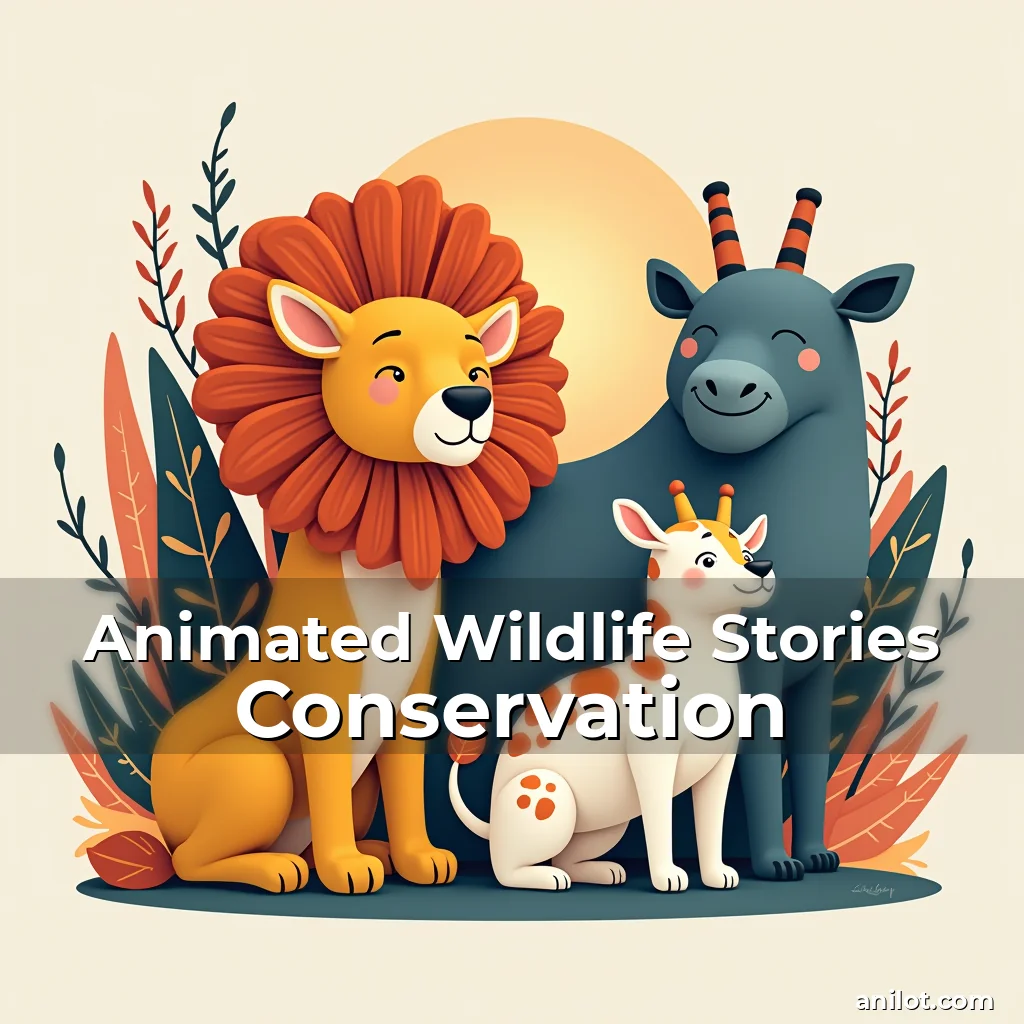
The Enchanting World of Animated Wildlife Stories: Bridging Nature and Imagination
In a world increasingly dominated by technology and urbanization, animated wildlife stories offer a whimsical escape that celebrates the beauty and complexity of nature through the lens of animation. These narratives not only entertain but also educate audiences about ecological systems, endangered species, and conservation efforts.
By blending artistry with environmental awareness, animated wildlife stories have become a powerful medium for fostering empathy towards animals and their habitats. They invite viewers into vibrant ecosystems where every creature has a role to play in maintaining balance and harmony.
The Power of Animation in Wildlife Storytelling
Animation possesses a unique ability to transform real-world creatures into captivating characters while preserving their essential traits and behaviors. This visual storytelling format allows creators to explore complex themes such as migration patterns, predator-prey relationships, and habitat preservation in ways that are both engaging and accessible.
Through stylized depictions and imaginative scenarios, animators can simplify intricate biological processes without losing their scientific integrity. For example, documentaries featuring animated sequences often use simplified visuals to explain animal behavior during mating seasons or territorial disputes.
The flexibility of animation enables storytellers to create environments that might be difficult or dangerous to film in reality. From dense rainforests teeming with life to arid deserts inhabited by elusive nocturnal creatures, animated settings provide limitless possibilities for exploration and education.
- Simplified Visualization: Complex natural phenomena can be broken down into digestible segments using color-coded diagrams, step-by-step animations, and interactive elements that enhance comprehension.
- Creative Freedom: Animators are free from the constraints of physical locations and camera limitations, allowing them to depict fantastical landscapes or time-lapse transformations that would otherwise be impossible to capture realistically.
Moreover, animation serves as an effective tool for reaching younger audiences who may find traditional documentary formats less appealing. By incorporating humor, music, and relatable protagonists, these stories make learning about wildlife an enjoyable experience rather than a chore.
As digital platforms continue to evolve, animated wildlife stories are becoming more interactive, offering immersive experiences where users can engage with virtual ecosystems and participate in simulated conservation activities.
Fostering Empathy Through Animal Characters
One of the most compelling aspects of animated wildlife stories is their capacity to humanize non-human beings. By attributing emotions, motivations, and personalities to animals, creators help bridge the gap between humans and other species, encouraging deeper emotional connections.
This empathetic approach is particularly beneficial when addressing issues related to poaching, deforestation, or climate change impacts on wildlife populations. When audiences see themselves reflected in the struggles of animated animals, they are more likely to develop concern for real-world counterparts facing similar challenges.
Educational programs leveraging animated narratives have shown increased engagement rates compared to conventional teaching methods. Students exposed to character-driven stories about endangered species demonstrate higher retention levels regarding key facts about biodiversity loss and ecosystem interdependence.
The Science Behind Emotional Engagement
Neuroscientific research indicates that our brains respond similarly to fictional characters we care about and real people we know personally. This phenomenon suggests that emotionally resonant portrayals of wildlife in animated form can trigger genuine compassion responses akin to those evoked by live encounters with animals.
A study published in Nature Communications found that participants exhibited stronger neural activity associated with social bonding after watching animated films depicting cooperative behaviors among various animal species compared to viewing static images or text-based information about the same topics.
Such findings highlight the potential of animated wildlife storytelling as a legitimate educational strategy within formal curricula and informal learning environments alike. It offers a multidimensional approach combining entertainment value with cognitive development benefits.
Beyond individual impact, collective empathy cultivated through shared cinematic experiences can lead to broader societal shifts in attitudes toward conservation initiatives and sustainable living practices.
Diverse Genres Within Animated Wildlife Narratives
Animated wildlife stories span a wide spectrum of genres catering to different age groups and interests. Adventure tales follow heroic animals embarking on daring quests across treacherous terrains filled with exotic flora and fauna.
Mystery series present intriguing puzzles centered around missing animals or unexplained natural occurrences, prompting young minds to think critically and apply deductive reasoning skills to solve the cases alongside protagonist creatures.
Comedy sketches feature humorous misunderstandings between species or satirical takes on anthropomorphized animals navigating modern challenges faced by their wild relatives, providing light-hearted yet informative commentary on contemporary environmental concerns.
Action-packed sagas showcase thrilling battles against invasive predators or threats posed by human encroachment, emphasizing teamwork and strategic planning among diverse animal factions working together for survival.
Romantic dramas delve into courtship rituals observed in nature, illustrating how evolution has shaped elaborate displays meant to attract mates under specific circumstances while subtly educating viewers about reproductive strategies employed by various species.
Historical epics transport audiences back in time to witness pivotal moments in evolutionary history, bringing prehistoric creatures to life with dramatic reenactments that highlight adaptations crucial for survival through epochs marked by cataclysmic events shaping Earth’s biosphere.
These varied narrative structures ensure there is something appealing for virtually everyone seeking to learn about wildlife through animated storytelling mediums.
Technological Innovations Enhancing Wildlife Animation
Advancements in computer graphics software now enable unprecedented levels of realism in portraying animal movement, texture rendering, and environmental interactions. Motion capture technologies allow animators to translate actual animal locomotion patterns into digital representations accurately capturing nuances previously challenging to achieve manually.
Artificial intelligence algorithms assist artists by predicting plausible behavioral sequences based on established zoological knowledge, streamlining production timelines while ensuring scientifically accurate depictions that align closely with authentic wildlife characteristics.
Virtual reality applications provide fully immersive experiences where users can walk alongside animated animals within digitally reconstructed habitats, experiencing first-hand the sensory details of their surroundings including soundscape composition, temperature fluctuations, and spatial orientation cues.
Augmented reality features permit mobile devices to overlay animated creatures onto real-world environments, enabling interactive learning sessions where children can observe virtual lions prowling through local parks or watch animated birds migrating overhead as part of educational field trips.
Data visualization techniques integrated into animated productions facilitate better understanding of population dynamics, climate change effects, or genetic diversity metrics typically conveyed through abstract statistical charts.
Collaborative platforms foster global participation by allowing contributors worldwide to submit suggestions or even co-create storylines involving specific endangered species, promoting international cooperation in wildlife conservation efforts via creative expression channels.
Such technological progressions mark significant milestones in making wildlife education more engaging, inclusive, and impactful across generations accustomed to consuming media primarily through digital interfaces.
The Role of Cultural Perspectives in Wildlife Animation
Different cultures harbor distinct beliefs, myths, and traditions surrounding particular animals, which significantly influence how they’re portrayed in animated narratives. Indigenous perspectives often emphasize spiritual connections between humans and nature, resulting in stories that highlight symbiotic relationships rather than mere observation of biological functions.
Comparisons between Western-style animations focusing heavily on individual heroism versus Eastern interpretations celebrating communal harmony reveal underlying values embedded within respective cultural frameworks guiding artistic choices made by creators from diverse backgrounds.
When producing cross-cultural projects aiming at global audiences, filmmakers must navigate sensitivities around stereotyping while respecting ancestral knowledge systems represented authentically within storylines depicting traditionally revered or feared creatures.
Language barriers necessitate careful consideration regarding subtitles placement, voice modulation techniques, and visual symbolism usage so that core messages remain clear regardless of linguistic differences affecting interpretation accuracy.
Successful multicultural collaborations occur when mutual respect forms the foundation upon which creative decisions rest; this includes acknowledging intellectual property rights held by communities whose folklore inspires storyline developments involving sacred animals or ceremonial practices central to their way of life.
Educational institutions utilizing internationally produced wildlife animations benefit immensely from exposure to varied viewpoints enriching classroom discussions about ethics relating to conservation policies, land management approaches, and wildlife protection legislation differing across regions due to historical contexts influencing current regulations governing natural resource utilization.
Challenges Faced by Creators of Animated Wildlife Stories
Prioritizing scientific accuracy presents considerable hurdles since some biological mechanisms operate beyond human perception capabilities requiring specialized equipment for complete understanding, thus posing difficulties in simplifying complex ideas effectively without oversimplification leading to misinformation risks.
Licensing agreements restricting access to high-resolution reference materials limit opportunities for thorough research phases essential prior to beginning storyboard creation stages aimed at achieving lifelike depictions matching target species’ anatomical features precisely.
Financial constraints pose substantial obstacles preventing smaller independent studios from investing resources necessary for acquiring cutting-edge animation tools capable of replicating fine fur textures or dynamic muscle movements seen naturally in living organisms.
Ensuring inclusivity demands intentional efforts addressing representation gaps manifesting across gender identities, ethnicities, and socio-economic statuses potentially overlooked unless consciously incorporated into scriptwriting processes determining character design selections impacting final product outcomes.
Addressing climate change implications requires ongoing updates to existing material reflecting shifting conditions affecting animal habitats globally necessitating continuous monitoring cycles updating database archives containing relevant ecological data sources informing future content development plans.
Lastly, balancing entertainment value against educational objectives remains constant challenge demanding meticulous calibration ensuring neither aspect overshadows the other resulting in cohesive narratives satisfying dual purposes simultaneously through well-crafted plot structures integrating factual components seamlessly within engaging adventures.
Future Directions for Animated Wildlife Storytelling
Emerging trends indicate growing interest in participatory media formats empowering audiences to shape story arcs dynamically according to personal preferences altering narrative directions influenced by viewer choices presented through branching path options during playback sessions.
Interactive webisodes permitting real-time decision-making regarding storyline progression represent promising innovations enhancing immersion levels surpassing traditional linear storytelling models limiting audience agency confined solely to passive consumption modes prevalent historically within broadcast television schedules following fixed programming timeslots.
Immersive theater performances merging live actors with projected holographic imagery could revolutionize experiential learning methodologies transforming classrooms into theatrical spaces where students physically interact with animated creatures embodying lessons learned through kinesthetic engagement reinforcing memory retention rates achieved through multi-sensory stimuli activations simultaneous with verbal instruction delivery.
Blockchain technologies facilitating secure ownership transfers of user-generated content contributions enable decentralized collaboration networks expanding creative potential exponentially while safeguarding intellectual properties belonging to original idea owners participating voluntarily within open-source platforms designed specifically for wildlife-themed multimedia productions aiming at educational outreach goals.
Predictive analytics applied to streaming platform user behavior patterns will inform targeted content curation strategies tailoring recommendations aligned closely with demographic profiles establishing personalized pathways guiding individuals through curated collections optimized for maximizing long-term knowledge acquisition outcomes measured quantitatively through periodic assessments tracking conceptual mastery degrees attained progressively over extended periods spent interacting regularly with provided resources.
Ultimately, the convergence of evolving technological capabilities with persistent demand for quality wildlife education content positions animated storytelling firmly within vanguard position poised for continued expansion accommodating ever-growing complexities inherent within contemporary ecological discourse realms.
Conclusion
Animated wildlife stories serve as vital conduits connecting humanity with the natural world by translating ecological truths into visually arresting narratives that inspire action and appreciation for our planet’s inhabitants.
To support the growth of this genre, educators, policymakers, and technologists must collaborate to ensure equitable access to high-quality wildlife animation resources, promote interdisciplinary approaches in curriculum development, and advocate for ethical standards prioritizing authenticity and respect for the subjects depicted.
“`

news is a contributor at AniLot.com. We are committed to providing well-researched, accurate, and valuable content to our readers.
You May Also Like

About the Author
Related Articles
Animal Characters with Human Traits
Animal Characters with Human Traits In today’s creative world, animal characters are more than just…
Funny Animal Videos Montage
The Unstoppable Rise of Funny Animal Videos: A Digital Age Phenomenon In an era where…
Funny Animal Videos Fails
Funny Animal Videos Fails The world has become increasingly fascinated by funny animal videos that…