
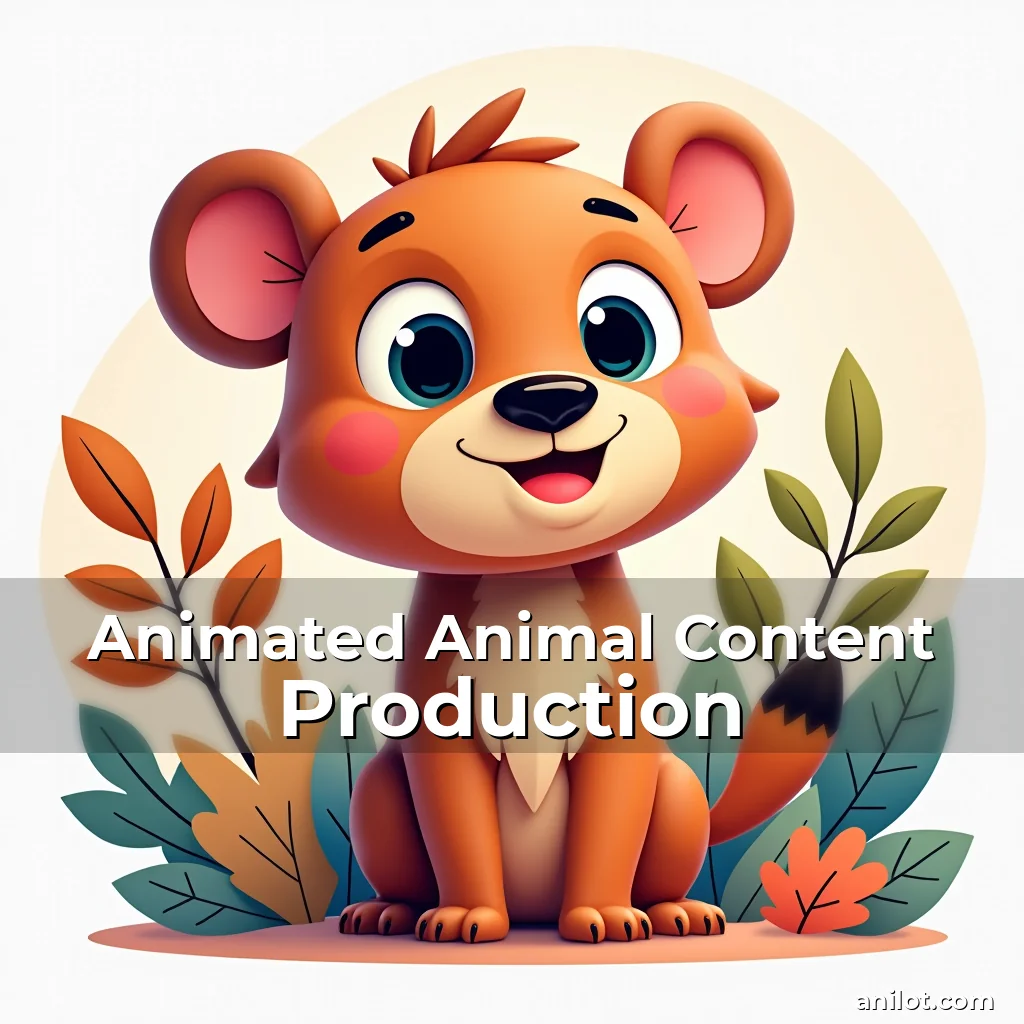
The Art of Animated Animal Content Creation: A Deep Dive into Captivating Wildlife Narratives
In recent years, animated animal content has surged in popularity across platforms ranging from streaming services to social media, captivating audiences worldwide. This vibrant niche combines creativity with technical skill to bring animals—from the tiniest insects to majestic elephants—to life through motion pictures, series, and interactive experiences.
The appeal lies in its ability to merge factual accuracy with artistic expression, offering both entertainment and education. As demand grows, creators and enthusiasts in the AniLot community and beyond are exploring new ways to innovate within this dynamic field.
The Origins and Evolution of Animated Animal Media
Animated animal content traces its roots back to early 20th-century film pioneers who sought to depict nature through stop-motion techniques. These foundational efforts laid the groundwork for today’s sophisticated digital animations, blending scientific observation with imaginative storytelling.
The mid-20th century saw the rise of television specials and theatrical films featuring anthropomorphic animals, which blurred the line between realism and fantasy. Shows like *The Pink Panther* and movies like *Babe* introduced audiences to the emotional depth that animated animals could convey.
Technological advancements over the past few decades have revolutionized the genre. High-resolution CGI, motion capture, and AI-driven rendering now enable animators to replicate natural movements and expressions with astonishing precision. This shift has expanded creative possibilities while raising expectations for visual fidelity.
- Historical milestones: From hand-drawn cel animation to photorealistic 3D modeling, each era brought new breakthroughs.
- Cultural influence: Classic cartoons shaped perceptions of wildlife, sometimes leading to misconceptions about animal behavior.
Mastery of Motion: Techniques Behind Realistic Animal Animation
Anthropomorphism vs. Zoology Accuracy
Striking the right balance between personification and biological correctness remains contentious among critics. While exaggeration can enhance character development, excessive anthropomorphism risks misrepresenting real animal psychology and social structures.
Series targeting children frequently soften harsh realities of wild life, opting instead for sanitized portrayals that prioritize safety messages. Conversely, mature audiences may appreciate darker narratives addressing survival struggles or ecosystem fragility.
Impact on Environmental Awareness and Education
Animated content has proven effective in promoting environmental stewardship, especially among younger demographics. By humanizing endangered species, shows foster empathy that translates into tangible actions like habitat preservation campaigns.
School curricula incorporate animated modules to simplify complex topics such as food chains, genetic diversity, or climate change impacts. Visual metaphors and vivid scenarios aid comprehension better than static textbooks alone.
Interactive installations allow museum visitors to simulate tracking wildlife or experiencing deforestation consequences firsthand. These immersive approaches deepen engagement compared to passive information delivery.
Case Study: “Animal Planet Live”
A hybrid format combining documentary-style cinematography with stylized animation delivers behind-the-scenes access to zoo operations. Viewers witness medical procedures, breeding programs, and enrichment activities presented in an entertaining manner.
This approach bridges gaps between traditional documentaries and fictional storytelling, appealing to diverse age groups seeking both informative and emotionally resonant content.
Challenges Facing Contemporary Animators
Creating lifelike animals demands immense resources, including talent pools skilled in both artistry and technology. Budget limitations force many independent producers to adopt simplified styles or outsource key components.
Ethical considerations arise when depicting injured animals or sensitive ecological situations. Studios must navigate boundaries regarding graphic content while maintaining authenticity in portraying natural phenomena like predation cycles.
Culture-specific interpretations also pose difficulties. Certain regions associate particular animals with conflicting symbolic meanings, requiring careful scriptwriting to avoid unintended offense or misrepresentation.
Voice Acting and Sound Design Considerations
Selecting appropriate vocal tones is critical—too human-sounding voices risk undermining believability, whereas overly animal-like intonations may hinder dialogue clarity. Voice actors often undergo training to mimic natural sounds alongside speech patterns.
Sound designers craft distinct auditory signatures for different habitats, from rainforest ambiance to Arctic wind effects. Layered audio cues help reinforce spatial orientation and add layers of realism to virtual environments.
Trends Reshaping the Future of the Genre
Augmented reality applications are transforming how people interact with animated animal content. Mobile apps enable users to place cartoon creatures in their own surroundings, creating personalized immersive experiences at home.
User-generated content platforms now host thriving communities where amateurs share original stories featuring custom-animated animals. These democratized spaces foster innovation but also raise concerns about quality consistency.
The metaverse concept promises new frontiers for interactive storytelling, allowing global audiences to explore digitally rendered ecosystems simultaneously. Virtual pet ownership models may redefine how consumers relate to animated creatures.
- Immersive storytelling: 360-degree panoramas and haptic feedback devices
Localizing language while preserving core message integrity poses challenges. Dubbing processes must maintain tonal nuances essential to conveying personality characteristics inherent in animal characters.
Visual design choices must accommodate varying aesthetic preferences across cultures—one region may prefer hyper-realism while another favors stylized caricatures to emphasize certain physical traits symbolically.
Preserving Authenticity Amid Technological Progress
As tools become more accessible, maintaining artistic integrity becomes paramount. Over-reliance on automated solutions risks producing homogenized outputs lacking individuality or creative vision.
Encouraging mentorship programs helps transfer expertise from seasoned professionals to emerging talents, ensuring continuity in craftsmanship despite evolving technologies.
Curatorial efforts in archives preserve classic works that defined earlier eras, serving as benchmarks against which future innovations can be measured for progressiveness and originality.
Building Communities Around Shared Passion
Platforms like AniLot offer dedicated spaces for fans, creators, and researchers to exchange ideas, showcase projects, and collaborate on initiatives promoting animated animal content excellence.
Online workshops and tutorials empower aspiring artists to learn cutting-edge techniques through hands-on practice, bridging the gap between theoretical knowledge and practical application.
Virtual expos and exhibitions let attendees experience groundbreaking projects in action, sparking inspiration that fuels further experimentation and growth within the field.
Conclusion
The journey of animated animal content reflects our enduring fascination with wildlife, technology, and storytelling. It stands at the intersection of science, art, and culture, continually evolving to meet changing audience needs and technological capabilities.
Whether you’re an animator seeking to refine your skills, a viewer looking for meaningful entertainment, or someone passionate about wildlife conservation, this ever-expanding medium offers infinite potential for connection and discovery. Embrace the opportunity to contribute to its next chapter, wherever your interests may lead you.

news is a contributor at AniLot.com. We are committed to providing well-researched, accurate, and valuable content to our readers.
You May Also Like
About the Author
Related Articles
Kids Animation Halloween Specials
Kids Animation Halloween Specials Halloween is a time when creativity takes center stage, especially when…
Animal Animation Trends Streaming
The Evolution of Animal Animation in the Digital Age: A Deep Dive into Current Trends…
Iconic Cartoon Animals
The Endearing World of Iconic Cartoon Animals In the vibrant realm of animation, cartoon animals…