


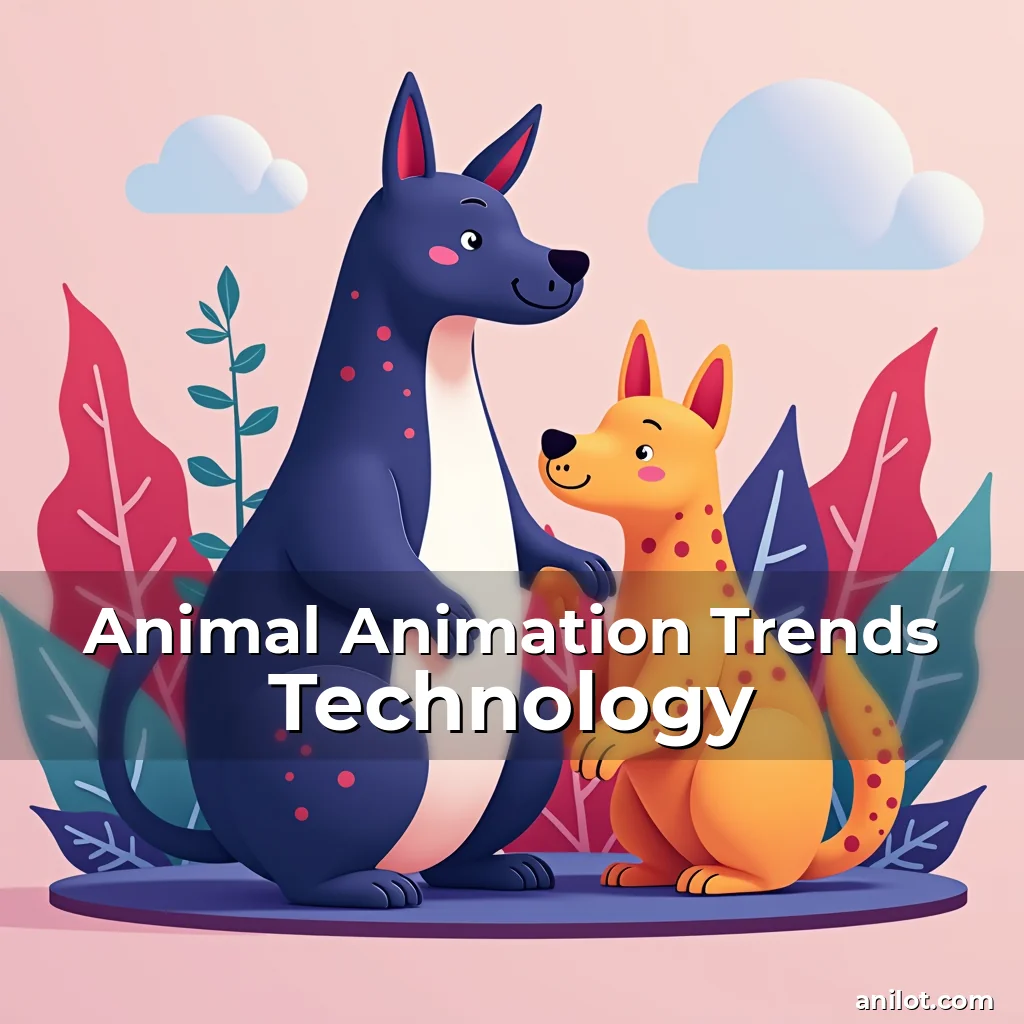
The Evolution of Animal Animation: Emerging Technologies and Creative Directions
In recent years, animal animation has experienced a renaissance driven by technological advancements and evolving artistic sensibilities. From early hand-drawn techniques to modern digital innovations, animators continue pushing boundaries to bring creatures from fantasy and reality to life with unprecedented realism and emotional depth.
This transformation is particularly evident in the rise of AI-assisted tools that enhance character design workflows while preserving creative control. As studios explore new frontiers in motion capture, procedural animation, and hyper-realistic rendering, the field offers exciting opportunities for both veteran artists and newcomers alike.
The Rise of Realism Through Motion Capture
Motion capture technology has revolutionized how animals are animated by capturing real-world movement patterns with remarkable precision. By outfitting live animals with specialized suits embedded with sensors, animators can translate natural behaviors into digital environments with minimal manual intervention.
This technique not only improves accuracy but also allows for more nuanced expressions that would be difficult to achieve through traditional keyframe animation alone. For example, subtle muscle movements during running or blinking patterns in different species can now be captured and replicated digitally.
Industry applications:
- Bio-mechanical studies: Researchers use motion data to understand animal locomotion better, informing both scientific research and entertainment productions
- Veterinary training: Medical professionals simulate complex procedures using realistic animations derived from actual patient cases
- Celebrity endorsements: Famous animals have been featured in commercials using their own motion data for authenticity and audience engagement
While some critics argue that over-reliance on motion capture could limit creative freedom, most professionals view it as a tool that enhances rather than replaces human artistry. When combined with traditional hand-drawing techniques, motion-captured sequences can create compelling hybrid styles that push narrative possibilities.
Animators often refine raw motion data by adjusting timing, exaggerating certain features for dramatic effect, or blending elements from multiple sources to create entirely new creatures that exist outside the realm of current biological realities.
Digital Sculpting Tools Redefining Creature Design
Digital sculpting software has transformed how artists approach animal anatomy modeling, enabling greater detail and flexibility than ever before. Programs like ZBrush allow creators to manipulate virtual clay at microscopic levels, creating textures and forms that closely mimic living organisms.
This level of detail extends beyond basic shape modeling to include intricate skin structures, fur dynamics, and even internal organ systems when necessary for storytelling purposes. Some projects now incorporate biomechanical simulations to ensure anatomical correctness under various conditions.
Pioneering technologies in creature design:
- Haptic feedback devices: These provide tactile sensations to sculptors, allowing them to ‘feel’ surfaces as they work, which significantly improves surface quality perception
- Ai-powered texture generators: Algorithms analyze real animal samples to produce highly accurate surface patterns without requiring extensive manual input
- Multi-layered rigging systems: Enable complex articulations such as joint deformations and flexible spine movements that were previously impossible to animate realistically
Artists frequently combine these digital tools with physical maquettes made from materials like foam latex or resin. This hybrid approach helps maintain dimensional awareness and provides reference points when working purely in digital space.
As hardware capabilities advance, we’re seeing increasingly sophisticated renderings of semi-translucent body parts, bioluminescent features, and other fantastical elements that were once limited to speculative fiction illustrations.
Procedural Animation Techniques for Dynamic Creatures
Procedural animation systems generate complex movements algorithmically based on defined rules and parameters, offering new ways to animate animals across diverse scenarios. Unlike traditional frame-by-frame methods, these systems adapt automatically to changing environmental factors and behavioral requirements.
This approach proves especially useful for simulating herding behavior in large groups, predator-prey interactions, or natural habitat responses where individual variations contribute to overall group dynamics. Animators set up rule sets governing things like flocking algorithms or schooling behaviors that then self-generate appropriate reactions.
Advantages of procedural systems:
- Scales well for massive populations: Simultaneously animating thousands of creatures without significant performance degradation
- Creates emergent behaviors: Unpredictable yet believable actions arise naturally from established rules, adding organic feel to animations
- Faster iteration cycles: Changes to behavior parameters affect entire scenes instantaneously, streamlining production timelines
However, achieving believable results requires careful calibration of parameters to avoid mechanical repetition that might make characters appear artificial. Artists often spend considerable time fine-tuning variables to strike the right balance between mathematical predictability and natural randomness.
Some studios develop custom procedural engines tailored specifically to particular types of animals or ecosystems being depicted. These bespoke solutions help maintain consistency across vast landscapes filled with interacting wildlife elements.
AI Integration: Enhancing Creativity Without Replacing Artistry
Artificial intelligence is reshaping animal animation workflows by automating routine tasks while amplifying creative potential. Machine learning models trained on vast datasets of existing animations can suggest plausible motion options, identify inconsistencies, or even generate concept sketches based on textual descriptions.
This doesn’t mean replacing skilled artists but augmenting their abilities. For instance, AI can pre-process raw footage from live action references, isolating relevant segments and suggesting optimal framing choices for integration into animated sequences.
Applications of AI in contemporary animation:
- Style transfer algorithms: Convert photographic material into stylized drawings maintaining essential visual characteristics
- Automated cleanup tools: Correct minor imperfections in line art efficiently without compromising artistic intent
- Dialogue-driven animation: Generate matching lip movements and facial expressions based on audio recordings
Critics caution against over-dependence on AI-generated content, emphasizing that technical efficiency shouldn’t come at the expense of original vision. Successful implementations blend machine suggestions with human refinement to maintain artistic integrity.
Many leading studios establish clear guidelines regarding AI usage, ensuring its role remains supportive rather than dominant within creative processes. This balanced approach preserves the uniqueness of each project’s aesthetic identity.
Immersive Storytelling Through Augmented Reality Experiences
Augmented reality (AR) platforms are expanding the scope of animal animation by bringing digital creatures into physical spaces with interactive possibilities. Users can now engage with animated animals in real-time through mobile devices or smart glasses, experiencing narratives that unfold around them in three-dimensional environments.
These experiences leverage location-based triggers and user interaction mechanics to create personalized encounters. A child exploring a park might see a friendly fox following their path, while another viewer nearby observes completely different animal activity happening simultaneously in the same area.
Notable AR animal animation projects:
- Wildlife Education Apps: Provide immersive lessons about animal habitats and behaviors through gamified experiences
- Tourist Attractions: Allow visitors to interact with augmented versions of local fauna enhanced with historical context information
- Therapeutic Applications: Help individuals with disabilities connect with nature through customized interactive experiences
Developers face challenges in balancing interactivity with computational efficiency to maintain smooth performance on consumer-grade hardware. Optimizing graphics for varying device capabilities remains an ongoing technical challenge in this emerging medium.
Despite these hurdles, the demand for AR-based animal content continues growing, reflecting a broader cultural shift towards experiential media consumption patterns that value participation over passive viewing.
Ethical Considerations in Wildlife Representation
The increasing sophistication of animal animation raises important ethical questions about responsible representation of wildlife. While digital depictions offer creative freedoms, they also carry responsibilities related to public education and conservation messaging.
Animal rights advocates emphasize the importance of accurate portrayals that respect ecological relationships and discourage harmful misconceptions about wild species. Misrepresentations risk reinforcing stereotypes or promoting dangerous behaviors toward real animals.
Best practices for ethical animation:
- Consultation with experts: Involve zoologists and conservation scientists during development phases to ensure biological accuracy
- Transparent disclosure: Clearly differentiate between real-life animals and computer-generated imagery in educational contexts
- Responsible marketing: Avoid implying endorsement of unethical treatment of animals through promotional materials
Several organizations now provide certification programs for animators focused on sustainable content creation principles. These initiatives aim to promote environmentally conscious approaches without compromising artistic expression.
As audiences become more aware of global biodiversity issues, there’s growing expectation for animated depictions to reflect genuine understanding of animal welfare concerns rather than prioritize spectacle alone.
Futuristic Possibilities: Brainwave-Controlled Animations
Emerging neurotechnology is opening fascinating avenues for direct brain-computer interface (BCI) controlled animations. Experimental prototypes already demonstrate ability to interpret neural signals associated with movement intention and translate those into corresponding animal motions within digital environments.
This technology could enable users to guide animated creatures through thought alone, creating deeply personal interaction experiences unachievable through conventional input methods. Early tests involve simple gesture recognition that maps directly onto available animation controls.
Current BCI applications in animation:
- Rehabilitation therapy: Patients recovering motor functions practice controlling virtual animals as part of therapeutic exercises
- Assistive communication: Individuals with limited mobility express themselves through symbolic representations involving animated animals
- Immersive gaming: Players navigate complex environments by intuitively directing digital companions through mental commands
While still in developmental stages, researchers anticipate significant breakthroughs in signal interpretation accuracy and latency reduction within the next decade. Potential future developments may allow full-body motion translation for multi-species interactions.
These innovations raise intriguing philosophical questions about authorship and control in animation. If thoughts themselves can influence digital creatures, what does that imply about our relationship with the fictional worlds we create?
Conclusion
The landscape of animal animation continues evolving rapidly through technological innovation and creative exploration. New methodologies are continually refining how we depict and interact with animated creatures across various mediums.
From advanced motion capture systems to immersive augmented reality experiences, the field presents boundless opportunities for storytellers seeking to bridge the gap between imagination and reality. Embracing these changes responsibly ensures continued growth while respecting the core values underlying meaningful animation.


news is a contributor at AniLot.com. We are committed to providing well-researched, accurate, and valuable content to our readers.
You May Also Like

Animation for Kids Streaming
Animation for Kids Streaming In an era dominated by digital screens, animation has become a cornerstone of childhood entertainment. From...
Emotional Animal Animation Films
The Heartwarming World of Animal Animation Films In today’s entertainment landscape, animal animation films have carved out a special niche...
Animal Cartoons vs Human Characters
The Timeless Appeal of Animal Cartoons Across Generations Animal cartoons have captured hearts worldwide since their inception. From classic animated...
The Digital Safari: Exploring the World of CGI Animals and Their Impact on Modern Storytelling
The Digital Safari: Exploring the World of CGI Animals and Their Impact on Modern Storytelling In an era where technology...