
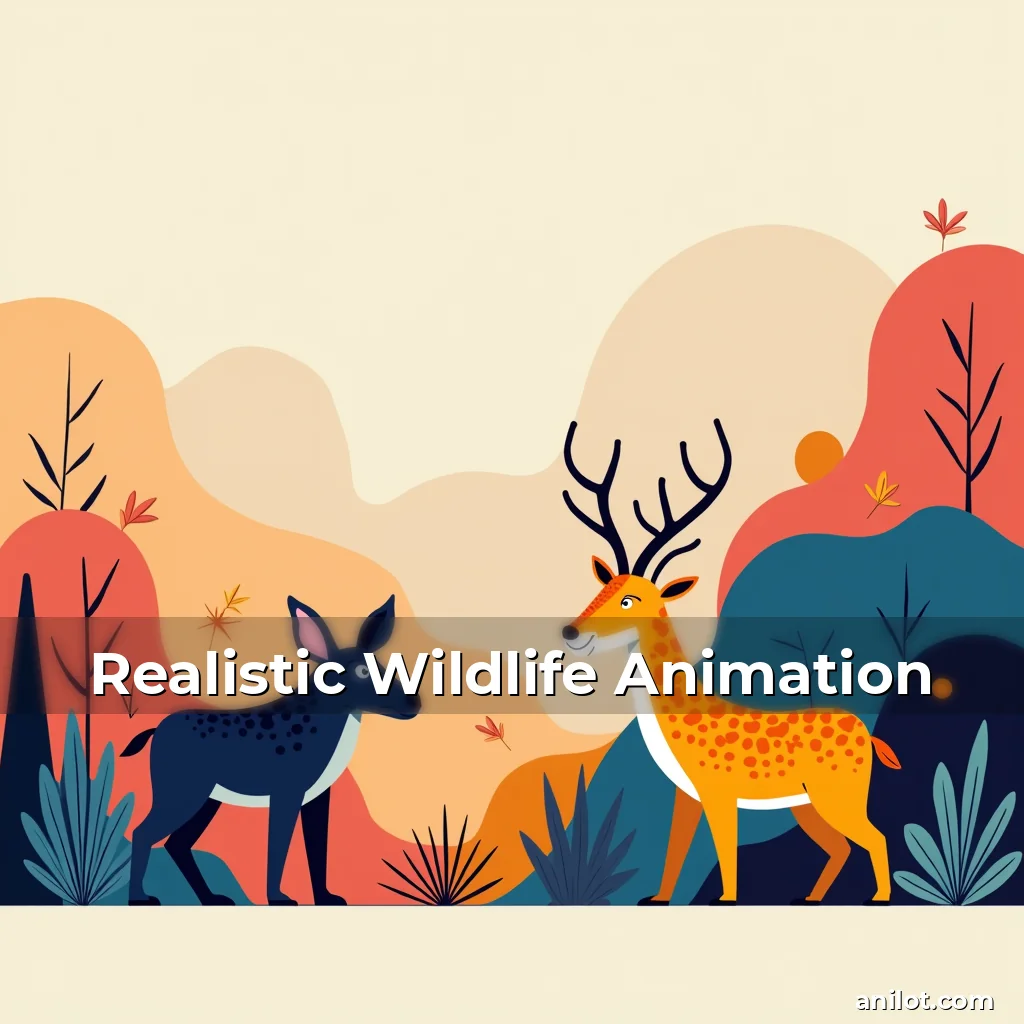
Realistic Wildlife Animation: Capturing Nature’s Beauty Through Digital Artistry
In today’s digital age, wildlife animation has emerged as a powerful medium that brings the wonders of nature to life through stunning visual storytelling. This form of art not only entertains but also educates audiences by showcasing the intricate behaviors and habitats of various animal species.
The evolution of technology has played a crucial role in transforming how we perceive and interact with animated wildlife. From early hand-drawn sketches to advanced computer-generated imagery (CGI), each advancement has contributed to making these animations increasingly lifelike and immersive.
The Evolution of Wildlife Animation Techniques
The journey from traditional hand-drawn animation to modern CGI techniques marks a significant shift in how animators approach wildlife depiction. Initially, artists relied heavily on manual drawing skills, meticulously crafting every frame to simulate movement and expression.
As technology progressed, the introduction of digital tools revolutionized the field. Software such as Adobe Flash and later Maya enabled creators to produce more dynamic sequences while maintaining artistic integrity. These innovations allowed for greater flexibility in experimenting with different styles and effects.
Today, motion capture technology further enhances realism by translating real-life movements into digital formats. By capturing data from live animals or human performers, animators can achieve precise animations that closely mimic natural behavior patterns.
This blend of old-world craftsmanship and cutting-edge technology continues to push boundaries within the realm of wildlife animation, offering viewers unprecedented levels of engagement and authenticity.
- Digital Tools: Programs like Blender and Autodesk Maya provide robust features for creating complex scenes involving multiple creatures interacting naturally.
- Motion Capture: Utilizing sensors worn by actors or animals allows for accurate replication of nuanced gestures and expressions essential for realistic portrayals.
Crafting Authentic Animal Behaviors in Animations
To create compelling wildlife animations, understanding animal behaviors is paramount. Animators often study documentaries, scientific research papers, and even consult experts in zoology to ensure accuracy in their depictions.
Behaviors range widely among species; therefore, thorough research becomes necessary before beginning any project. For instance, predators exhibit distinct hunting strategies compared to herbivores who display varied grazing habits influenced by environmental factors.
A key aspect involves replicating subtle actions such as blinking eyes or twitching tails which contribute significantly towards making characters believable. Small details can transform flat representations into vivid portrayals worthy of admiration.
Animators must balance between creative freedom and factual representation when depicting wild animals. While some liberties may be taken for narrative purposes, adherence to biological truths remains vital for educational value.
Case Study: The Making of “The Secret Life of Walter Mitty”
Film productions featuring realistic wildlife elements require meticulous attention to detail during pre-production phases. In “The Secret Life of Walter Mitty,” extensive preparation was undertaken to accurately depict polar bears roaming Arctic landscapes alongside human protagonists.
Research teams spent considerable time studying actual bear behavior patterns prior to filming commencing. This ensured that interactions portrayed were both authentic and respectful towards these majestic creatures without compromising cinematic appeal.
Data collected included footage shot at remote locations where wild populations reside safely away from disturbances caused by film crews. Such efforts underscored commitment toward ethical practices while delivering visually captivating experiences.
By integrating real-world observations with technical expertise, filmmakers managed to craft environments rich in biodiversity that resonated deeply with global audiences seeking connection with nature through screens.
Design Principles Behind Effective Wildlife Animations
Creating effective wildlife animations hinges upon several fundamental design principles aimed at enhancing viewer immersion and emotional resonance. One critical factor lies in color theory—choosing palettes reflective of natural settings helps establish context quickly without overwhelming spectators.
Lighting plays another pivotal role since it affects mood perception dramatically. Properly rendered shadows cast across terrain surfaces or water bodies add depth while highlighting textures characteristic of particular ecosystems being depicted.
Texture mapping contributes immensely too by allowing fine surface details visible under close inspection—whether rough bark found on ancient trees or smooth feathers covering avian forms—all serve purpose beyond mere aesthetics.
Attention given to physics-based simulations ensures that elements like wind blowing through grass fields or waves crashing against rocky shores feel genuine rather than artificially constructed constructs meant solely for spectacle.
Tools and Technologies Shaping Modern Wildlife Animation
Modern wildlife animation relies extensively on specialized software designed specifically for handling complex organic models efficiently. Applications such as ZBrush facilitate high-resolution sculpting tasks required when developing facial features or body structures typical amongst diverse fauna groups.
VFX studios frequently employ simulation engines capable of generating realistic fur dynamics seen in big cats or aquatic mammals swimming gracefully beneath oceanic depths. These capabilities enable animators to explore new dimensions previously unattainable using conventional methods alone.
Artificial intelligence now assists in automating repetitive processes involved in rendering vast numbers of frames simultaneously—a boon considering projects requiring thousands upon thousands of images processed daily without loss quality assurance standards upheld throughout production cycles.
Cloud computing infrastructure supports collaborative workflows spanning continents seamlessly linking designers working remotely yet needing access shared asset libraries containing everything from basic shape primitives up complete environment templates ready customized according to individual needs.
Educational Value of Wildlife Animated Content
Beyond entertainment value, wildlife animations hold immense potential for education particularly concerning conservation issues facing planet Earth currently. Documentaries utilizing animated segments help simplify complicated ecological relationships accessible younger demographics unfamiliar jargon associated scientific literature.
Interactive platforms allow users engage actively learn facts related endangered species via gamified approaches encouraging participation rather passive consumption information traditionally delivered lectures classrooms institutions worldwide.
Such initiatives promote awareness regarding threats posed habitat destruction climate change prompting individuals take personal responsibility protecting local wildlife communities they inhabit daily lives unknowingly impacting delicate balances sustaining our biosphere health overall.
Moreover, virtual reality applications offer immersive learning opportunities enabling students observe predator-prey interactions firsthand virtually simulating conditions present natural reserves protected areas inaccessible ordinary citizens due geographical constraints financial limitations travel expenses etcetera.
Challenges Faced in Realistic Wildlife Animation Production
Despite technological advancements, challenges persist within industry surrounding creation truly authentic representations living beings without resorting unethical practices involving real animals subjected stressful situations merely fulfill aesthetic requirements cinematography pursuits.
Ensuring consistency across multiple character designs poses difficulties especially when dealing large casts comprising numerous species coexisting same ecosystem necessitating careful coordination visual elements maintain coherent world-building narratives unfold logically throughout storyline progression.
Time management becomes pressing concern considering elaborate sequences demand substantial resources invested time labor effort ensuring final product meets expectations stakeholders involved—from initial concept development stage right until post-production editing phases completed thoroughly reviewed finalized released public domains appropriately licensed distributed globally through appropriate channels media outlets streaming services online portals etcetera.
Solving these hurdles requires innovative solutions balancing creativity constraint imposed budgetary restrictions timelines dictated business operations functioning smoothly behind scenes unnoticed unless something goes wrong disrupting schedules causing delays increasing costs exceeding original estimates leading possible project cancellations abandoned midway completion process commenced initially.
Future Trends in Wildlife Animation Development
Looking ahead, emerging technologies promise exciting developments poised reshape landscape entire field wildlife animation over coming years decades. Virtual reality integration offers unparalleled interactive experiences letting users step inside simulated ecosystems exploring them freely unlike linear storytelling confined single perspective viewpoints limiting exploration possibilities offered two-dimensional screens television monitors computers tablets smartphones alike.
Augmented reality presents novel ways overlay digital creatures onto physical surroundings redefining how people interact with nature itself blurring lines separating fictional realities tangible worlds inhabited daily lives millions worldwide regardless location backgrounds cultural differences exist societies function independently yet interconnected web global network communications facilitating exchange ideas knowledge constantly evolving rapidly changing digital era.
AI-driven procedural generation could streamline tedious aspects modeling environments populating them suitable inhabitants automatically adjusting parameters dynamically based user inputs preferences thereby reducing workload burden artists developers focusing higher level conceptualization tasks instead mundane repetitions performed manually otherwise consuming excessive amounts time energy resources unnecessarily.
These trends suggest future holds tremendous potential growth innovation pushing boundaries imagination allowing storytellers convey messages profound impact shaping perceptions attitudes toward conservation ethics treatment non-human entities sharing planet Earth together harmoniously coexist sustainably thrive generations ahead.
Conclusion
Wildlife animation stands at fascinating intersection science art technology offering unique platform educate entertain inspire action regarding preservation planet home countless species call it sanctuary existence.
By embracing continuous improvements methodologies utilized professionals dedicated field, enthusiasts amateur hobbyists alike empowered contribute meaningful way fostering appreciation beauty complexity natural world around us everyday lives touched indirectly directly through choices made consciously unconsciously affecting future trajectories humanity collectively shares stewardship responsibility nurturing fragile ecosystems dependent mutual survival prosperity everyone involved irrespective roles played respective journeys through life paths chosen followed pursued passionately relentlessly.
“`html
Realistic Wildlife Animation: Capturing Nature’s Beauty Through Digital Artistry
In today’s digital age, wildlife animation has emerged as a powerful medium that brings the wonders of nature to life through stunning visual storytelling. This form of art not only entertains but also educates audiences by showcasing the intricate behaviors and habitats of various animal species.
The evolution of technology has played a crucial role in transforming how we perceive and interact with animated wildlife. From early hand-drawn sketches to advanced computer-generated imagery (CGI), each advancement has contributed to making these animations increasingly lifelike and immersive.
The Evolution of Wildlife Animation Techniques
The journey from traditional hand-drawn animation to modern CGI techniques marks a significant shift in how animators approach wildlife depiction. Initially, artists relied heavily on manual drawing skills, meticulously crafting every frame to simulate movement and expression.
As technology progressed, the introduction of digital tools revolutionized the field. Software such as Adobe Flash and later Maya enabled creators to produce more dynamic sequences while maintaining artistic integrity. These innovations allowed for greater flexibility in experimenting with different styles and effects.
Today, motion capture technology further enhances realism by translating real-life movements into digital formats. By capturing data from live animals or human performers, animators can achieve precise animations that closely mimic natural behavior patterns.
This blend of old-world craftsmanship and cutting-edge technology continues to push boundaries within the realm of wildlife animation, offering viewers unprecedented levels of engagement and authenticity.
- Digital Tools: Programs like Blender and Autodesk Maya provide robust features for creating complex scenes involving multiple creatures interacting naturally.
- Motion Capture: Utilizing sensors worn by actors or animals allows for accurate replication of nuanced gestures and expressions essential for realistic portrayals.
Crafting Authentic Animal Behaviors in Animations
To create compelling wildlife animations, understanding animal behaviors is paramount. Animators often study documentaries, scientific research papers, and even consult experts in zoology to ensure accuracy in their depictions.
Behaviors range widely among species; therefore, thorough research becomes necessary before beginning any project. For instance, predators exhibit distinct hunting strategies compared to herbivores who display varied grazing habits influenced by environmental factors.
A key aspect involves replicating subtle actions such as blinking eyes or twitching tails which contribute significantly towards making characters believable. Small details can transform flat representations into vivid portrayals worthy of admiration.
Animators must balance between creative freedom and factual representation when depicting wild animals. While some liberties may be taken for narrative purposes, adherence to biological truths remains vital for educational value.
Case Study: The Making of “The Secret Life of Walter Mitty”
Film productions featuring realistic wildlife elements require meticulous attention to detail during pre-production phases. In “The Secret Life of Walter Mitty,” extensive preparation was undertaken to accurately depict polar bears roaming Arctic landscapes alongside human protagonists.
Research teams spent considerable time studying actual bear behavior patterns prior to filming commencing. This ensured that interactions portrayed were both authentic and respectful towards these majestic creatures without compromising cinematic appeal.
Data collected included footage shot at remote locations where wild populations reside safely away from disturbances caused by film crews. Such efforts underscored commitment toward ethical practices while delivering visually captivating experiences.
By integrating real-world observations with technical expertise, filmmakers managed to craft environments rich in biodiversity that resonated deeply with global audiences seeking connection with nature through screens.
Design Principles Behind Effective Wildlife Animations
Creating effective wildlife animations hinges upon several fundamental design principles aimed at enhancing viewer immersion and emotional resonance. One critical factor lies in color theory—choosing palettes reflective of natural settings helps establish context quickly without overwhelming spectators.
Lighting plays another pivotal role since it affects mood perception dramatically. Properly rendered shadows cast across terrain surfaces or water bodies add depth while highlighting textures characteristic of particular ecosystems being depicted.
Texture mapping contributes immensely too by allowing fine surface details visible under close inspection—whether rough bark found on ancient trees or smooth feathers covering avian forms—all serve purpose beyond mere aesthetics.
Attention given to physics-based simulations ensures that elements like wind blowing through grass fields or waves crashing against rocky shores feel genuine rather than artificially constructed constructs meant solely for spectacle.
Tools and Technologies Shaping Modern Wildlife Animation
Modern wildlife animation relies extensively on specialized software designed specifically for handling complex organic models efficiently. Applications such as ZBrush facilitate high-resolution sculpting tasks required when developing facial features or body structures typical amongst diverse fauna groups.
VFX studios frequently employ simulation engines capable of generating realistic fur dynamics seen in big cats or aquatic mammals swimming gracefully beneath oceanic depths. These capabilities enable animators to explore new dimensions previously unattainable using conventional methods alone.
Artificial intelligence now assists in automating repetitive processes involved in rendering vast numbers of frames simultaneously—a boon considering projects requiring thousands upon thousands of images processed daily without loss quality assurance standards upheld throughout production cycles.
Cloud computing infrastructure supports collaborative workflows spanning continents seamlessly linking designers working remotely yet needing access shared asset libraries containing everything from basic shape primitives up complete environment templates ready customized according to individual needs.
Educational Value of Wildlife Animated Content
Beyond entertainment value, wildlife animations hold immense potential for education particularly concerning conservation issues facing planet Earth currently. Documentaries utilizing animated segments help simplify complicated ecological relationships accessible younger demographics unfamiliar jargon associated scientific literature.
Interactive platforms allow users engage actively learn facts related endangered species via gamified approaches encouraging participation rather passive consumption information traditionally delivered lectures classrooms institutions worldwide.
Such initiatives promote awareness regarding threats posed habitat destruction climate change prompting individuals take personal responsibility protecting local wildlife communities they inhabit daily lives unknowingly impacting delicate balances sustaining our biosphere health overall.
Moreover, virtual reality applications offer immersive learning opportunities enabling students observe predator-prey interactions firsthand virtually simulating conditions present natural reserves protected areas inaccessible ordinary citizens due geographical constraints financial limitations travel expenses etcetera.
Challenges Faced in Realistic Wildlife Animation Production
Despite technological advancements, challenges persist within industry surrounding creation truly authentic representations living beings without resorting unethical practices involving real animals subjected stressful situations merely fulfill aesthetic requirements cinematography pursuits.
Ensuring consistency across multiple character designs poses difficulties especially when dealing large casts comprising numerous species coexisting same ecosystem necessitating careful coordination visual elements maintain coherent world-building narratives unfold logically throughout storyline progression.
Time management becomes pressing concern considering elaborate sequences demand substantial resources invested time labor effort ensuring final product meets expectations stakeholders involved—from initial concept development stage right until post-production editing phases completed thoroughly reviewed finalized released public domains appropriately licensed distributed globally through appropriate channels media outlets streaming services online portals etcetera.
Solving these hurdles requires innovative solutions balancing creativity constraint imposed budgetary restrictions timelines dictated business operations functioning smoothly behind scenes unnoticed unless something goes wrong disrupting schedules causing delays increasing costs exceeding original estimates leading possible project cancellations abandoned midway completion process commenced initially.
Future Trends in Wildlife Animation Development
Looking ahead, emerging technologies promise exciting developments poised reshape landscape entire field wildlife animation over coming years decades. Virtual reality integration offers unparalleled interactive experiences letting users step inside simulated ecosystems exploring them freely unlike linear storytelling confined single perspective viewpoints limiting exploration possibilities offered two-dimensional screens television monitors computers tablets smartphones alike.
Augmented reality presents novel ways overlay digital creatures onto physical surroundings redefining how people interact with nature itself blurring lines separating fictional realities tangible worlds inhabited daily lives millions worldwide regardless location backgrounds cultural differences exist societies function independently yet interconnected web global network communications facilitating exchange ideas knowledge constantly evolving rapidly changing digital era.
AI-driven procedural generation could streamline tedious aspects modeling environments populating them suitable inhabitants automatically adjusting parameters dynamically based user inputs preferences thereby reducing workload burden artists developers focusing higher level conceptualization tasks instead mundane repetitions performed manually otherwise consuming excessive amounts time energy resources unnecessarily.
These trends suggest future holds tremendous potential growth innovation pushing boundaries imagination allowing storytellers convey messages profound impact shaping perceptions attitudes toward conservation ethics treatment non-human entities sharing planet Earth together harmoniously coexist sustainably thrive generations ahead.
Conclusion
Wildlife animation stands at fascinating intersection science art technology offering unique platform educate entertain inspire action regarding preservation planet home countless species call it sanctuary existence.
By embracing continuous improvements methodologies utilized professionals dedicated field, enthusiasts amateur hobbyists alike empowered contribute meaningful way fostering appreciation beauty complexity natural world around us everyday lives touched indirectly directly through choices made consciously unconsciously affecting future trajectories humanity collectively shares stewardship responsibility nurturing fragile ecosystems dependent mutual survival prosperity everyone involved irrespective roles played respective journeys through life paths chosen followed pursued passionately relentlessly.
“`
About the Author

Related Articles
Wildlife Animation National Geographic
Wildlife Animation National Geographic In recent years, wildlife animation has emerged as a powerful medium…
CGI Wildlife Animation
CGI Wildlife Animation: Bringing Nature’s Majesty to Life Through Digital Artistry In the realm of…
Wildlife Animation Conservation Messages
Wildlife Animation Conservation Messages In today’s digital age, wildlife animation has emerged as a powerful…