


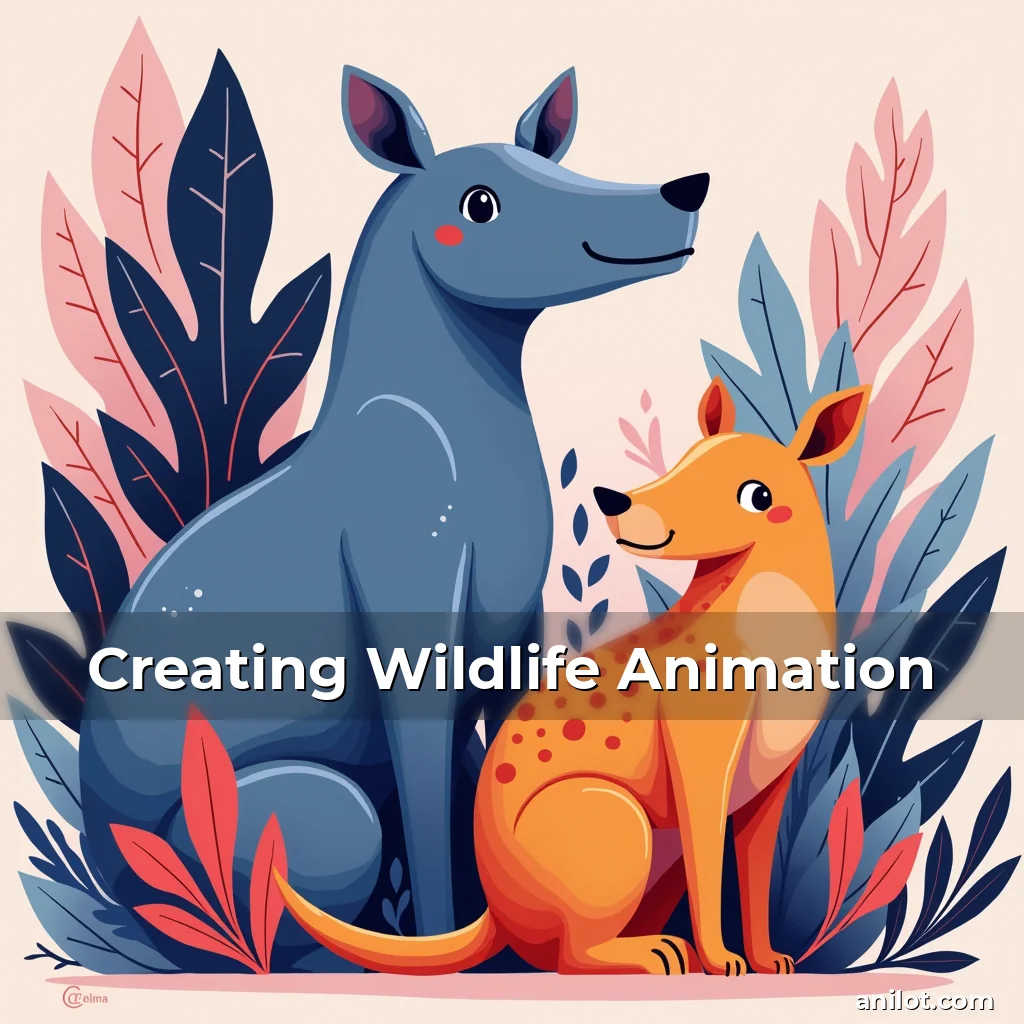
The Art of Crafting Realistic Wildlife Animations: A Deep Dive into Nature’s Digital Realm
In the ever-evolving world of digital artistry, wildlife animation stands as a testament to human creativity and technological advancement. This intricate field blends science and storytelling to bring the natural world to life through moving images. As animators strive for greater realism and emotional resonance, they push the boundaries of what is possible in visual representation.
The journey from concept to completion involves meticulous research, advanced software tools, and a deep understanding of animal behavior. Artists must balance technical precision with artistic expression to create animations that are both scientifically accurate and visually captivating. This complex process has given rise to entire industries dedicated to environmental education and conservation efforts through animated media.
Fundamental Principles of Wildlife Animation
At its core, wildlife animation requires mastery of several fundamental principles that govern motion and form. These include squash and stretch, anticipation, and secondary action – techniques originally developed for traditional hand-drawn animation but equally applicable in digital formats. Understanding these foundational elements allows artists to create lifelike movements that mimic real-world physics.
Animators often begin by studying reference materials such as video footage, photographs, and scientific illustrations. This extensive research phase helps them capture subtle nuances in animal movement patterns. For example, observing how a cheetah accelerates versus how a sloth moves reveals crucial differences in body mechanics that inform animation decisions.
- Anatomy studies: Detailed knowledge of musculature and skeletal structure ensures anatomical accuracy in character design
- Movement analysis: Frame-by-frame examination of live-action footage identifies key motion characteristics
- Biological research: Consulting zoological experts provides insight into species-specific behaviors and habitats
A critical aspect of this preparation involves creating storyboards that outline each scene’s composition and timing. These visual guides help maintain consistency across different shots while allowing creative freedom within established parameters. Storyboarding also serves as a communication tool among team members working on various aspects of the project.
When developing characters, artists consider not only external features but also behavioral traits associated with particular species. This includes analyzing vocalizations, social interactions, and feeding habits to ensure authenticity in portrayal. Such attention to detail transforms simple drawings into believable representations of living creatures.
Techniques and Tools in Modern Wildlife Animation
The modern animator’s toolkit consists of sophisticated software programs designed specifically for 3D modeling and rendering. Programs like Maya, Blender, and Cinema 4D offer powerful capabilities for creating realistic textures, lighting effects, and dynamic simulations. These platforms enable artists to manipulate virtual environments with remarkable precision.
Digital sculpting plays a vital role in constructing detailed models of animals. Using tools like ZBrush or Mudbox, artists can carve out intricate fur structures, skin textures, and muscle definitions that would be impossible to achieve manually. This level of detail contributes significantly to the overall realism of the final product.
Texture mapping is another essential technique used extensively in wildlife animation projects. By applying high-resolution surface maps onto 3D models, artists can replicate natural variations found in animal hides, feathers, and scales. Advanced algorithms allow for realistic shading effects that respond dynamically to changes in light sources.
Rigging processes involve setting up internal skeletons that control how characters move and deform during animation sequences. Skinning techniques determine how surfaces react when bones shift positions, ensuring smooth transitions between poses without visible distortion. Proper rig construction enables efficient posing and animation workflows.
Simulation technologies have revolutionized the way animators handle complex physical phenomena like water interaction, wind resistance, and hair dynamics. Specialized plugins integrated into mainstream animation packages now provide realistic fluid simulations that enhance environmental interactions with animated characters.
Crafting Authentic Animal Movements
Creating convincing animal locomotion requires careful observation of biomechanics and kinematics principles. Unlike human anatomy which follows predictable movement patterns, many wild animals exhibit unique ways of moving through their environment. Understanding these distinctions is crucial for producing authentic animations.
For terrestrial mammals, gaits play an important role in determining movement style. Different species develop specialized walking patterns based on their physiology and habitat requirements. Cheetahs use bounding gait at high speeds while elephants employ a more deliberate pacing method suited to their massive frames.
Avian animation presents additional challenges due to the complexities involved in flight mechanics. Wing flapping frequencies vary widely between bird species depending on size, weight distribution, and aerodynamic efficiency needs. Accurate simulation of feather articulation adds further layers of complexity requiring precise mathematical calculations.
Marine life animations demand special consideration regarding buoyancy and hydrodynamics. Fish movements differ greatly from those observed in land animals owing to the properties of water medium. Creating realistic swimming motions necessitates studying propulsion mechanisms and tail fin functions characteristic of aquatic organisms.
Even small-scale movements require attention to detail. Insects display highly coordinated limb movements controlled by complex nervous systems. Replicating these micro-motions demands frame-by-frame breakdowns capturing minute shifts in posture and orientation during activities like crawling or jumping.
Environmental Integration in Wildlife Animation
Effective wildlife animation extends beyond individual creature depiction; it requires seamless integration within appropriate ecosystems. Background environments must reflect geographical features relevant to each species’ natural habitat. This includes terrain types, vegetation density, and climatic conditions affecting animal behavior.
Weather effects add depth and dimensionality to animated scenes. Rainfall intensity impacts visibility levels, alters surface textures, and influences animal activity patterns. Snow accumulation modifies terrain contours and affects mobility considerations for certain species. Incorporating these atmospheric variables enhances narrative immersion.
Landscape composition follows ecological principles governing plant-animal relationships. Vegetation placement considers factors like sunlight expo These details contribute to verisimilitude by establishing plausible spatial arrangements within virtual worlds.
Nocturnal settings present unique challenges related to limited illumination sources. Moonlight scattering creates distinct shadow patterns differing from daylight scenarios. Adjusting color temperatures accordingly maintains biological plausibility while preserving aesthetic appeal through calculated contrast ratios.
Dynamic weather transitions require smooth interpolation between states maintaining continuity in environmental presentation. Sudden storms may disrupt animal routines prompting instinctive reactions, whereas gradual sunrise sequences influence diurnal activity schedules naturally.
Storytelling Through Animated Wildlife
While technical proficiency forms the foundation, compelling narratives elevate wildlife animation from mere spectacle to meaningful engagement. Effective storytelling combines factual information with emotive expressions to educate audiences about biodiversity and ecological interdependencies.
Documentary-style productions utilize observational techniques similar to film crews following subjects in their native habitats. This approach fosters intimacy between viewers and subjects, revealing fascinating behaviors otherwise inaccessible through static visuals alone.
Fictional narratives offer creative latitude in exploring hypothetical scenarios involving endangered species or fictional biomes. However, even speculative content benefits from grounding itself in scientific accuracy to maintain credibility and educational value.
Educational segments often incorporate interactive elements encouraging viewer participation. Augmented reality experiences let users explore ecosystems virtually before transitioning back to conventional screen-based presentations. Gamification strategies transform learning objectives into engaging adventures.
Emotional connections forged through well-crafted stories drive home conservation messages effectively. When audiences empathize with portrayed creatures, they become more receptive to environmental protection initiatives presented alongside visual content.
Ethical Considerations in Wildlife Animation
As creators shape perceptions through animated depictions, ethical responsibilities accompany this power. Representing wildlife accurately avoids perpetuating misconceptions that could harm conservation efforts. Misinformation risks undermining public trust in both entertainment media and scientific discourse.
Potential pitfalls arise when anthropomorphizing animals excessively, attributing human emotions where none exist. While relatable portrayals aid audience connection, overstepping biological realities might distort natural behaviors leading to inaccurate expectations about actual wildlife encounters.
Responsible depiction respects cultural sensitivities surrounding sacred animals or mythological figures revered by indigenous communities. Collaborating with local experts ensures respectful portrayals avoiding appropriation or misrepresentation of culturally significant symbols.
Copyright issues emerge concerning source material used for reference purposes. Clear attribution practices prevent legal disputes while acknowledging contributions from researchers whose work informs artistic interpretations.
Conservation messaging embedded within narratives carries moral implications. Balancing urgency against optimism prevents overwhelming audiences yet still communicates pressing threats facing global biodiversity today.
The Future of Wildlife Animation Technology
Ongoing advancements promise exciting possibilities expanding wildlife animation horizons. Artificial intelligence applications streamline production pipelines reducing manual labor required for repetitive tasks traditionally performed by artists.
Machine learning algorithms analyze vast datasets identifying patterns useful for predicting optimal animation solutions automatically. This technology assists in generating realistic facial expressions matching corresponding emotional states, enhancing believability in character performances.
Virtual reality integration offers immersive experiences placing viewers inside simulated wilderness environments interacting directly with animated wildlife. This hands-on engagement increases comprehension levels surpassing passive viewing methods currently prevalent in most media formats.
Augmented reality overlays superimpose digital creatures onto real-world locations using smartphone cameras or wearable devices. This innovative application bridges gaps between fantasy and reality creating novel opportunities for experiential learning about diverse ecosystems globally accessible via mobile platforms.
Collaborative cloud-based platforms facilitate global teamwork enabling simultaneous editing sessions regardless of geographic location constraints previously limiting cross-border cooperation in international co-productions typical in major studio ventures.
Conclusion
Wildlife animation represents a fusion of artistic vision and scientific rigor that continues evolving alongside technological progress. From basic principles guiding motion creation to cutting-edge innovations reshaping industry standards, this discipline remains at the forefront of digital storytelling.
To aspiring professionals entering this field, mastering fundamentals while staying attuned to emerging trends proves essential for long-term success. Engaging deeply with nature through continuous study supports development of authentic portrayals capable of inspiring future generations committed to protecting our planet’s rich biodiversity.


news is a contributor at AniLot.com. We are committed to providing well-researched, accurate, and valuable content to our readers.
You May Also Like

Animated Animals Disney Classics
The Enchanting World of Animated Animals in Cinema History In the ever-evolving landscape of animation, few elements have captured the...

Best Animated Animals Movies
The Enchanting World of Animated Animal Adventures In recent years, animated films featuring anthropomorphic animal characters have captured the hearts...
Wildlife Animation vs Photography
The Artistic Evolution and Technical Mastery Behind Wildlife Animation In an era where digital creativity reigns supreme, wildlife animation has...
Animal Cartoons Voice Actors
The Magic Behind Animal Cartoon Voice Acting: A Deep Dive into Iconic Performances In the world of animated entertainment, few...