


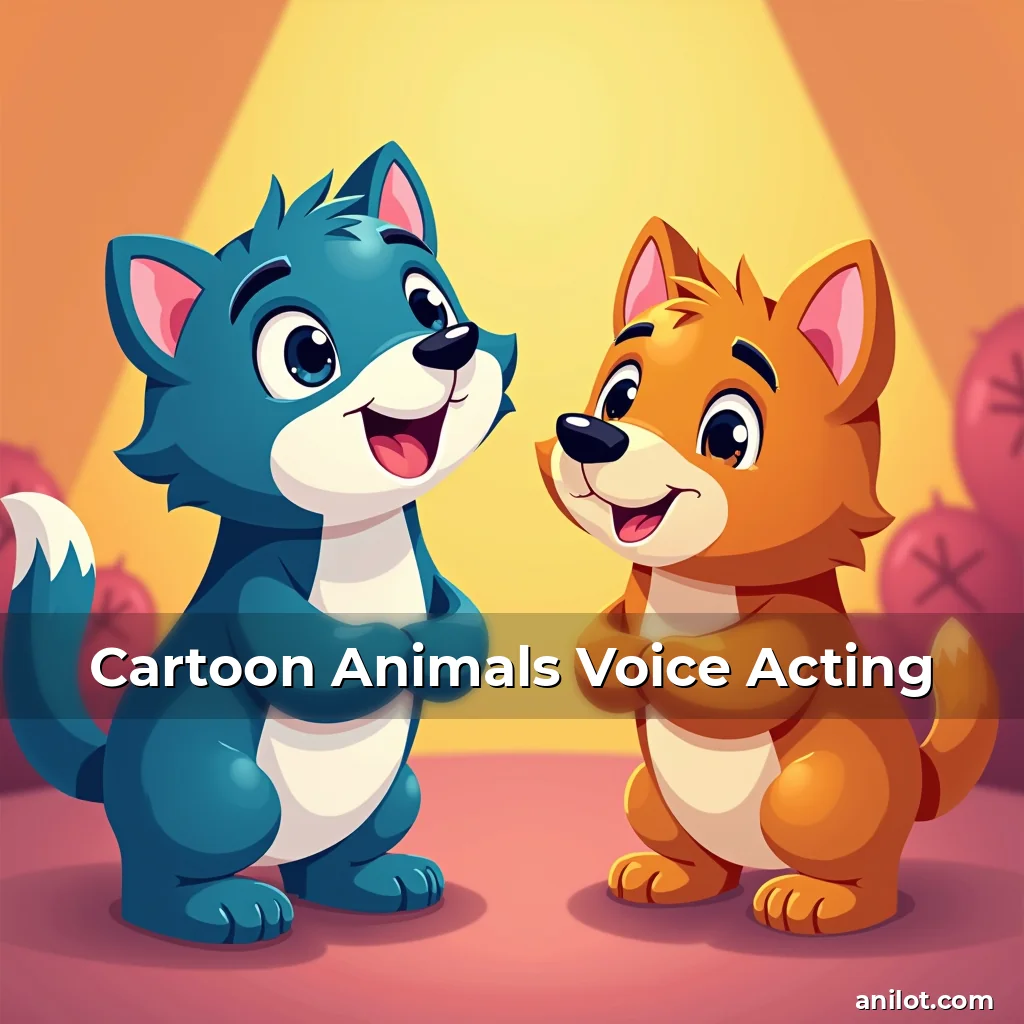
The Art of Cartoon Animal Voice Acting: Crafting Believable Characters Through Sound
The world of cartoon animal voice acting brings beloved characters to life through sound, transforming animated creatures into relatable personalities with expressive voices. From mischievous rabbits to wise old bears, these performances require skillful interpretation of animal traits while maintaining comedic timing, emotional depth, and character consistency across episodes.
In recent years, the demand for professional voice actors specializing in cartoon animals has surged as streaming platforms and international markets expand the reach of family-friendly animation. This growing need highlights the importance of understanding both the technical aspects and creative nuances involved in breathing personality into fictional non-human characters.
Bridging Nature and Imagination: The Unique Challenge of Animal Characters
Creative teams face an intriguing challenge when casting cartoon animal roles – they must find performers who can convey anthropomorphic qualities without mimicking real-world animals too closely. A well-executed performance balances physical characteristics (such as size or movement) with human-like expressions that resonate emotionally with audiences of all ages.
This duality requires voice actors to master vocal techniques specifically tailored for different species. For example, portraying a small rodent may involve high-pitched tones and rapid speech patterns, while larger mammals often call for deeper resonance and slower pacing in dialogue delivery.
- Vocal range adaptation: Skilled animators consult phonetics experts to ensure vocalizations match anatomical realities for each species’ portrayal
- Dialect development: Regional accents are carefully selected based on story settings rather than pure biological accuracy
A notable example comes from the critically acclaimed series “The Secret Life of Pets,” where veteran actor Patton Oswalt provided the voice for Max, a clever Chihuahua. His performance combined characteristic high-pitched squeaks with thoughtful pauses that conveyed intelligence beyond typical canine behavior.
When creating talking animals, directors often provide visual references showing how characters move physically. These cues help voice artists align their vocal deliveries with body language, ensuring synchronized emotional expression across both audio and video elements.
Mastery of Character Arcs: Developing Authentic Personas Over Time
Successful voice actors approach cartoon animal roles by thoroughly analyzing scripts to understand character motivations and relationships within the narrative structure. This deep analysis enables them to maintain consistent personas over extended storylines, which is crucial for long-running franchises.
Consider the evolution of Garfield, whose sarcastic humor gradually becomes more vulnerable as his adventures progress. The voice actor’s ability to subtly shift tonal inflections maintains audience engagement while honoring character growth across decades of storytelling.
Character development extends beyond individual lines – it involves mastering subtle shifts in pronunciation, breath control, and vocal fry usage that signal changing emotions or states of mind.
To achieve this level of authenticity, many professionals use emotion mapping exercises, identifying key moments where character expressions shift dramatically during pivotal scenes.
Trends in Modern Animal Character Development
Data from industry surveys show increasing diversity in how animal characters are portrayed today compared to past decades. Modern creators emphasize psychological complexity rather than merely playing up traditional stereotypes associated with various species.
Recent studies indicate viewers connect more strongly with animal characters who display nuanced emotions akin to human experiences. As a result, casting decisions now prioritize vocalists capable of conveying multi-layered expressions suitable for complex narratives.
An unexpected trend emerging is the rise of non-binary animal characters whose performances incorporate gender-fluid vocal styles. This reflects broader societal conversations around identity representation in media and challenges conventional portrayals of animal genders.
The Science Behind Successful Animal Voices
Behind every memorable cartoon animal voice lies scientific research informing artistic choices. Linguists work closely with studios to develop phonetic guidelines that allow voices to remain distinct yet comprehensible regardless of species type.
Synthesis tools analyze thousands of real-world animal sounds to create reference libraries used by voice actors preparing for roles requiring realistic sonic qualities alongside exaggerated expressions appropriate for comedy or drama.
The process begins with extensive auditions where candidates demonstrate versatility in pitch ranges and articulation clarity. Directors evaluate not only vocal talent but also the performer’s ability to interpret written descriptions translating into audible representations of imaginary beings.
For particularly challenging roles involving cross-species interactions, performers study natural behaviors extensively before recording sessions. Understanding territorial markers, social hierarchies, and communication patterns informs subtler vocal choices in interactions between different animal types.
Fostering Creativity: Voice Actor Techniques and Training
Professional voice actors developing cartoon animal personas employ specialized training methods designed specifically for this niche. Many institutions offer courses focusing on animorphic vocal projection techniques essential for sustaining distinctive character voices over time.
Workshops teach practitioners how to manipulate diaphragm pressure for sustained loud noises or soft whispers depending on situational requirements. Breathing exercises help maintain stamina during lengthy recording sessions filled with repeated takes for various scene permutations.
Puppeteers collaborating with voice actors benefit significantly from shared knowledge about body mechanics influencing vocal tone production. This synergy helps create seamless integration between physical movements and corresponding auditory output.
Mental preparation plays equally vital role; meditative practices aid concentration required for maintaining precise vocal modulation during intricate comedic sequences featuring quick-fire dialogues between multiple animal characters.
Evolving Industry Standards and New Technological Frontiers
The field continues evolving rapidly due to advances in artificial intelligence applications related to vocal synthesis and performance capture technologies. These innovations present exciting opportunities for expanding the scope of possible character portrayals while posing new ethical questions regarding AI-generated voices versus live performer contributions.
Some studios experiment with hybrid approaches using AI-assisted vocal processing to enhance recordings, preserving original performer intent while offering enhanced flexibility during post-production editing processes. This technology allows for minor adjustments to pitch or volume without altering fundamental performance quality.
Rising demands for global localization have led to more diverse casting pools including multilingual talents comfortable switching between languages mid-recording session to accommodate international release schedules efficiently.
Emerging formats such as interactive media and virtual reality experiences create unprecedented opportunities for dynamic voice acting, enabling instantaneous reaction to user inputs in ways previously unachievable with linear storytelling formats.
Celebrating Excellence: Notable Achievements and Awards Recognition
Award ceremonies recognizing outstanding voice acting achievements include exclusive categories highlighting exceptional performances in animated features or television series featuring prominent animal characters.
Industry accolades honor not just technical mastery but also innovative approaches taken towards redefining traditional notions surrounding animal representation in entertainment mediums.
Pioneering performers receive special recognition for pushing boundaries through bold stylistic choices, whether it be subverting expected vocal timbres for iconic species or inventing entirely new modes of expression uniquely suited to particular fictional ecosystems.
The Academy Award for Best Animated Feature frequently acknowledges standout voice acting accomplishments whenever major film releases feature noteworthy animal character portrayals deserving critical acclaim.
Encouraging Future Generations: Education and Career Opportunities
Aspiring individuals seeking careers in this specialty area benefit greatly from mentorship programs connecting newcomers with established professionals already working within the field.
Training academies prepare students by providing hands-on experience operating motion-capture equipment alongside practicing various vocal techniques applicable across numerous character types ranging from mythical beasts to everyday pets.
Internship opportunities with animation houses expose trainees to practical considerations like scheduling conflicts caused by simultaneous productions requiring multiple recording sessions spread over several locations worldwide.
New graduates entering the workforce discover abundant job prospects thanks to ongoing expansion of streaming services continuously commissioning fresh animated content demanding skilled voice artists able to deliver convincing animal performances consistently under tight deadlines.
Community Building and Audience Engagement Strategies
Engaged fan communities contribute significantly to shaping how cartoon animal characters evolve socially through online discussions influencing future plot developments indirectly via creator feedback mechanisms.
Interactive events allowing fans direct participation in determining certain aspects of character design foster stronger attachment among followers invested in seeing their favorite creatures grow organically within unfolding stories.
Voice actors themselves play active roles maintaining connection with supporters through social media presence, behind-the-scenes documentaries revealing making-of process insights, and exclusive livestreams demonstrating improvisation skills during spontaneous demo reels.
Collectors and enthusiasts benefit from curated exhibitions displaying rare props used during production phases along with annotated script pages showcasing handwritten notes from directors indicating specific vocal directions given during recording sessions.
Conclusion: Embracing the Magic of Cartoon Animal Storytelling
The artistry involved in bringing cartoon animals to life through voice remains an enchanting blend of science, technique, and creativity that continues captivating audiences globally. Every line delivered by dedicated performers contributes meaningfully toward creating immersive worlds populated by unforgettable creatures.
If you’ve ever found yourself laughing at a squirrel’s wisecrack or feeling moved by a bear’s farewell, consider exploring the fascinating realm of cartoon animal voice acting yourself – after all, we never know what kind of remarkable animal character awaits discovery within us waiting simply to be voiced.


news is a contributor at AniLot.com. We are committed to providing well-researched, accurate, and valuable content to our readers.
You May Also Like

Wildlife Animation National Geographic
Wildlife Animation National Geographic In recent years, wildlife animation has emerged as a powerful medium that bridges the gap between...
Animated Movies Streaming Services
The Magic Behind Animated Movies: A Deep Dive Into Storytelling and ArtistryIn a world where animated films have transcended childhood...
Pet Animation Drawing Tutorial
Whiskers in Motion: A Pet Animation Masterclass Pet animation brings life to our favorite furry friends through art, blending creativity...
Inspiring Animated Wildlife Stories
Inspiring Animated Wildlife Stories Animated wildlife stories have captivated audiences worldwide by blending artistry with education, creating immersive experiences that...