
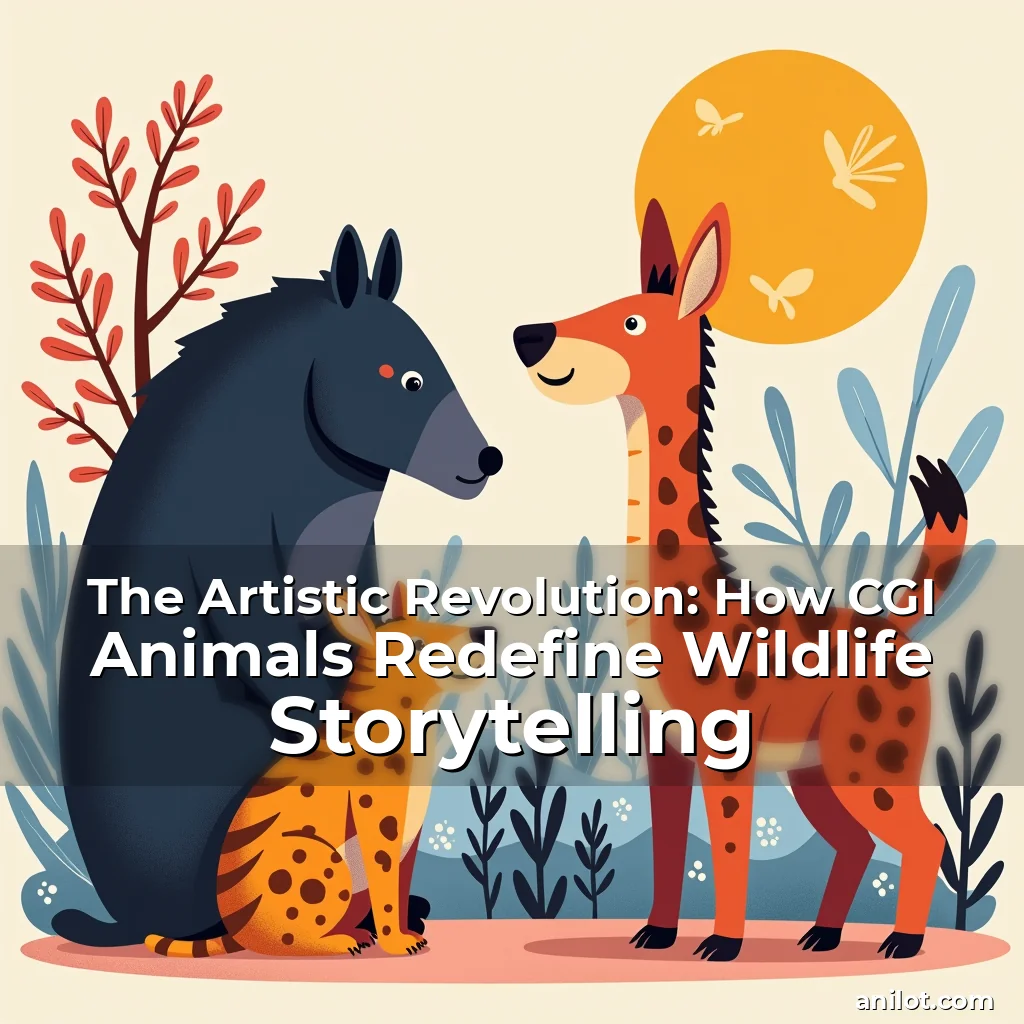
The Artistic Revolution: How CGI Animals Redefine Wildlife Storytelling
In an era where technology and artistry collide, CGI animals have emerged as a groundbreaking force in the world of visual storytelling. From cinematic blockbusters to educational documentaries, these digitally crafted creatures bring fantastical worlds and forgotten ecosystems to life. Their impact is reshaping how we connect with nature.
This revolution is driven by advances in computer graphics that allow artists to breathe lifelike realism into virtual beings. The result? A new frontier where imagination knows no bounds while still grounding itself in scientific accuracy when necessary.
From Concept to Canvas: Crafting Digital Creatures
The process begins with concept art and storyboards that serve as blueprints for digital creation. Artists work closely with directors and scientists to ensure each creature aligns with both narrative needs and biological plausibility. This stage sets the foundation for everything that follows.
Detailed research plays a crucial role at every step. For example, animators studying cheetah movement patterns may consult wildlife biologists before translating those motions onto a digital model. These collaborations help bridge creative vision with real-world authenticity.
Three essential tools transform sketches into immersive experiences:
- 3D modeling software: Creates the basic structure and texture of each animal form
- Motion capture technology: Translates human movements into realistic animal behavior
- AI-enhanced animation engines: Automate complex motion sequences while maintaining organic feel
Modeling starts with building skeletal structures called armatures which define how bodies move. Texturing then adds skin, fur, scales, or feathers through layered digital paints that respond dynamically to lighting conditions during rendering processes.
Rendering engines calculate millions of light interactions across surfaces, determining shadows, reflections, and transparency levels. Modern techniques can simulate water droplets on rhino hides or the refractive properties of chameleon skin under different environments.
Beyond Hollywood: Practical Applications Across Industries
While blockbuster films receive most attention, CGI animals are transforming diverse fields far beyond entertainment. Conservation organizations use hyper-realistic renders to educate communities about endangered species without disturbing natural habitats. Museums now employ these digital creatures in interactive exhibits that transcend traditional displays.
Agriculture has also benefited significantly. Farmers utilize augmented reality simulations featuring realistic farm animals to train workers on best practices before handling live stock. Veterinary students practice procedures safely on digital patients, reducing risks associated with hands-on training.
Educational Impact Assessment
Data shows that educational institutions integrating CGI animals see improved engagement rates among students. One study revealed increased retention rates of 42% in biology classes using animated demonstrations compared to static textbooks alone.
Schools in remote areas lacking access to physical specimens gain special advantages through digital libraries containing hundreds of animated models ready for exploration. Teachers report higher participation levels from typically disengaged learners who interact better with animated presentations.
Celebrating Cinematic Excellence: Awards-Winning CGI Animals
Taking home prestigious awards often hinges on exceptional craftsmanship seen in digital creatures. Recent winners demonstrate remarkable achievements where virtual animals rivaled or surpassed their living counterparts. The Academy Awards recognize breakthroughs pushing industry standards forward annually.
Specific accolades highlight particular innovations. One standout was the development of photorealistic muscle deformation algorithms allowing characters to maintain natural body dynamics even during extreme emotional states like fear or aggression.
Famous award-winning creations include:
- VFX Supervisor Sarah Kim’s work on “Wild Realms”: Created the first entirely digital lion with ultra-detailed mane physics
- Animators at Reimagined Studios: Developed AI-assisted flocking behaviors for massive herds featured in “The Migration”
- Special effects team behind “Sea Kingdoms”: Engineered deep-sea creatures reacting authentically to ocean currents and pressure changes
Judging criteria emphasize technical skill combined with artistic expression. Review panels assess elements ranging from anatomical precision to behavioral nuance, ensuring each winning entry represents true innovation within its field.
Pioneers Who Shaped the Industry
Royce Mitchell pioneered early motion control systems used for stop-motion animation in the late ’80s. His work laid groundwork that later merged with modern CGI techniques creating today’s seamless transitions between practical effects and digital renderings.
Laura Chen developed revolutionary inverse kinematics solutions enabling complex limb movements in virtual beasts. Her advancements allowed animators to create more believable gaits and expressions previously thought impossible in digital formats.
More recent innovators continue building upon past successes. The latest developments involve neural networks trained on extensive motion databases that anticipate appropriate responses based on environmental stimuli.
Notable pioneers shaping the digital beast landscape include:
- Michael Thorne: Pioneered crowd simulation technologies for large animal assemblies in epic battle scenes
- Aisha Patel: Created the first fully autonomous digital predator capable of adapting hunting strategies based on virtual terrain data
- Hiroshi Tanaka: Developed underwater camouflage algorithms for marine mammals making them indistinguishable from footage captured in open oceans
These trailblazers face constant challenges yet remain dedicated to perfecting their craft. They navigate evolving expectations alongside rapidly advancing technological capabilities defining this dynamic field continuously.
Artists’ Perspectives: Balancing Creativity and Constraints
Crafting convincing digital animals demands navigating numerous artistic and technical constraints. Animators must satisfy director visions while adhering strictly to established scientific principles regarding physiology and ecology. Finding harmony between imagination and factual accuracy proves particularly challenging.
Collaboration becomes vital as teams balance conflicting priorities daily. Some projects require hyper-realism for documentary-style productions whereas others embrace stylized interpretations suitable for fantasy genres. Maintaining consistency across these differing approaches presents unique difficulties.
Time limitations add another layer of complexity. Complex animations sometimes take months requiring continuous refinements throughout production cycles. Meeting tight deadlines while preserving quality remains central to professional success within this demanding profession.
To manage these complexities effectively,
- Storyboard reviews: Ensure alignment with initial creative directions and scientific guidelines simultaneously
- Iterative feedback loops: Allow gradual improvements rather than abrupt revisions near completion dates
- Resource allocation strategies: Distribute workload efficiently considering skillsets available in project teams
Successful management depends heavily on effective communication. Clear documentation helps track progress while fostering collaboration across departments working together toward common goals.
Future Horizons: Advancements Waiting Around the Corner
Ongoing research promises exciting possibilities shaping tomorrow’s CG landscapes dramatically. Current efforts focus on enhancing interactivity through responsive artificial intelligence built into animated entities themselves. This could lead to completely personalized encounters with digital creatures tailored specifically for individual users.
Emerging technologies suggest potential for direct brain-computer interfaces that translate thoughts instantly into corresponding actions performed by virtual animals. Imagine manipulating a simulated wolf simply by imagining its movements – such intuitive controls would redefine immersion levels possible within digital spaces.
Predicted transformations include:
- Real-time emotion recognition systems: Enable digital animals to react appropriately to user expressions or vocal cues
- Neuro-linked interaction frameworks: Potentially connect subconscious impulses with corresponding behaviors exhibited by virtual creatures
- Autonomous adaptation protocols: Let simulated animals evolve over time based on environmental factors introduced by players/users
Researchers also explore ways to merge synthetic biology concepts with digital design for hybrid applications combining real tissue samples with augmented realities. Such integrations might eventually allow scientists to study animal reactions without physically capturing subjects.
Growth areas show tremendous promise:
- Immersive conservation simulations: Help restore degraded habitats virtually before implementing real-world initiatives
- Medical research models: Test pharmaceutical treatments using accurate biological replicas avoiding ethical issues involved with live experimentation
- Educational gamification platforms: Make learning about biodiversity fun through interactive adventures populated by rendered wildlife
The Emotional Resonance of Virtual Fauna
Despite being digital constructs, CGI animals evoke powerful emotional connections similar to those formed with real creatures. Psychological studies indicate viewers experience genuine empathy towards screen-based entities due to shared cognitive processes involving mirror neurons activated identically whether observing real or simulated animals.
This phenomenon raises fascinating questions about our relationship with non-living things. When children watch animated films featuring realistic creatures, they often display same emotional responses witnessed when encountering actual animals. This suggests digital representations hold equal capacity for inspiring wonder and compassion.
Psychological implications extend further:
- Conservation advocacy: Educational campaigns featuring compelling CGI narratives can motivate public support for endangered species protection
- Animal welfare awareness: Documentaries depicting cruel treatment inflict comparable distress reactions as videos showing harmed real-life counterparts
- Therapeutic applications: Interactive digital pets provide comfort equivalent to real companionship offering mental health benefits analogous to conventional therapy animals
The growing acceptance of virtual beings indicates changing perceptions regarding what constitutes authentic life experiences. As these technologies advance, society grapples with redefining boundaries between tangible existence and digital representation in meaningful contexts.
Preserving Authenticity Amidst Technological Advances
Maintaining ecological integrity becomes imperative amidst ever-growing digitalization trends. While impressive results emerge from sophisticated simulations, care must be taken not to obscure fundamental truths about species characteristics or ecosystem relationships solely for aesthetic appeal.
Ethical considerations guide professionals working in this domain continually. Responsible usage involves transparent disclosure whenever depictions diverge from empirical observations or fail to represent complete life cycles accurately. Honesty forms cornerstone principle ensuring trust maintained between creators and audiences alike.
Best practices recommend:
- Scientific consultation during pre-production phases: Ensures authenticity preserved right from conceptual stages
- Transparent disclaimer notices accompanying fictional portrayals: Clarifies distinctions between factually grounded content versus imaginative reinterpretations
- Continuous education programs for artists focusing on biological accuracy: Helps cultivate deeper understanding required for responsible digital depictions
These measures uphold credibility while allowing creative freedom inherent in any artistic endeavor. By respecting both science and spectacle equally, the field continues progressing responsibly toward greater enlightenment instead of misleading simplifications.
Conclusion
The evolution of CGI animals exemplifies humanity’s enduring fascination with the natural world expressed through innovative mediums. These digital creations don’t replace but rather expand opportunities for experiencing wildlife wonders in profound and unprecedented ways.
As enthusiasts immerse themselves increasingly in virtual realms teeming with life, they contribute meaningfully toward global appreciation of Earth’s rich biodiversity. Future generations will likely inherit an enriched connection with planet’s inhabitants nurtured initially through carefully designed digital experiences bridging imagination with reality seamlessly.
“`

news is a contributor at AniLot.com. We are committed to providing well-researched, accurate, and valuable content to our readers.
You May Also Like
About the Author
Related Articles
Creating Animated Animals
The Art of Bringing Creatures to Life Through Animation Animated animals have long captivated audiences…
Digital Animal Art Portfolio
The Evolution and Mastery of Digital Animal Artistry In recent years, digital animal art has…
Funny Animal Videos TikTok
Funny Animal Videos TikTok In today’s fast-paced digital world, funny animal videos have become a…