
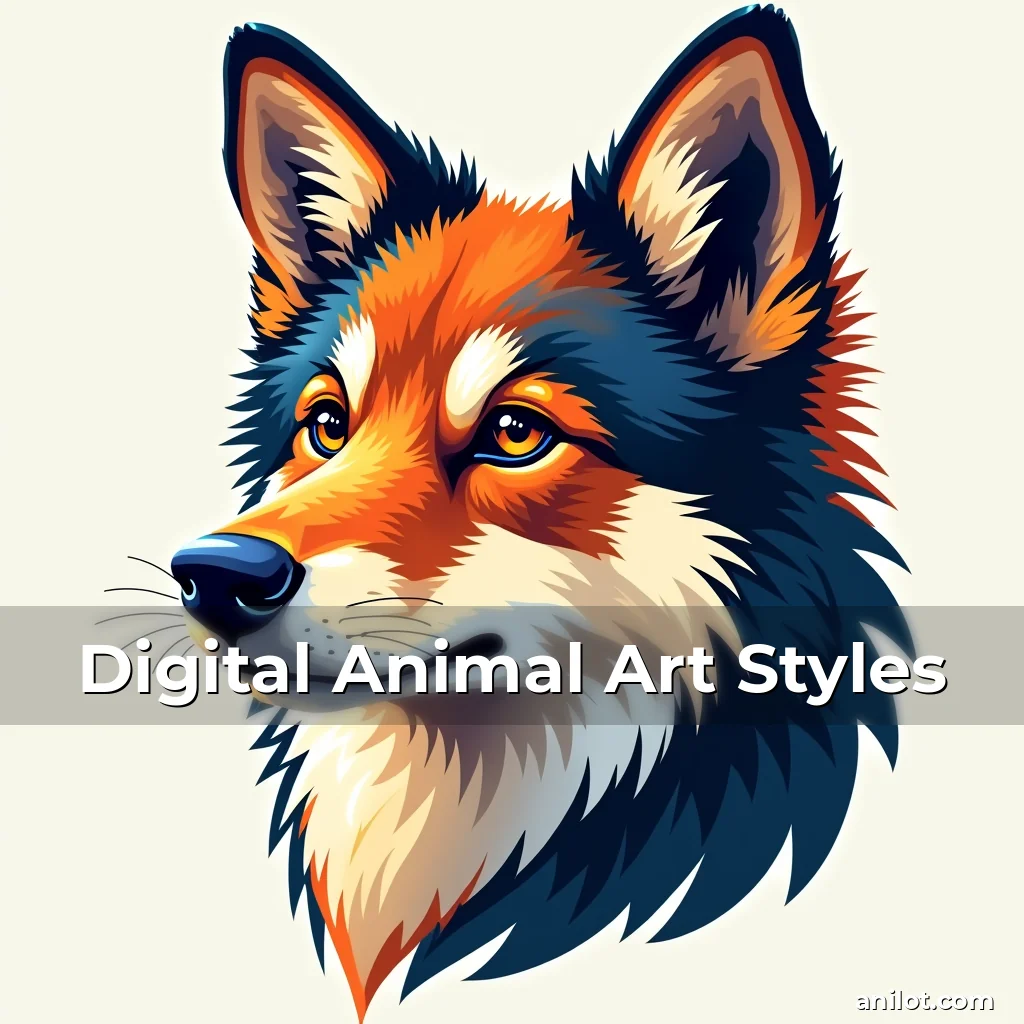
The Endless Canvas: Exploring Digital Animal Art Through Generative AI and Human Creativity
In the ever-evolving landscape of digital art, a fascinating new frontier is emerging at the intersection of artificial intelligence and traditional zoological illustration. The realm of digital animal art now encompasses not only human-
In conservation efforts, digital art plays a vital role in raising awareness about threatened species. Virtual encounters with endangered animals
In the ever-evolving landscape of digital art, a fascinating new frontier is emerging at the intersection of artificial intelligence and traditional zoological illustration. The realm of digital animal art now encompasses not only human-created works but also machine-generated masterpieces that challenge our understanding of creativity itself. This exploration delves into the intricate world where pixels meet biology, revealing how both artists and algorithms are redefining what it means to capture life through art. As we navigate this exciting terrain, we’ll uncover the unique styles, techniques, and cultural significance shaping contemporary digital animal representations. Modern digital animal art represents a remarkable synthesis of biological accuracy and technological innovation. Artists employ advanced software tools capable of simulating realistic fur textures, skin patterns, and movement dynamics never before possible with traditional media. This convergence allows for unprecedented levels of anatomical precision combined with artistic interpretation. Generative adversarial networks (GANs) have revolutionized the field by enabling machines to create original animal designs that blend real-world characteristics with imaginative elements. These neural network systems learn from vast datasets of existing artwork, allowing them to produce compositions that maintain species-specific features while incorporating novel visual aspects. The integration of motion tracking technology has further expanded creative possibilities. Artists can now generate dynamic sequences showing animals in naturalistic behaviors such as swimming, flying, or hunting. This capability opens up entirely new dimensions for storytelling through digital animation. Collaborations between biologists and digital artists result in scientifically accurate yet visually stunning portrayals. Such partnerships ensure that even fantastical creatures maintain plausible evolutionary traits based on established biological principles. This approach bridges the gap between scientific illustration and pure artistic expression. The stylistic evolution of digital animal art reveals distinct phases marked by technological breakthroughs. Early computer-generated imagery (CGI) focused primarily on creating photorealistic depictions suitable for film and television production. However, recent advancements have diversified the aesthetic spectrum available to artists. Trends in current digital animal art reflect a shift towards greater expressiveness and thematic depth. While hyper-realism remains popular, there’s growing interest in stylized interpretations that emphasize emotional resonance over strict anatomical accuracy. This evolution parallels broader changes in mainstream digital illustration trends. Artists today experiment with various approaches ranging from ultra-detailed reconstructions of extinct species to abstract interpretations of animal behavior. Digital mediums offer unique advantages in exploring these diverse styles without being constrained by physical materials. The rise of procedural generation techniques allows for the creation of entire ecosystems populated by algorithmically designed creatures. This method demonstrates how computational power is expanding the boundaries of creative possibility in animal representation. Tracing back to the early days of computer graphics in the 1960s, the depiction of animals was limited to simple geometric shapes due to hardware constraints. With each subsequent decade, increasing processing power enabled more complex simulations, culminating in the sophisticated renderings we see today. Major milestones include the development of ray tracing algorithms in the 1980s which significantly improved lighting effects and surface reflections. This advancement proved crucial for accurately depicting animal coats under different environmental conditions. The emergence of GPU-accelerated rendering in the late 2000s transformed digital animal art by making high-quality visuals accessible to independent creators rather than just large studios with extensive resources. Recent breakthroughs in deep learning have led to automated texture mapping capabilities that analyze actual animal specimens to recreate their surface qualities digitally with remarkable fidelity. Contemporary digital animal artists utilize a wide array of specialized tools tailored to different needs and preferences. Software suites like Blender offer powerful sculpting capabilities essential for creating three-dimensional animal models from scratch. ZBrush provides unparalleled control over fine details like fur and scales. Voice recognition interfaces now enable hands-free adjustments during the creative process, allowing artists to modify parameters without interrupting their workflow. This feature proves particularly useful when working on animated sequences requiring news is a contributor at AniLot.com. We are committed to providing well-researched, accurate, and valuable content to our readers.The Endless Canvas: Exploring Digital Animal Art Through Generative AI and Human Creativity
The Convergence of Nature and Technology
Evolution of Stylistic Approaches
Historical Context and Technological Milestones
Creative Techniques and Tools
You May Also Like

About the Author
Related Articles
Animation For Kids Strategies and Implementation
The Magic of Animation: A Gateway to Creativity and Learning for Kids In today’s digital…
Funny Animal Videos Montage
The Unstoppable Rise of Funny Animal Videos: A Digital Age Phenomenon In an era where…
Animal Cartoons Voice Actors
The Magic Behind Animal Cartoon Voice Acting: A Deep Dive into Iconic Performances In the…