
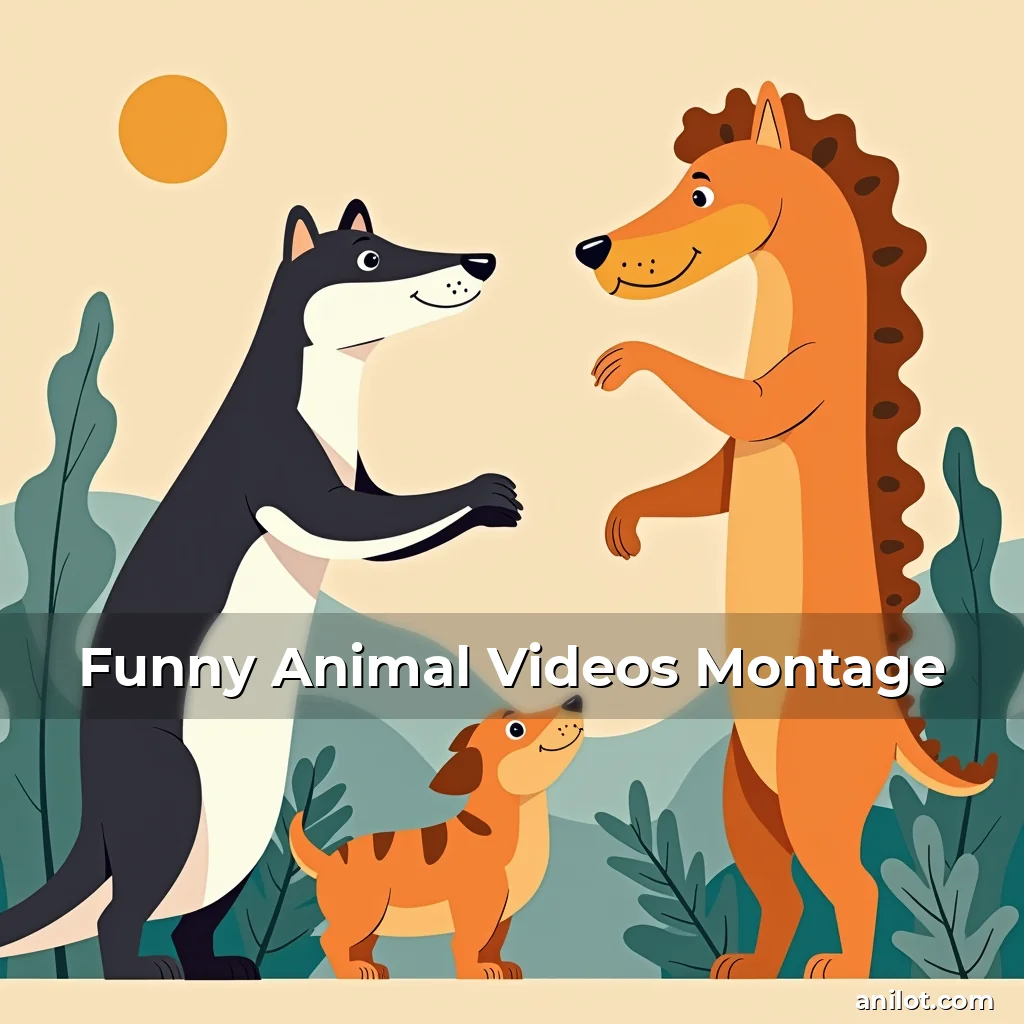
The Unstoppable Rise of Funny Animal Videos: A Digital Age Phenomenon
In an era where digital entertainment is king, funny animal videos have carved out a special niche that captures hearts across generations. From the mischievous antics of squirrels to the clumsy stumbles of domestic pets, these clips offer an instant dose of levity that transcends language barriers.
This phenomenon has grown exponentially over the past decade, fueled by platforms like YouTube, TikTok, and Instagram Reels. The sheer volume of user-generated content featuring animals doing unexpected things creates a never-ending stream of amusement for millions worldwide.
The Psychology Behind Our Love for Animal Comedy
Humans are naturally drawn to humor involving non-human subjects due to our innate fascination with animal behavior. When we see a cat chasing its tail or a dog getting stuck in an unusual place, it triggers primal instincts of curiosity and surprise.
Researchers suggest that watching funny animal videos activates the same brain regions as when we experience human comedy. This neurological connection explains why we find ourselves laughing at a raccoon’s chaotic dance as readily as we would at a stand-up comedian’s punchline.
The contrast between an animal’s innocent intentions and their often absurd outcomes creates a perfect comedic formula. A goat attempting to climb a fence might simply want to explore new territory, but the way they struggle to navigate the obstacle becomes inherently humorous to observers.
Psychologists also note that viewing these videos provides emotional relief through what’s known as “benign violation theory.” We laugh because something seems wrong from a serious perspective yet remains harmless and even endearing in context.
- Cats executing elaborate escape plans to get onto kitchen counters
- Dogs pretending not to know their owners while clearly begging for treats
- Birds accidentally joining in on human activities like dancing or yoga
How These Clips Spread Like Wildfire Online
The virality of funny animal videos relies heavily on platform algorithms designed to prioritize entertaining content. Social media companies actively promote such material because it keeps users engaged for longer periods.
Creators strategically use hashtags like #animalcomedy and #weirdpets to increase discoverability. Some upload videos specifically timed to coincide with peak internet usage hours when engagement rates are highest.
Many successful animal video creators maintain dedicated channels focused entirely on compiling the most ridiculous pet moments. Channels with names like “The Best Pet Pranks” attract millions of followers eager for weekly doses of animal-related humor.
Behind every viral clip lies meticulous editing work. Editors enhance audio cues, add visual effects, and sometimes create side-by-side comparisons to emphasize the comedic elements of each scene.
The Business of Laughter: Monetizing Animal Content
A surprising number of content creators have built full-time careers around sharing funny animal videos. Ad revenue from YouTube alone can generate substantial income for those who consistently produce high-quality content.
Some creators partner with brands to create sponsored content featuring their pets. These collaborations range from promoting pet food products to showcasing smart home devices through the lens of curious animals interacting with them.
Merchandising opportunities extend beyond online platforms. Popular animal content leads to branded merchandise including t-shirts, mugs, and even plush toys modeled after famous viral pets.
Live streaming events featuring beloved animal influencers have become popular attractions. Fans pay to watch their favorite pets interact with guest stars or participate in themed challenges during virtual meet-and-greets.
The Impact on Modern Communication
Funny animal videos have significantly influenced how people communicate digitally today. They’re frequently used in text messages, social media posts, and email conversations to convey emotions quickly and effectively.
These videos serve as universal conversation starters that transcend cultural boundaries. Whether someone speaks English, Spanish, or Mandarin, seeing a dog falling off a couch elicits similar reactions of laughter and surprise.
They’ve also changed expectations regarding online interactions. People now anticipate spontaneous moments of shared joy rather than purely informational exchanges when communicating through screens.
Animal-based humor has become so embedded in digital culture that some corporations incorporate it into customer service strategies. Airlines and hotels occasionally share amusing pet stories alongside official updates to engage customers emotionally.
Ethical Considerations in Capturing Wildlife Moments
While many funny animal videos feature domesticated pets, others capture wild animals in their natural habitats. Ethical concerns arise when determining whether such footage respects wildlife conservation efforts.
Professional wildlife photographers take great care to ensure their presence doesn’t disrupt ecosystems or stress animals unnecessarily. They follow strict guidelines set by environmental organizations before capturing any footage.
Amateur filmmakers may unintentionally cause harm by approaching animals too closely or altering environments to create more dramatic scenes. Responsible filming practices emphasize observation without interference.
Social media platforms have started implementing policies against unethical wildlife documentation. Creators found exploiting animals for views risk having their accounts suspended or banned altogether.
The Future of Animal-Based Entertainment
Advancements in technology promise exciting developments for the world of funny animal videos. Drones equipped with cameras will allow for new perspectives previously impossible to achieve manually.
Virtual reality experiences could let viewers immerse themselves fully in animal worlds, observing creatures from angles that wouldn’t be feasible in real life situations. Interactive VR environments might even simulate playing fetch with dogs in digital spaces.
Artificial intelligence will likely play a significant role in future content creation. AI systems could analyze vast quantities of footage automatically identifying potentially funny sequences worthy of sharing.
Augmented reality filters may enable users to overlay animated characters onto real-life footage, creating hybrid experiences blending actual animal behavior with digital enhancements.
Creating Your Own Memorable Animal Video
If you’re inspired to capture your own funny animal moments, start by setting up a basic recording system. Most smartphones today have excellent camera capabilities suitable for casual videography.
Patience is key when trying to catch spontaneous actions. Animals rarely perform perfectly choreographed routines, which is part of what makes their unpredictable behaviors so endearing.
Lighting conditions greatly affect video quality. Natural daylight typically produces clearer images than artificial lighting unless properly balanced using equipment like softboxes or diffusers.
Edit your footage thoughtfully, focusing on preserving the raw charm of unscripted moments rather than over-producing them with excessive post-processing effects.
Conclusion
Funny animal videos continue to thrive as a global form of entertainment connecting people through shared laughter and wonder. Their impact extends far beyond simple amusement, influencing communication patterns and business models alike.
As long as there are animals exhibiting their inherent quirks and humans seeking lighthearted distractions, this genre of content shows no signs of slowing down. Capture your own memorable moments and join the ever-growing community celebrating the delightful chaos of animal antics.

news is a contributor at AniLot.com. We are committed to providing well-researched, accurate, and valuable content to our readers.
You May Also Like

About the Author
Related Articles
Pet Animation for Kids
The Enchanting World of Pet Animation: Crafting Digital Companionship In today’s digital age, pet animation…
Animated Animals Characters Iconic
The Enchanting World of Animated Animal Icons: A Journey Through Timeless Characters In the vast…

Quality Animation for Kids
The Magic World of Animation for Children: A Journey Through Creativity and Learning Animation holds…