
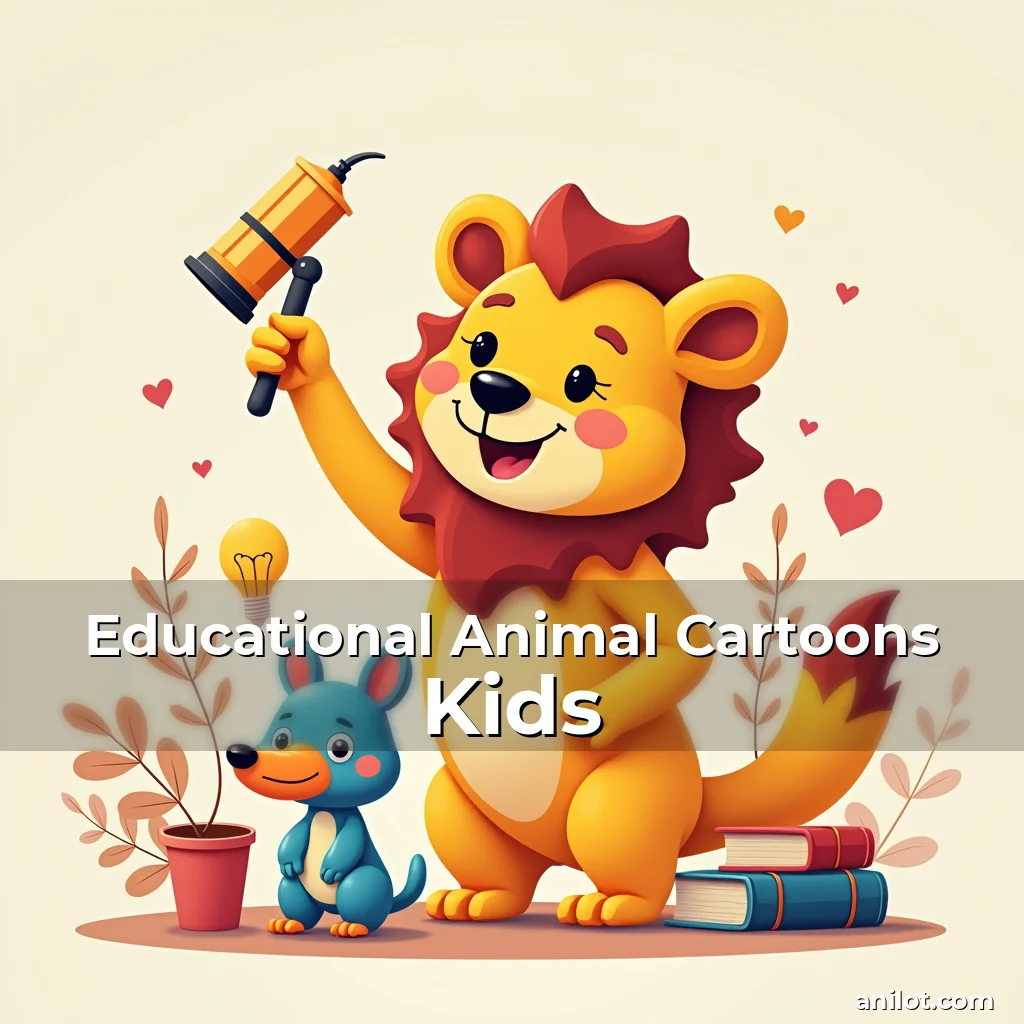
The Joyful World of Educational Animal Cartoons for Kids
Animal cartoons have long been cherished by children around the world as both entertainment and educational tools. These vibrant animations bring beloved creatures from nature to life through imaginative storytelling, teaching young viewers essential lessons while keeping them engaged. From classic shows that first introduced kids to animals’ behaviors to modern series incorporating interactive learning techniques, animal cartoons continue to evolve.
In recent years, there has been a growing emphasis on creating content that not only entertains but also educates. Parents and educators alike are recognizing the value of using animated programs to teach children about wildlife conservation, basic science concepts, and social skills development. This shift reflects a broader understanding of media’s potential impact on early childhood education.
The Evolution of Animal Cartoon Animation Techniques
The history of animal cartoon animation dates back to the earliest days of television when simple hand-drawn characters brought anthropomorphic animals to life. Early examples like “The Adventures of Jimmy Neutron: Boy Genius” featured stylized representations of animals within human-like scenarios, laying the groundwork for future developments in the genre.
As technology advanced, so did the complexity of these animations. The introduction of digital drawing tablets allowed animators to create smoother movements and more expressive features in their characters. Shows like “Bluey” demonstrate how contemporary techniques enable more realistic portrayals of animal behavior combined with creative narrative structures.
Modern advancements include motion capture technology which allows for even greater realism in depicting animal actions. While primarily used in feature films, some animated series now incorporate elements of this technique to enhance character expressions and movement accuracy.
- Digital painting: Enables artists to create intricate textures and shading effects that were previously difficult to achieve with traditional methods.
- Stop-motion animation: Offers a tactile quality that can be particularly effective for showcasing real animal interactions in controlled environments.
- Computer-generated imagery (CGI): Allows for seamless integration between live-action footage and animated sequences, expanding storytelling possibilities.
Famous Examples That Shaped Children’s Media Landscape
Certain animal-themed cartoons have become cultural touchstones that define generations of children’s programming. “Mickey Mouse Clubhouse,” for example, introduced preschoolers to fundamental problem-solving strategies through its iconic mouse character navigating various challenges with help from his friends.
“Peppa Pig” continues to captivate audiences worldwide by presenting everyday situations through the lens of a curious little pig who explores her environment alongside family members. Its success demonstrates how relatable animal protagonists can effectively convey life lessons in an accessible format.
“Dora the Explorer” took interactivity to new heights by encouraging young viewers to participate actively in solving puzzles presented during episodes. This pioneering approach helped establish the foundation for today’s immersive educational experiences found in many modern series.
Global Reach and Cultural Impact
These popular shows have transcended geographic boundaries thanks to international broadcasting deals and streaming platforms that make them available globally. As a result, they’ve influenced parenting styles across cultures by promoting values such as curiosity, teamwork, and perseverance through universally appealing narratives.
Studies indicate that exposure to well-crafted educational cartoons significantly improves vocabulary acquisition rates among pre-school aged children compared to non-educational alternatives. Researchers at Harvard University found that regular viewing of structured educational content could boost language comprehension skills by up to 25% over six months.
Learning Through Play: How Animals Teach Important Life Skills
Animal cartoons often use playful settings to introduce complex concepts in ways that resonate with young minds. For instance, “Wild Kratts” employs adventurous storylines where characters explore different ecosystems, subtly embedding scientific facts without feeling like formal instruction.
This method leverages natural child interests in play and exploration to facilitate deeper engagement with subject matter. By framing educational content within exciting adventures rather than dry lectures, these programs maintain high levels of viewer interest and retention.
Moreover, many series integrate moral dilemmas into their plots, helping children develop empathy and ethical decision-making abilities. When characters face choices involving fairness or cooperation, viewers learn to consider multiple perspectives before forming opinions.
The Role of Music and Sound Design in Engaging Young Audiences
Musical themes and sound effects play crucial roles in making educational cartoons memorable and enjoyable for children. Catchy jingles reinforce key messages, while background music enhances emotional engagement with storyline developments.
Sound design is equally vital; the distinctive noises associated with different animals add authenticity to scenes and aid in distinguishing between species visually impaired viewers might otherwise struggle to identify.
Interactive episodes sometimes incorporate call-and-response segments where viewers repeat phrases along with on-screen characters, strengthening memory recall through active participation rather than passive observation alone.
Creating Safe Spaces Through Positive Representation
Awareness regarding representation issues has grown substantially within the industry, leading to more inclusive depictions of diverse animal communities. Modern productions strive to showcase varied habitats, ensuring that children see themselves reflected in the worlds being portrayed regardless of geographical origin.
Careful consideration goes into crafting environments that accurately represent different biomes—from dense rainforests teeming with biodiversity to arid deserts home to resilient creatures—thereby fostering appreciation for global ecological diversity right from an early age.
Additionally, efforts are made to depict positive relationships between different species whenever possible, reinforcing messages about coexistence and mutual respect among living beings irrespective of size or strength differences.
Parental Involvement Strategies for Maximizing Benefits
To fully capitalize on the educational benefits offered by animal cartoons, parental involvement remains essential. Watching episodes together provides opportunities for discussion about what was learned and encourages critical thinking about environmental topics covered during viewing sessions.
Purposefully selecting shows aligned with current classroom curriculum can bridge gaps between school teachings and at-home reinforcement activities. This synergy strengthens overall knowledge retention through consistent exposure across multiple learning contexts.
Encouraging follow-up projects based on favorite episodes helps translate virtual experiences into tangible understandings. Activities ranging from building miniature habitats to conducting simple experiments mirror the investigative spirit seen in many educational animated series.
Future Trends and Innovations in Educational Animal Cartoons
The future promises continued innovation driven by emerging technologies aimed at enhancing personalized learning experiences. Artificial intelligence applications may soon tailor educational content dynamically according to individual learner needs identified through adaptive algorithms analyzing interaction patterns.
Augmented reality integrations could transform static screen time into dynamic exploratory journeys where users physically interact with digital overlays superimposed onto real-world surroundings, deepening conceptual understanding beyond two-dimensional formats.
Virtual reality options hold tremendous potential for providing first-hand encounters with endangered species habitats, offering immersive simulations that would be impossible under normal circumstances yet remain safe and informative for young learners.
Bridging Generational Gaps Through Shared Viewing Experiences
Educational animal cartoons serve as excellent conversation starters between parents and grandparents, allowing multi-generational bonding over familiar stories and characters that have stood the test of time. Nostalgia plays a significant role here as older relatives share memories connected to certain shows they watched during their youth.
Family movie nights featuring classic animal cartoons can foster intergenerational dialogue about changing perceptions regarding wildlife preservation and conservation ethics over decades. Such discussions enrich younger viewers’ awareness of evolving societal attitudes towards nature protection initiatives.
When choosing which episodes to watch together, families benefit greatly from considering those highlighting universal themes applicable across ages—such as friendship dynamics or overcoming obstacles—which ensure meaningful connections occur naturally during shared viewings.
Conclusion
The enduring popularity of educational animal cartoons speaks volumes about their effectiveness in combining entertainment with enlightenment. Their ability to adapt continuously ensures relevance across generations while maintaining core principles centered around discovery and wonder.
By embracing these animated resources thoughtfully—as both entertainment and pedagogical tools—we empower our youngest generation to grow smarter, kinder individuals equipped with foundational knowledge about the fascinating world we inhabit alongside countless other amazing creatures.

news is a contributor at AniLot.com. We are committed to providing well-researched, accurate, and valuable content to our readers.
You May Also Like
About the Author
Related Articles
Future Animal Animation Trends
The Evolution of Animal Animation: A Deep Dive Into Emerging Trends In recent years, animal…
Nostalgic Animated Series 90s
The Golden Age of Nostalgic Animated Series from the 90s The 1990s were a transformative…

The Enchanting World of Animal Animation Films: A Journey Through Paws and Whiskers
The Enchanting World of Animal Animation Films: A Journey Through Paws and Whiskers In the…